Georgia GOP's Loudermilk-Young Debate becomes referendum on absence as Burt Jones turns empty podium into political weapon
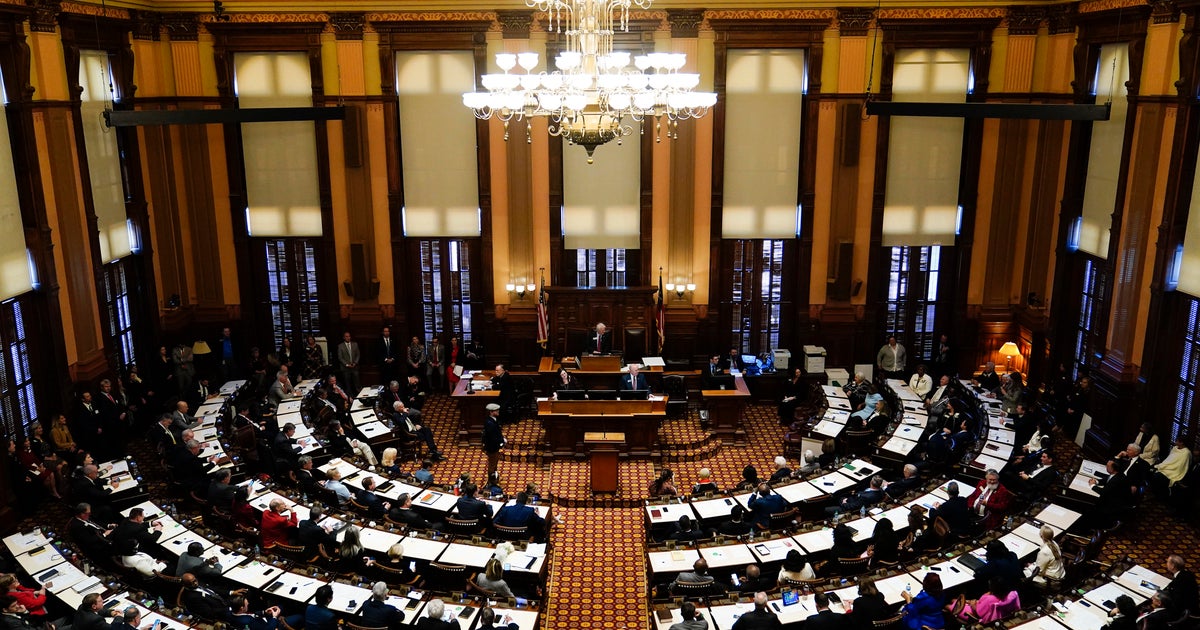
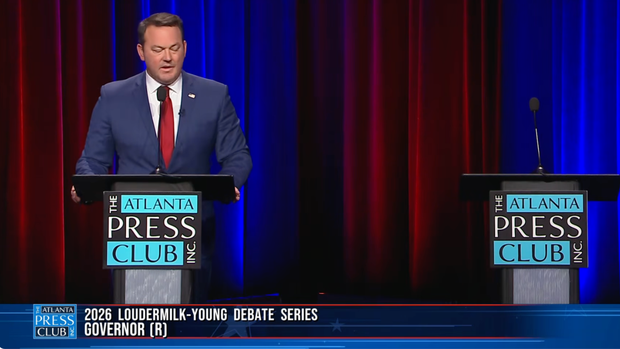
The biggest storyline from Georgia's Republican gubernatorial debate may not have been what was said on stage, but who never appeared on it.
Rick Jackson's absence quickly transformed the debate from a traditional policy showdown into something far more symbolic: a televised test of visibility, political strength and voter perception inside a Republican primary already shaped by questions about identity, loyalty and momentum.
Lt. Gov. Burt Jones seized on that vacuum repeatedly throughout the debate, turning Jackson's empty podium into a centerpiece of his argument to Republican voters.
"It became a fallback for him whenever there was a place that he maybe felt weaker or was less inclined to give a lot of policy details," said Mikaela Malsin, director of debate at Emory University's Barkley Forum. "He quickly defaulted to the point of contrast, which is to say: 'My opponent didn't even show up.'"
The dynamic reflected a broader reality of modern campaigns: in today's political media environment, perception can sometimes matter as much as policy.
For much of the debate, Jones blended traditional conservative messaging with repeated reminders that his opponent was absent. At one point, moderators even allowed Jones to direct questions toward Jackson's empty podium — an unusual debate moment that Malsin described as both risky and effective television.
"It highlights some of the strangeness and invites a little controversy," Malsin said. "At the same time, this debate had Jones talking about the issues by himself for 25 minutes already, so it was probably a relatively safe choice."
The moment underscored how debates have evolved in the social media era, where viral optics and emotional framing often travel faster than detailed policy discussions.
Malsin said Jones appeared disciplined in balancing those moments without overplaying them.
"He relatively capably managed the dynamic of the absence," she said, "not to overplay it, but to highlight it as a core part of his messaging."
Still, the debate also revealed areas where Jones appeared more cautious.
According to Malsin, Jones offered more detailed answers on healthcare policy and Georgia's Certificate of Need system, while appearing noticeably less specific on politically sensitive issues such as abortion policy and partisan tensions surrounding law enforcement races.
"I think he is trying to stay away from some of the more controversial issues," Malsin said.
That balancing act may reflect the political terrain Georgia Republicans continue to navigate heading into the next gubernatorial cycle.
The state GOP remains divided between establishment conservatives, deeply Trump-aligned voters and populist factions competing for influence inside the party. Malsin said Jones appeared intent on threading those lanes simultaneously while acknowledging President Donald Trump's endorsement without making it the centerpiece of his debate identity.
"I think he wants to be seen as a Georgian above all else," she said. "Someone who knows the people and the culture and the history of the state."
Historically, skipping debates has often carried political risk, especially when opponents successfully define the absence before the missing candidate can explain it themselves.
And while debates do not always dramatically shift primary races, experts say they can reinforce emotional impressions that linger with voters long after the policy details fade.
"A lot happens in those pretty quick judgments people make about candidates," Malsin said. "The confidence and the ethos of a candidate can make a huge difference in whether people are willing to show up and vote for that candidate or not."
For Jackson, continued debate absences or limited public appearances could risk creating a longer-term narrative challenge — particularly if opponents succeed in framing those decisions as disengagement rather than strategy.
For Jones, meanwhile, the debate may have offered an early glimpse into how his campaign intends to position itself statewide: disciplined, culturally Georgia-focused and carefully calibrated between the Trump era and a broader Republican electorate.
But the larger question moving forward may not simply be which candidate had the better policy answers.
It may be which candidate voters believe looked most prepared to lead, and most willing to show up.
CBS News Atlanta has contacted the Jackson campaign for comment regarding the healthcare billionaire's absence. We will provide updates if a response is received.