Watch CBS News

Trump says Iran is "completely defeated"

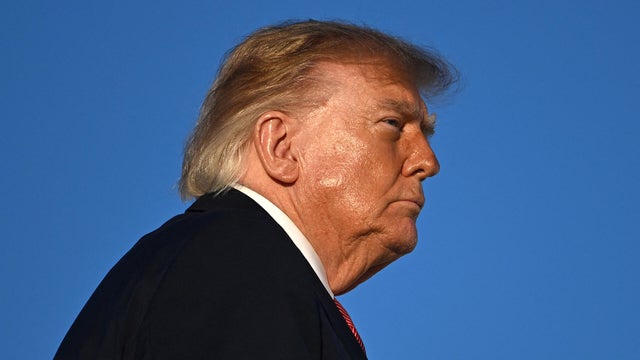
President Trump is again claiming that Iran's military has been defeated, despite the U.S. and Iran trading attacks following the downing of an Apache helicopter near the Strait of Hormuz. CBS News' Olivia Rinaldi reports, and national security contributor Joseph Zacks joins with his takes on Iran's military capacity and the Trump administration's messaging on the war.

Jun 10 (06:49)

TRANSCRIPT FOR: “TRUMP SAYS IRAN IS "COMPLETELY DEFEATED," EXPERT SAYS MIXED MESSAGES MAY BE SIGNALING "DESPERATION"”

JD VANCE:
00:00:26

Look, I think that the deal could happen in the next week. But the deal could also happen months from now. Are the Iranians stringing President Trump along, in your view? No, I don't think so. Again, I think their system takes a long time to reach consensus.

ERROL BARNETT:
00:00:40

CBS News White House reporter Olivia Rinaldi joins us from DC with more on this. You've been looking into this issue, Olivia. Good morning. So what does what the vice president is saying mean for President Trump's peace efforts, which he seems to still be optimistic about? Well, it seems like he was up until about two minutes ago when he posted on Truth Social. This is brand new, Errol. It just came out. The president wrote, "Iran's military is a complete and total mess. Much of it, like their navy and air force, doesn't even exist anymore. They have been completely defeated. Iran is all talk and no action. The bully of the Middle East is dead." He goes on to say, "They've taken too long to negotiate a deal that would have been great for them. Now they will have to pay the price." The question is, what is the price they're willing to pay? Because this ceasefire has been in place now since April 8, so we're about two months into it. And now it seems the president is at the end of his patience rope. And you gave context there. But yes, over the last 24 hours, we have seen the US and Iran trading strikes, the most significant strikes since that April 8 ceasefire. The US said it was responding to the downing of that Apache helicopter. Iran says it was a mistake that that helicopter went down. Then they retaliated against US forces in the region, in Bahrain and Kuwait. They also sent strikes into Jordan. So this now appears like it could spiral out of control. The question being, and the question we're posing to the White House right now, are peace talks done? Because for the last several weeks, at this point, President Trump has said they're about two to three days away from a deal, that the deal is getting close, that there is momentum happening behind the scenes. Even Vice President Vance there saying, could happen next week, could happen several months from now. Well, after this latest tit for tat with these strikes, is peace dead or is there a path forward? That is really the question at this moment.

ERROL BARNETT:
00:02:41

Some six exclamation marks in that statement from President Trump. Olivia Rinaldi bringing that fresh information to us. Olivia, thank you. Joining us now is CBS News National Security contributor Joe Zacks. He's also the former deputy assistant director of the CIA for counterterrorism. Joe, good morning. Looking at Iran's drone and missile attacks, does this call into question the American assessment previously of the state of Tehran's military? Even this morning, President Trump says their country's navy and air force doesn't exist anymore. They've been completely defeated. How is the country then able to launch these strikes? Thank you, first, Errol, for having me on. With respect to your question, I think the president is right. By and large, Iran's navy and air force and other portions of their military establishment have been largely defeated. Perhaps not completely destroyed, but largely defeated. But one area in this 60-plus-day ceasefire period, I believe there has been some reconstitution on the Iranian side. And that's been with respect to their drone program, as well as their ballistic missiles. And this is where we're seeing the threat. We saw it in the Iranian attack against Israel this weekend, as well as they're launching missiles at Jordan, Kuwait, and Bahrain these past few hours. So in that respect, there still remains a threat. And it sounds like the president is signaling that he may have to deal with it. Despite efforts to pursue negotiations, this may be a culminating moment.

ERROL BARNETT:
00:04:18

Yeah, and we've seen over the past few months that the US military can quickly achieve its tactical goals. But the aim here in the end is political. And there's a cost to the US, literally. Its ammunition stocks, reportedly, are concerning, as far as the amount they're being reduced. Share any information you have on that. But the ceasefire would be a political decision, not a military one. So what is the risk for the US to continue investing so much militarily? Well, I think at this point, the US is all-in. We started something over a hundred days ago and it needs to be resolved. And it needs to be resolved satisfactorily for the US. It's in our national interest. And it's especially in our national interests that this be resolved with the US coming out in a strengthened and a strong position. And by all indications, we should be able to achieve that. The Iranian regime is really, in many ways, diminished. Their economy is in peril. They're not in a good state. They are, I believe, trying to escalate to maybe de-escalate and get a better deal for themselves. But at the end of the day, we should consider that we're in a stronger position. And I believe that perhaps all this signaling about imminent deals is maybe sending a mixed signal to Iran, where they actually are sensing desperation for us to achieve a negotiated solution of some sort with them, when in fact, they are in the weaker position, and perhaps the president is signaling that he's going to take a different approach to really prod them to be more constructive on the diplomatic front. With respect to your question on munition stockpiles, I don't have exact details. But I wouldn't be overly concerned. The Pentagon manages that very carefully. We have huge capabilities in the United States. And this hundred-day conflict, really 40 some days of actual military engagement, is not bringing us into a critical position with respect to our munition stockpiles, from what I understand.

ERROL BARNETT:
00:06:40

All right, Joe, great to get your insight on this really important issue. Thanks for being with us this Wednesday. Thank you.

View CBS News In
CBS News App Open
Chrome Safari Continue