Watch CBS News

Trump says he's in "no hurry" on Iran

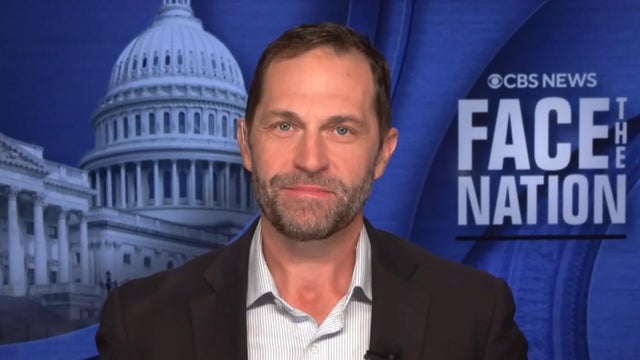
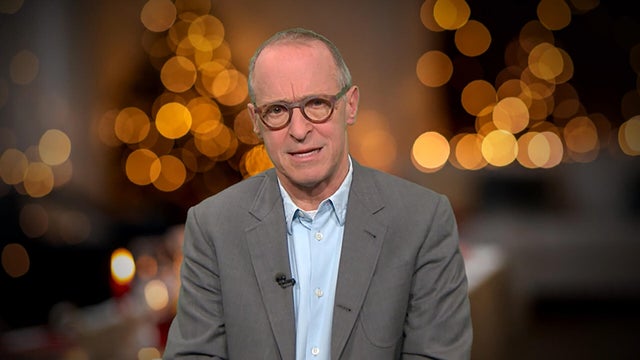
President Trump is now saying he's in no hurry on Iran despite his recent comments about considering imminent strikes. CBS News analyst Aaron MacLean joins with more insight.
May 20 (13:32)

TRANSCRIPT FOR: “TRUMP SAYS HE'S IN "NO HURRY" ON IRAN DAYS AFTER SAYING HE WAS AN "HOUR AWAY" FROM STRIKES”

REPORTER:
00:02:51

--said to Prime Minister Netanyahu about Iran and how long to hold off on strikes. He's fine. He'll do whatever I want him to do. He's a very good man. He'll do whatever I want him to do. And he's a great guy. To me, he's a great guy. Don't forget, he was a wartime prime minister. And he's not treated right in Israel, in my opinion. I'm, right now, at 99% in Israel. I could run for prime minister. So maybe, after I do this, I'll go to Israel, run for prime minister. Had a poll this morning. I'm 99%. So that's good. But, no, he's a wartime prime minister. And I just don't think they treat him well.

REPORTER:
00:03:31

Mr. President-- [OVERLAPPING SPEECH] I think they have a president over there that treats him very poorly.

REPORTER:
00:03:36

You're on the same page with him on Iran? Yeah.

REPORTER:
00:03:40

Have you spoken to anyone about replacing Lauren Boebert after she-- If somebody comes along, I'd look. It's a little late in the race. But if somebody comes along, I'd look. So we didn't catch the full question thrown to the president. But we heard him, when asked about Benjamin Netanyahu, say that he'll do whatever I tell him to do. He actually repeated that phrase. We know that Netanyahu spoke to 60 Minutes recently and indicated that, perhaps, Israel wanted to be more financially independent from USAID. What did you make of that remark from the president just now? Well, there's clearly some increasing tension between the administration and then the Israeli side of this. From the Israeli perspective, certainly from the perspective of Prime Minister Netanyahu, this conflict was ended prematurely, that there's still work to be done there. The policy goal of the Israeli government is unambiguously regime change. That is what they would like to see. The president, clearly, I think, sincerely wants a negotiated solution. Now, he has to deal with all the problems in getting there that we were just discussing a moment ago. I personally am of the view that a negotiated solution that satisfies the demands he is making is currently unlikely. But there's a big gap between those two policy wishes going forward. And apparently, they are hashing that out on these phone calls. And the president is expressing that he's the stronger partner in that relationship. And it's true. The United States brings a lot more to the table than Israel does, even given Israel's impressive capabilities in the region. ANCHOR 1: All right, let's go back to President Trump, who is continuing his remarks there on his way to Connecticut. I get along with everybody but your husband and a few others.

REPORTER:
00:05:06

On the Iran deal, would you be open to a limited deal that just covered the Strait of Hormuz? What does that mean?

REPORTER:
00:05:12

On Iran, just a limited deal, just for a longer ceasefire. We'd have to open the strait. That would open immediately. So we're going to give this one shot. I'm in no hurry. You never think, oh, the midterms, I'm in a hurry. I'm in no hurry. I just-- ideally, I'd like to see few people killed, as opposed to a lot. We can do it either way. But I'd like to see few people killed. I just wonder whether or not they have the good of the people. Because some of the things they're doing, to me, means they don't have the good of the people. And they have to have the good of the people. There's a lot of anger now in Iran because people are living so badly. There's a lot of foment that we haven't seen before so much. And we'll see what happens.

REPORTER:
00:05:54

Has it taken longer than you expected it would to make a deal with Iran? Well, let's put it this way. You were in Vietnam 19 years, right? You were in Afghanistan and these other places 10 years. You were in Iraq. How long were you in Iraq, 12 years? You were in Korea for seven years. World War II is different. That was four years. I'm in for three months. And much of it's been ceasefire, so-- and you know? You lost hundreds of thousands of soldiers in these various wars. In two wars, Venezuela, where we lost nobody, and here, we lost 13 people. Now, 13 people is 13 too much. But we lost 13 people. In other wars, you lost hundreds of thousands of people. So people don't like it when you say, oh, do you know you've lost 13? We've lost-- in two major wars-- we took over Venezuela. We essentially took over Iran. And we've lost so far 13 people. Somebody else would have lost 100,000 people. But I get a kick when I look at somebody on television, "He's lost 13 people." I lost 13 people. They lost 13 people leaving an airport, Obama, 13 very good people that I got to know their families. So what we've done is amazing. And we have them decimated. Iran is decimated. And you're going to see things that are amazing. You're going to see a lot of amazing things over the next three years for our country. And I'd like to talk more about the economic, because we have $18 trillion being spent. And no country has ever had anything like that. We have car plants pouring in from Mexico, Canada. They don't want to be there. There's no reason to be there. Because they want to sell to our market. We have car companies and plants coming in from Germany, from South Korea, from Japan, coming in by the billions. And they're being built now. You're going to see things that nobody thought was possible.

REPORTER:
00:08:02

Mr. President, the DOJ-- You're going to end up saying, he's the greatest president that ever lived. Goodbye, everybody.

REPORTER:
00:08:08

James Comey, over the weekend, Mr. President, he suggested that there's still people in your DOJ and FBI that are waiting you out. They're waiting until your administration is over to get back to work. Do you think those people are still in the DOJ and FBI? I hope not. Well, we're going to seek them out. We'll seek them out. We'll get rid of them. Because you have-- in every agency, you have scum. And certainly, they did in the FBI and DOJ. But Todd Blanche is doing a fantastic job. Kash is doing a very good job. So we will prevail. I've been standing here a long time with you, many years, right? And they've been saying, I think it's it, I think he's troubled. Here I am. It's a very constant situation. But I think you're going to find that we have great people in the FBI. And we have great people in DOJ. Todd Blanche has really been doing a great job, and a lot of things to come. We have a lot of things that are coming right now. It's going to be great. ANCHOR 1: And you're listening to President Trump just moments ago at Joint Base Andrews, talking to reporters as he boards Air Force One on the way to New London, Connecticut, where he will be addressing the Coast Guard graduates. And we have Aaron MacLean with us now, who we've been talking to all morning. The president was really talking about-- he started out talking about the timeline of the war with Iran. And he said, quote, he's in no hurry. He doesn't feel pressured by the midterms. He's in no hurry. And then he started comparing the timelines of past wars, all the way back to World War II, talking about how Vietnam was roughly 20 years and so on and so forth. What did you make of the president's characterization of the timeline? Well, a couple of interesting things, to me, from those remarks-- the first was, I think the implication of what he was saying was that the war is still ongoing, that strategic goals have not yet been achieved. That seemed to me to be the logic in which he was encompassing his comments, that this clock is still ticking. By the way, I think that's true. The administration has not achieved its goals yet on the nuclear program, for example. And obviously, the Strait of Hormuz is a problem. So that's interesting because, at other points, the president has insisted that this is over, that the ceasefire essentially ended. And certainly that's their perspective from a legal perspective. They actually argued the War Powers Resolution doesn't apply at all because of ceasefires. That's one thing I took away. The other thing that I thought was really interesting was that very first question when they asked him, would you accept a deal just on the Strait-- because this, right now, the Iranian-- among the differences between the American and Iranian positions seems to be the Iranians want to talk about waterways and ending the war first, and maybe talking about nuclear issues and other things later. So the question was, basically, are you going to go with that flow? And he said, we're going to give it one shot, which was a little ambiguous. But I took it to mean no. I took it to be a rejection of that, that we still want to package the nuclear conversation into the waterway conversation. And there is some exclusive reporting from The New York Timesyesterday that suggests the US and Israel had a plan, early days in this war, to install former Iranian President Mahmoud Ahmadinejad-- this was the death to America, death to Israel guy-- as Iran's new leader. But on the early days of the campaign in late February, a strike hit too close to Ahmadinejad's home. And then he was spooked by the whole thing. CBS has not been able to match this. But have you seen that reporting? And what do you make of it, considering we're now at a potential stalemate because a strategy wasn't really formulated correctly in the first place? My main takeaway from that report, which I did see, was, don't think you can't be surprised, no matter how many years you follow these things. As you point out very correctly, this is Mr. Death to Israel, Death to America. This is a radical amongst radicals. That strike that spooked him, by the way, appears to have been a strike, according to that reporting, that was designed to free him from house arrest because he is a polarizing figure within Iranian politics. The radicals have difficult politics amongst themselves. So I was quite surprised that this was the plan. In a way, it fits the logic of Venezuela, where the idea, of course, was to replace Nicolas Maduro with somebody part of that regime, part of the Maduro regime broadly-- Delcy Rodriguez, of course. Ahmadinejad, very much part of the broader radical clique that rules Iran, even though he was on the outs with the current group actually in charge, really, really surprising, and this time, unlike Venezuela, obviously didn't work. And quickly, Aaron, it struck me that he talked about whether or not this regime in Iran has the-- he said the good of the people. I think he meant the will of the people, the support of the people. We haven't heard the president really talk about the Iranian people in a while. Did that stand out to you, as well? Well, yeah, when he was talking about, do they have the good of the people at heart, the answer is no. They definitely do not. And then, you're right, I think he is raising the issue of is there going to be popular rest-- unrest-- excuse me-- in Iran. Of course, if we think back to January, that was one of the inciting events-- ANCHOR 1: That was how we started this conversation. --of this whole thing. The sequences-- the Israelis were increasingly concerned about the Iranian missile program. Netanyahu came to Florida to talk to President Trump in December. The Israelis were clearly going to do something about the missile program. Then, these protests started in January, brutal repression, tens of thousands of Iranians killed in the streets. That appears to have pushed the president in the direction of actually joining the Israelis in doing this. And then it disappeared. The issue disappeared. And now it's coming back. I've not seen reporting on the ground that there are popular uprisings again. Obviously, this regime is willing to gun down tens of thousands more if that's what it takes. But they are going to run into trouble if they start running out of cash to pay, for example, members of the IRGC. So we don't know what's going to happen here in the weeks ahead. ANCHOR 1: They may start running out of cash with the Strait of Hormuz continued to be closed. Aaron MacLean, thank you so much. ANCHOR 2: All right, thank you. Thanks, guys. ANCHOR 2: Thank you for being here.

Videos
View CBS News In
CBS News App Open
Chrome Safari Continue