Watch CBS News

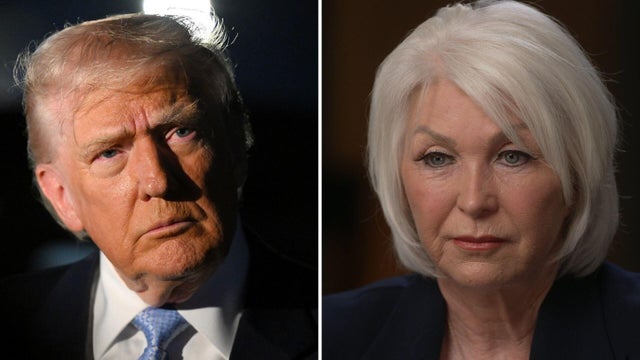
Trump on his plan to end Iran war

President Trump spoke to reporters in the Oval Office on Monday during a maternal health event at the White House, where he said he has "the best plan ever" to end the war with Iran after saying Tehran's response to the latest peace proposal was "unacceptable." CBS News' Natalie Brand has more after Trump's remarks.
May 11 (28:05)

TRANSCRIPT FOR: “TRUMP SAYS HE HAS "THE BEST PLAN EVER" TO END IRAN WAR”

REED COWAN:
00:00:00

Now to breaking news. Our cameras and crews at the White House, where President Donald Trump participates in an event for maternal health, one day after Mother's Day. He's taking questions from reporters. Here's what he had to say just a few minutes ago.

REPORTER:
00:00:12

You mentioned that you're going to be meeting with the generals on Iran. You rejected a deal from Iran over the weekend. Can you tell us anything about that proposal, and what, if any, effort was made to break this deal? It was just unacceptable. A lot of people said, well, does he have a plan? Yeah, of course, I do have a plan. Have the best plan ever. I mean, Iran has been defeated militarily, totally. They have a little left they probably built up during this period of time. We'll knock that out in about a day. But I have a plan. It is a very simple plan. I don't know why you don't say it like it is. Iran cannot have a nuclear weapon. They're very dangerous. They're very volatile. It's a terrible thing that's happened over there. They've killed 42,000 people in the last two months. 42,000. At least, that's what we know of. 42,000 people. They killed numerous people over the last week, but they killed 42,000 people a month ago, a month and a half ago. They were unarmed protesters, not at all violent protesters. And they started taking them out, shooting them. So we're not going to let them. That's the plan. People say, what's the plan? The plan is very simple. The blockade, first of all, was part of military genius, just like Venezuela was military genius. We have the greatest military in the world by far. And we're stocked up with great ammunition. We have much better stuff than we did two months ago when we first did the attack, which knocked them for a loop. But, very simple. Iran cannot have a nuclear weapon. It can't have it. And if they did have it, the Middle East would be gone, Israel would be gone, and they'd hit Europe probably next. We're doing the service to the world. And this has gone on for 47 years. Other presidents and leaders of other countries that have the power should have done it, but they didn't do it. But it's a very simple plan. Iran cannot have a nuclear weapon, and they won't have a nuclear weapon. And they didn't-- and they didn't want to go that far. If you can believe it, they didn't. How stupid? Are they stupid people? They didn't want to believe it. They think that, well, I'll get tired of this, or I'll get bored, or I'll have some pressure. But there's no pressure. There's no pressure at all. We're going to have a complete victory. We've already, in theory, had a complete victory from the military standpoint. The military-- look, their navy is dead. They had 159 ships. Now, they have zero, other than little speed boats that go around that got taken out eight a day by US. They have no air force. They have no anti-aircraft. Now, they probably put the shoulder jobs on-- into service over the last three weeks, probably, but essentially, they have no anti-aircraft. They have no radar. And frankly, their leaders have been killed at the first level, second level, and half of the third level. And then they come back, and they want to negotiate. And they give us a stupid-- it's a stupid proposal, and nobody would take it. Although, Obama would have taken it. Biden would have taken it. What they took was far worse. So we stopped him twice. We stopped them when I terminated the worst deal probably ever made in the history of our country in terms of defense. That was the Iran nuclear deal by Barack-- penned by Barack Hussein Obama. That would have given Iran a nuclear weapon within a year. They would have had it years ago. I terminated that in my first term. And then when that beautiful plane right there hit them hard, we really hit them hard. And they told me-- I want to just tell you this because they like to say, oh, well, maybe it wasn't that hard a hit. Iran told me very strongly, because they intend to give us the nuclear dust, as I call it. It's easier than talking about other terms, because it's a term everyone-- but the nuclear dust, which is what we hit. They told me, number one, you're getting it, but you're going to have to take it out. Because the site was so obliterated that there's only one or two countries in the world that could get it. It's so deep and got hit so hard that there's no way they have the equipment to move it. You and China are the only two countries in the world that could take it out. So we talked about it. And they said, you'll have to take it out because we don't have the capability of doing it. So for those people that to say that those great pilots in those great planes, where we just ordered 22 more of them, new and improved, that those great pilots didn't do their job, they did their job. At 1:00 in the morning with no moon, no light, no nothing, every single bomb hit its targets. And then, as you know, we shot some incredible things. There's things that nobody else has. Nobody has a military like we have. We shot the Tomahawks from a submarine 200 miles away. And that went on top of it. But every one of those-- including the Tomahawks, every one of those weapons and shots hit perfectly. And they said to me-- just to put it on the record. They said to me, there are only two countries in the entire world that could ever get that stuff out of there, because we don't have the equipment and nobody else. They said China and the United States. So I just want to let, those pilots did an unbelievable job, very dangerous job, at 1:00 o'clock in the morning. Think of it. No moon. No nothing. We had no light, purposely, and every single one of those bombs were right down an air chute in a granite mountain that exploded. And they are unable to get it, even if they wanted to, but we're not going to take a chance, so that's part of the deal.

REPORTER:
00:05:56

So, sir, are you saying the Iranians agreed to allow the removal of all their enriched uranium? Yeah. Well, they did two days ago. They didn't-- they did two days ago. They said you're going to have to take it. We were going to go with them, but they changed their mind because they didn't put it in the paper. So when they sent us this document that we waited for days for, that should have taken 10 minutes to do-- look, very simple. We get that. They guarantee no nuclear weapons for a very long period of time and a couple of other minor things, but they just can't get there. So they agree with us, and then they take it back. But they said to us that it was so badly "obliterated"-- was the word they actually used. That was my original word, then it got challenged by some of the fake news. And it wasn't challenged with any knowledge. It was just challenged like, they were hoping that this wouldn't have been so successful. No, it was obliterated. We have the greatest military in the world. They built it largely in my first term. And I didn't know I'd be using it quite this much in my second term. But very simply, when they say, does he have a plan? Yeah, I have a plan. The plan is very simple. In war, you have to change. You have to be flexible. You have a lot of plans, but you have to do different plans and different days. But I have a great plan. But the plan is they cannot have a nuclear weapon. And they didn't say that in their letter.

REPORTER:
00:07:25

Mr. President, leaderships changes that you've talked about in Iran, is this still a leadership that you believe you can negotiate with and ultimately reach-- I think so. Well, you have two, moderates and you have the lunatics. And I think the moderates are more respected. The lunatics want to fight till the end. There will be a very-- it will be a very quick fight. But, I call them-- you have, just like our country. We have lunatics, too. We have-- I call them lunatics. I call them stupid people, too. But in Iran, they have the moderates. They're dying to make a deal. And then you have the lunatics. And I guess, they're a little bit afraid of the lunatics, but-- and why not? The level of ferocity for protests. The people are watching it. They want to go out on the streets. They have no weapons. They have no guns. We thought the Kurds were going to give us weapons. But the Kurds disappointed us. The Kurds take, take, take. They have a great reputation in Congress. Congress says, oh, they fight so hard. No, they fight hard when they get paid. So I'm very disappointed in the Kurds. But, they were given-- I said it wasn't going to work, by the way. I just have to say it. I disagreed with what they did. They gave it. I said, they'll never get there. And I was right. I like to be right. In this case, too bad. But we sent some guns with ammunition, and it was supposed to be delivered, but they kept it. I said, they're going to keep it. But what do I know? I've only been doing this a short period of time. What do I know? Go ahead. What?

REPORTER:
00:09:02

For the time being, the ceasefire remains in place? It's unbelievably weak, I would say. I would call it the weakest right now after reading that piece of garbage they sent us. I didn't even finish reading it. I said, I'm not going to waste my time reading it. I would say it's one of the weakest. Right now, it's on life support. They understand. These are all medical people. Dr. Oz, life support is not a good thing. Do you agree? DR. OZ: Prognostic. I would say the ceasefire is on massive life support, where the doctor walks in and says, Sir, "your loved one has approximately a 1% chance of living." Yeah. [OVERLAPPING SPEECH] Daniel, go ahead. One of the best reporters in Washington.

REPORTER:
00:09:49

Thank you, sir. Dr. Oz referenced this a little earlier. Two questions on healthcare, if I can. The Council of Economic Advisors released a report saying that the Most Favored Nation drug deals will generate about $529 billion in domestic savings over the next 10 years. [AUDIO OUT] Most Favored Nation drug deals are the Republicans' golden ticket to the midterms. I think the Republicans should walk away with the midterms. Now, typically, whoever is president, they vote the other way. Nobody knows this. Do we have a psychiatrist in the group? Nobody knows why. Because I think we've had the best president. A lot of people have said, even some radical left lunatics, have said that we've had the best presidency, the best first year of any president. Look, I stopped eight wars, got the largest tax cuts in history, the largest regulation cuts in history. All the things we've done, so many-- like all of this that we've done. Medically, we've done so much. We did a thing called Right to Try in my first. And I could never understand it when I was a civilian, which wasn't so long ago. I haven't been doing it that long. But I always used to marvel at the fact that if they had a great drug, and it had to go through the FDA, and the FDA guarded it and said, you can't use it. And if a person was terminally ill and the drug was showing great promise, the person's terminally ill, they wouldn't give it to the person because they didn't want to hurt the person. And I said, well, we need something on that. And it was very important to me. And I had no idea it would be so hard to get. But we got it in total. We got it in full. It's called Right to Try, that if you're terminally ill, you have the right to try a drug that has not gone even anywhere near final if it shows even a little promise. And we've saved thousands of lives. It's very hard to get because the insurance companies didn't want it. The doctors didn't want it because the doctors didn't want to be blamed. The drug companies didn't want it because if it didn't work, they didn't want it on their record. So what we did is we said, we're not going to count it on your record. If somebody is terminally ill and they take the drug, doesn't work, we're not going to count anyway. We'll have another record, a little smaller one that not a lot of people look at. But we're not going to count it on your record. So Right to Try has been one of the great successes. Again, nobody talks about it. We've saved thousands of lives. But what is maybe even more important, we've learned very quickly that some drugs work and some drugs don't. In other words, some drugs take a person who's terminally ill, and there are numerous cases, and without waiting seven years, 10 years-- by the way, we think we've cut it in half. But you do need a period of time-- without waiting many, many years. We know the drug works because we've taken people that were dead. We had a person given the last rites, gone, the kids are crying, and started them on this drug. And the person became better. It works. And some don't work. But you learn really fast. It's called the ultimate test, I think. They test all these things. They use animals all over the place. They use everything to test. The person's going to die. So, they didn't want it because they didn't want to be sued for-- the drug companies didn't want to be sued if it didn't work. The country didn't want to be sued. So I got everybody into a room, and I said, we're going to do this. But if anybody uses it, they have to sign a document-- they sign a very strong document-- that they're not going to sue the doctor. They're not going to sue the country. They're not going to sue the manufacturer, the pharmaceutical company. They're not going to sue show anybody, but we're going to give it a shot. It has been-- Right to Try has been so successful. It's been amazing. Nobody talks about it, but everyone knows how successful. Mr. President, there was a young man that we visited on-- actually in Los Angeles, who's taking advantage of this program. Katie actually spoke to him by phone. From Alabama. That he reached out to you directly. And this is the same program that benefited him. And just to put numbers on that Council of Economic Advisors. It's between 500 and whatever it was, 30 million that you said and $700 billion in savings. So we estimate that $600 billion in total savings. And the impact on the American people, Mr. President, is one in three Americans leave a drugstore without their medication because they can't afford it. Even though they got a doctor's prescription, and they know they can make a difference in their lives. That will no longer happen with the Most Favored Nation drug pricing. And we're giving drugs, as you call it, the fat shot, the weight loss drugs to all beneficiaries of Medicare. Every senior in America can get them for $50 starting on July 1. These are just inconceivably good prices. And they're so good, in fact, that we actually save the taxpayer money by reducing the downstream effects of obesity, diabetes, and hypertension. Mr. President, all possible because you took brave action. And again, the question we should be asking ourselves is why did this happen a decade ago? Katie, what do you think about that young man? That he is-- he has a new lease on hope, and it's because of you. I talked to his parents, and they said, we feel so good about our country that we literally have the president and Dr. Oz and Secretary Kennedy doing everything possible to give our son a fighting chance. They said before, no one was listening, but Mr. President, took action. And Will Roberts, that is such-- he is such a great young man. Well, Right to Try-- So many people. Nobody talks about them. Thousands of people. But it's also, it's like this incredible laboratory of people that are-- they're finished, they're terminally ill, they're not going to live, and we weren't given-- and this went on for years. This went on-- Madam Secretary, you're doing such a good job with prices, agriculture. How's the beef doing? We got to get the beef down. We're working on it. It's the only thing. We've got to get the beef down. But-- It's becoming more affordable. --this was so incredible because-- and I marveled at it for 30 years. I'd say, why-- I'd have friends that were terminally ill. You'd meet people. They were really in bad shape. They weren't going to make it, and they couldn't get a drug that looked like it was going to work. They couldn't get it. They asked me to get it. You have contacts. Could you get it? Couldn't get it. You go to jail if you get it. And they're going to die. They'd die three weeks later, four weeks later. And we're saving a lot of people that were gone, that were terminally ill. And what we're doing is producing almost immediately-- you can almost immediately approve these drugs. But it was very-- look, legally, it was a disaster because everybody would be sued. The problem is somebody would die, and then they'd blame the drug, and then the drug company gets sued, the doctors, the country get sued. A member of the family goes crazy and you're settling for millions of dollars because you killed somebody that was going to be dead in two weeks. So I did that, and I'm very proud of it. The other thing, doctor mentioned, the fat drug. So, think of it. $87 it would sell in London, and $1,300 in New York for the exact same box made-- I won't name the company-- made by the same company and the same facility. $87 in London, $87 in Heidelberg, $87 in Paris, $1,370 in New York. And this went on for a long time. And I will tell you, he could be a famous guy. He's begging me not to release his name. He's a very highly neurotic, very fat-- sort of a fat slob, I would call him, but he's a brilliant man. We know many of those people. He's a brilliant guy, actually. But he said, President, what the hell's going on here? He didn't need the money. He's rich as hell, but he just couldn't understand why he had to pay so little in London. He went to London, and he couldn't understand it. He said, this is crazy. And it actually motivated me in a certain way because he was very smart. He did a study. He actually studies people. And he traced this medicine, and he found out it was-- the box here is the same box as he had in New York. It was made in the same plant, and it cost 10 times more here than it did in London. And there are worse stories than that. And I said, that's it. It's over. We're going to do it. That got me really motivated. He's begging me not to release his name because he is a well-known person, and I've so destroyed his reputation in terms of his physicality that he just doesn't want. I said, you've had a big impact on medicine because you got to be better than any normal person could have. He said, no, I don't want it. OK. Yeah, please.

REED COWAN:
00:18:36

You're listening to the president of the United States moments ago at that maternal health event where he opened up questions from reporters, and we got a wide range of answers on a wide range of topics. But CBS News correspondent Natalie Brand listening in at the White House. Natalie, let's talk about the ceasefire that's on massive life support, as the president says. What does that mean as we go into a new week and talks to end the war in Iran? Yeah, hi, Reed. That was a big headline out of this ongoing Q&A with the president. We don't exactly know what it means, other than the president, again, saying that the ceasefire is on "life support, massive life support," he said. Now, he didn't say it was over, but the question that remains is, what are the next steps here? The president did go into a little bit more details about why he viewed Iran's response to the US peace proposal as unacceptable. He indicated that Iran just did not go far enough on the nuclear issues, and that's something that he also talked to our Nancy Cordes about this morning ahead of this on-camera appearance. She asked him, did Iran make any concessions on nuclear issues? And he said, "They did, but they did not go nearly far enough." And in this on-camera appearance, when he was asked about the Iranian response, he said that-- he reiterated, "Iran cannot have a nuclear weapon," and said that "they didn't want to go that far." He also seemed to suggest that Iran had at one point signaled that it would allow the Us to remove the enriched uranium that is still in Iran, and then they seemed to change their mind on that point. So some of these key sticking points seem to remain, but again, a lot more detail about why he did not like Iran's latest response. And again, saying that the ceasefire, this fragile ceasefire, is on massive life support.

REED COWAN:
00:20:44

So we've seen Israeli Prime Minister Benjamin Netanyahu on CBS in recent hours also holding that firm, firm opinion and belief that Iran cannot have a nuclear weapon, even getting into the amount of weapons-grade uranium that Iran, he says, still has. What kind of coordination is the president having with the Israeli prime minister on that? Yeah. Well, obviously, this from the start has been a joint operation. And if you talk to both leaders, they would say that they're in close contact. It was interesting in that new interview with CBS News's 60 Minutes,the prime minister said that that's the reason why this operation is not over, because there is still nuclear material in Iran. And on the Iranian side, the latest statements that we're seeing from their military forces and the foreign ministry is that they are guarding that enriched uranium, that they believe that this is their right to enrich, and they don't seem to be backing down from that sticking point. Now, the president, again, in this Q&A, seemed to allude again to the fractures or the divisions within Iranians current government, the different leaders, the hardliners versus the more moderates, and saying that, that still continues to be a source of challenge and difficulty in trying to reach a negotiated agreement here.

REED COWAN:
00:22:13

Well, and part of the impact of this war on the American people, of course, is the pain at the pump. The president was asked about gas prices a moment ago, and perhaps, how to give us a little bit of ease when we go to gas up our cars. Let's listen to that and then talk about it on the other side, Natalie. Yeah, I'm going to reduce until the-- let me tell you. As soon as this is over with, Iran, as soon as it's over, you're going to see gasoline and oil drop like a rock. It's going to be dropping down like a rock. I mean, already, look, just on the basis of-- things have happened. When it first came, about, 20% of the oil came out of Hormuz. That's a lot. But with time, it's like, they're going to Texas. They're going to Louisiana. They're going to Alaska-- a lot of Alaska. Alaska is, it seems very far away from Asia, but it's actually, a relatively short trip by comparison to other locations they have to go to get oil. And they go into Alaska. In fact, our big problem is we're building bigger docks, docking, to fill up. But we've become very big on the filling station. We're big filling station. And what's happening is when this first-- when people heard about losing Hormuz, they said, oh, this is-- it's genius. They're finding other locations. And some of those people, I spoke to them-- companies and countries. Some of those people are going to continue to go to Texas. They like it better. They said it's an extra 45 minutes. They like it better. And it's amazing. It found its way. So a lot of people thought oil would go to $250, $300. It's not. I mean, today, it's at less than $100. Think of that. Now, when this ends, you're going to see a drop like a rock.

REPORTER:
00:24:15

How long are you going to suspend that tax?

REED COWAN:
00:24:18

All right, so he uses those terms, Natalie, "drop like a rock." But that is contingent on when this ends. So we know there are some moving pieces there. Of course, the US has rejected that Iranian response. Not saying exactly why. But also, the president will be meeting with President Xi in China and talking about oil and Iran in the Strait of Hormuz. No? Yeah, absolutely. The huge impact that the effective closure of that Strait has had to global energy prices. Particularly, China has been hard hit because of its reliance on oil and energy from the Strait of Hormuz. But back to some of the president's comments. You heard him arguing that the closure in the Strait has had a positive impact on US oil producers because ships are now coming to the United States Gulf to fill up on oil. However, that has not eased the pain at the pump that average Americans are feeling. And in this exclusive phone call this morning with CBS News's Nancy Cordes, the president seemed to suggest that he would like to suspend the federal gas tax for a period of time while this continues to play out. That's $0.18 per gallon. But important to note that suspending that tax would require Congress to get involved, as well. Shortly after Nancy's phone call, Republican Josh Hawley of Missouri announced-- Senator-- announced that he would be introducing legislation to suspend the federal gas tax. This is something that some Democratic lawmakers have also pushed for. So we'll have to see now that Congress, once they return, whether this actually moves forward. The president, while trying to argue that this is short-term pain for this larger goal of making sure Iran does not have a nuclear weapon, he's acknowledging that average Americans are suffering at the gas pump, in talking about this new idea to suspend the federal gas tax. Reed.

REED COWAN:
00:26:27

I want to ask you about this. Breaking moments ago, sources tell CBS News that President Trump was very much involved in approving a plan to fire the FDA director, Marty Makary. What can you tell us about that little bit of Breaking News? Yeah, this is a report first by The Wall Street Journal, but CBS News has confirmed that it appears the president has signed off on a plan to fire the FDA director. Although, we have not heard any details about the timing. The president's been asked about this, and he's not answered directly. It doesn't appear as though, from what I heard, that the president has not been asked about this morning as of yet. This follows some clashes over health issues, including vaping and some others. Dr. Makary was a MAHA, Make America Healthy Again, advocate. But, his tenure so far has at times been a bit tumultuous. So we'll have to wait and see whether this does actually go forward with the administration firing him. Again, timing unknown. The caveat is that the president could always change his mind. And health experts and contributors at CBS have also pointed out the issue of vacancies within HHS, and this would add to them. All right. Natalie Brand showing us proof that our White House reporters have to be ready on a moment's notice to give a master class on a wide range of subjects. Thank you so much. Good to talk to you.

Videos
View CBS News In
CBS News App Open
Chrome Safari Continue