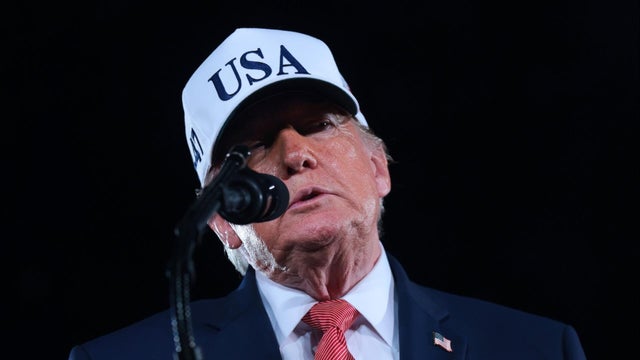
DONALD TRUMP:
00:00:13
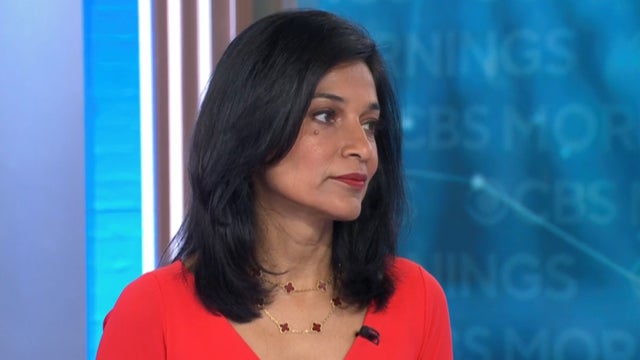
Cuba is ready to fall. Yes. Cuba looks like it's ready to fall. I don't know if they're going to hold out. Cuba is a disaster. It's run by incompetent, senile men. If I lived in Havana and I was in the government, I'd be concerned at least a little bit. Michael Bustamante is an associate professor of history who specializes in Cuban studies at the University of Miami and joins us now to discuss this. Michael, good morning. Let's get your assessment of Cuba and its stability today. Do you agree with the characterization from the administration? Good morning. Cuba is certainly in the midst of its worst economic crisis in 30 plus years. Things are bad. And by all measures, they're about to get worse as they are cut off from Venezuelan oil. But I think from there to simply conclude that kind of automatically the Cuban government is going to fall seems, to me, a little bit of a leap at this stage. There are so many moving parts to the story, both in Venezuela and on the ground in Cuba, that I think we have to wait to see how things play out.
ERROL BARNETT:
00:01:15
Those other components, I know that as far as the economy is concerned, you wonder what would be the benefit to the US of any potential takeover and how that might help the people of Cuba. Well, I think that's one of the key differences between Venezuela and Cuba from the point of view of this administration. The administration has not been shy about advertising that one of its, perhaps, primary interests in doing what they've done in Venezuela is about access to the oil industry. Cuba does not have the kind of natural resource wealth that Venezuela does to offer to the United States. So for an administration, that is rather transactional about how it approaches international affairs. I think there's still an open question as to what the willingness would be to take more dramatic steps in Cuba when the, quote-unquote, "payoff" might not be as obvious. That said, we also know that for the Secretary of State, in particular, Cuba is a priority. This goes beyond just natural resource questions. So I think we'll have to see. For me, I think how Venezuela goes, so to speak, in the next weeks and months and if that becomes messy or complicated may shape the likeliness or not of some ramping up of actions on Cuba beyond the cutoff of oil supplies. And as we've been discussing this hour, the administration is looking at options to acquire Greenland. So in your view, is it possible that this administration could repeat the Venezuela operation in Cuba? Well, here's another key difference. As far as I'm aware, there's not a standing indictment of a Cuban head of state in a US Court to provide a pretext to go in. That's not to say that other pretexts couldn't emerge. But I think the other key difference is that what reporting has suggested in the last 24 hours is that the Trump administration came to the conclusion in the Venezuelan case that the opposition not quite in a position to just simply take power. They made a sort of a cold calculation that to move forward, they're going to have to deal with remnants of the Maduro government. My open question is, who is that person, hypothetically, in the Cuban government that they think they could crack a deal with? Because if it's true that Venezuelan opposition is not in a position to take power, that's even more true, I think, for Cuban opponents to the Cuban government. And so the situation, this is a little bit like comparing apples and oranges in some ways. On the other hand, Cuba is a smaller place. And so I think that, if I can be blunt, the hubris of this administration may get the better of them in thinking that they can go in and simply do something big, which would replicate historical precedents going back to 1898. Really interesting perspective. Michael Bustamante, I'm glad we got to chat with you on this topic today. We appreciate you joining us from Miami. Thanks for the invitation.