SHANELLE KAUL:
00:00:36
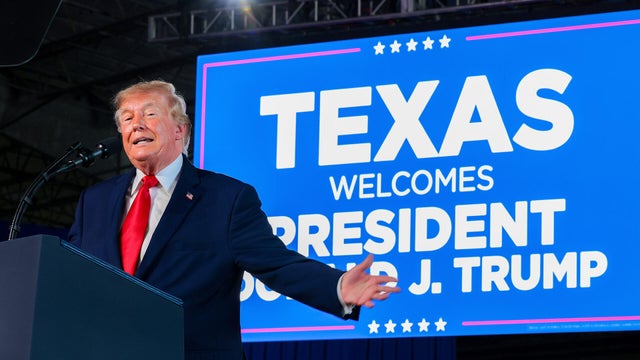
For more on this story, let's bring in CBS News White House reporter Aaron Navarro. Aaron, this is a historic achievement for the administration. What else did we learn from that cabinet meeting today? Shanelle, in addition to the president saying that the hostage release is expected next Monday or Tuesday, you also heard him name the specific Middle Eastern countries that were crucial in getting this deal over the finish line, at least the phase I agreed to. He mentioned Qatar, the United Arab Emirates, Saudi Arabia as coming together to make this deal happen, as well as Jordan, Indonesia, Egypt, where the mediators and US officials were to finalize this agreement, and Turkey, specifically noting that President Erdogan had a notable involvement in this. And when it comes to the reconstruction of Gaza-- that's something you've heard President Trump talk about in the past-- he said that it will be those Arab nations, particularly the wealthier ones, that will be involved in funding and the construction of that. You also heard a little bit from both Trump and Secretary of State Marco Rubio about what the turning points were that made this deal happen. President Trump noted the US strikes on Iran's nuclear facility, saying that if they did not do that, that would would be a, quote, "dark cloud" hanging over any peace deal agreement. And you heard Rubio cite the president's meeting with Arab leaders during the United Nations General Assembly in New York just a couple of weeks ago, as well as the president's one-on-one meeting with Israeli Prime Minister Benjamin Netanyahu, as key points in getting this deal done.
SHANELLE KAUL:
00:02:02
And Aaron, we mentioned that Trump says he expects to now visit the Middle East sometime soon. When might that happen? And what might that look like? It's a fluid plan, but CBS News is understanding from sources is that the travel would happen likely this Sunday and Monday. And the plan right now is definitely a trip to Egypt and Israel. Gaza, which is something that yesterday President Trump said he would be open to going to, has been officially ruled out again as of now. The president said he'd like to be in Egypt for a separate signing ceremony for this deal, while also noting that hostage release will happen next Monday or Tuesday. Should that line up, it would not be surprising to see President Trump there in some capacity. And one other note, President Trump said that he has been asked to speak at the Knesset, Israel's legislative body. He responded, quote, "If they would like me to, I will do it."
SHANELLE KAUL:
00:02:52
Interesting. OK. You talked, Aaron, about how we got here to this moment today. Can you tell us a bit about how this deal differs from previous deals that we've seen eventually break down? Yeah, a couple of things. One, the prior deal announced in January was sort of a joint effort between then the outgoing Biden administration and President Trump's administration. What we're seeing now is a couple months into his term, President Trump kind of reestablishing, including that trip to the Middle East, his relationships with those leaders. That has played a role in just getting the sides to the negotiation table and getting this deal done. And you've also seen the president frame this as not just a peace deal for Gaza or between Israel and Hamas, but a larger peace deal for the Middle East as a region.
SHANELLE KAUL:
00:03:38
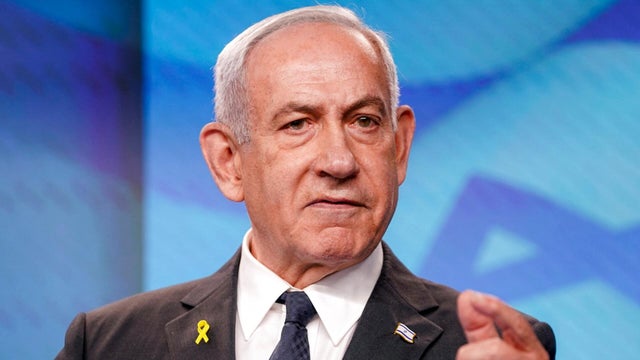
Got it. OK, Aaron Navarro, thank you. Take care. And CBS News reporter Haley Ott is in Tel Aviv with more on the logistics of this deal and how people there are responding. President Trump says he's expecting the remaining hostages held in Gaza, 48 in total, around 20 of whom are believed to still be alive, to be released on Monday or Tuesday next week. This comes as the first phase of that 20-point peace plan that the White House put out alongside Israeli Prime Minister Benjamin Netanyahu about 10 days ago has been agreed, though there are still some more difficult elements of that proposal to be hammered out, like how Hamas will disarm, whether it will agree to step back from Palestinian politics, and who will govern Gaza. But all that will come later. After Netanyahu's meeting with the cabinet and the Israeli government, a 24-hour clock will begin for Israel to retreat to an agreed upon line still within Gaza. A 72-hour period will also then begin for Hamas, during which it will be required to release all the hostages. [NON-ENGLISH SINGING] Here in Hostage Square, you can see a large crowd behind me. This is a symbolic place where people have been gathered throughout the war to be with one another and to support one another and the hostage families. For pretty much the last two years, families of the hostages and many Israelis have been protesting, demanding that their government agree to some sort of deal to bring all the hostages home and end the war in Gaza. And now, it seems like that could be happening. In Gaza, where local health officials say over 67,000 people have been killed in this war and the humanitarian crisis has reached a real breaking point, our colleagues report similar scenes of relief, that even though there's still a ways to go in terms of the next phase of this White House proposal, there's hope that this horrible chapter that's taken place over the last two years may be coming to a close. Back to you.
SHANELLE KAUL:
00:05:30
Haley Ott, thank you.