PILOT:
00:00:14
That wasn't good to watch.
AIR TRAFFIC CONTROLLER:
00:00:16
Yeah, I know. I was here. I tried to reach out to my staff. And we were dealing with an emergency earlier, and I messed up.
PILOT:
00:00:22
No, man. You did the best you could.
ERROL BARNETT:
00:00:25
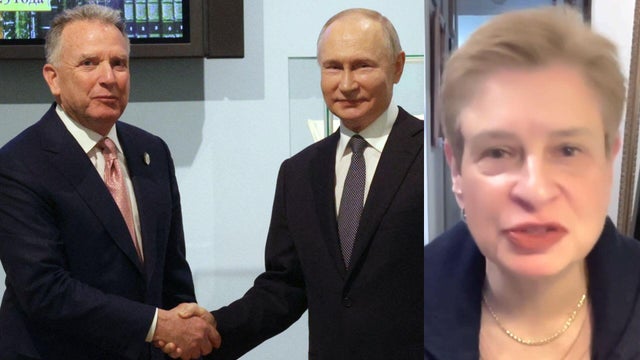
Todd Yeary is a former certified professional air traffic controller with the FAA. He joins me now from Baltimore to discuss this. Todd, good morning. The video is difficult to watch of the crash. That audio is quite tough as well. We know there were at least two controllers in the tower at the time of the incident. What do you make of all of this? Is that normal? And is that adequate for a busy airport like LaGuardia? Well, good morning to you, Errol. That's the fundamental question. What was going on at 11:30 at night? What were the staffing levels? Were staffing levels reduced because you're moving into the overnight hours? But then what added to the complexity is you already had an emergency underway with the United flight. That flight had declared emergency because of fumes in the cabin. And so the reason you had the fire truck moving across an active runway was to get to a yet unknown circumstance. How widespread was this emergency? And so you had a lot of focus on that emergency and not enough vigilance on what else was going on. And I think it's in that moment that you find the clearance of the fire truck across the active runway in front of a landing aircraft to be the fundamental issue. Was there so much of a distraction with the first emergency going on that they did not see the imminent emergency that was brewing when they cleared the fire truck across the runway?
ERROL BARNETT:
00:01:52
So you really had a number of extenuating circumstances. There was also a rain system moving through the region Sunday into Monday. So few of us know what it's like, though, to be inside those towers. You've been there. What challenges are impacting air traffic controllers every shift, no matter the extra externalities? Well, let's start with the fact that staffing is still a problem. You still, in many places, have controllers working six days, most of them working overtime. I understand LaGuardia may not be in that same situation, but what you do have is, as you approach midnight and the schedule is thinning out, you go to a reduced schedule of controllers. And so I'm not clear on how many controllers were available to help spread out the workload with an emergency while it sounds like just dealing with one aircraft, the United flight, and then the Air Canada flight. When you have an emergency, the coordination and the response is so complicated that it can raise the complexity of the control situation. And weather does not add to that scenario.
ERROL BARNETT:
00:03:00
Now, in this case, the controller was talking to the pilots and ground traffic on two different frequencies. That was also the case in the fatal DC mid-air crash. What do you make of that? Errol, you hit on something that I was focused on. Remember, the Black Hawk helicopter was on one frequency, and the regional jet was on a different frequency as it approached runway 33. What we find is that the aircraft, and the crews, and the fire truck crew cannot hear the full conversation. And because they don't hear the full conversation, information that they need to be able to process and maybe remain more vigilant is missed. And so I think that could be an underlying contributing factor because the instruction to the fire truck-- the response was not heard by the regional jet. Had it been, it may have triggered some awareness in the flight crew to pay attention to what was going on the runway just below them as they were focused on the touchdown zone, which shortly after they hit the touchdown zone, they hit the fire truck, too.
ERROL BARNETT:
00:04:06
Yeah. And air traffic controllers do a phenomenal job, and people travel safely every day. But it's these one moments where death occurs that things need to be investigated. Todd Yeary, we appreciate you joining us. Thank you very much. Thanks for having me.