Watch CBS News

Ex-DHS official on counterterrorism model

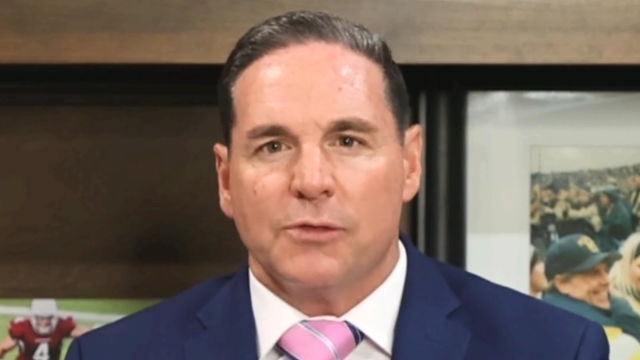
After two apparent terror attacks in the U.S. this week and rising energy prices, former CIA executive and operative Jonathan Gannon, CBS News national security contributor and Biden administration top counterterrorism official Sam Vinograd and energy policy expert and analyst Kevin Book join "Face the Nation with Margaret Brennan" to discuss.
Mar 15 (09:44)

TRANSCRIPT FOR: “FORMER DHS OFFICIAL SAYS U.S. NEEDS "A WHOLE NEW MODEL FOR COUNTERTERRORISM"”

JONNY GANNON:
00:02:13

Well, that's the right way to do it. You buy insurance when you don't need it. But right now, we need it. Sam, on the homeland, we had all these horrific incidents, including that 41-year-old man who drove a car with explosives into Michigan's largest synagogue. He was a naturalized US citizen. Brothers were members of Hezbollah, who had recently been killed in Lebanon along with their children. We don't know yet if the attacker was involved with Hezbollah. But what do you understand about the threat picture at home? Margaret, the diversity and volume of terrorist threats to this country has never been higher. We have a broad range of threat actors in play, individuals inspired and directed by countries like Iran, by foreign terrorist organizations like Hezbollah and ISIS, and individuals motivated by domestic political grievances and racial animus and more. At the same time, the internet has been a force multiplier for terrorism. Individuals have such easy access to content online that can radicalize them, and importantly, such easy access to information on tactics, techniques, and targets, which means that they can plot their attacks more quickly and make their attacks more effective. What that really means is we need a whole new model for counterterrorism in this country that includes law enforcement, but also includes members of the public. We'll be listening if there are any answers at this worldwide press briefing later this week that Senator Werner will help oversee. Jonny, on what is happening, we already had the Gaza situation having raised the global threat picture. Now around the world, Americans are being warned to be very careful. How do you understand what Sam is talking about here at home? And what about Americans overseas? Well, there's no doubt that the threats are increasing. I'm a little bit dubious that the Iranian regime right now can reach out and touch us in the homeland. Certainly, people who are still in the Gulf are vulnerable. And I think that on the back end of this, the intelligence community and our federal law enforcement are going to have to be very focused and well-resourced, given what we saw after the Soleimani strike, which was that the Iranians engaged in lethal operations around the world trying to kill American officials or former officials. So we can expect that, I think, on the back end of this. So, I mean, it's still making people really nervous. Sam, I mean, even just in New York, you had the two Pennsylvania men, two US citizens who were arrested. They were going to protest the anti-Muslim protest in New York. But they claim that they had ties to ISIS. It's not clearly directed by the state. It's not clearly directed by anyone.

JONNY GANNON:
00:04:58

Inspired. Inspired. How do you protect yourself?

SAM VINOGRAD:
00:05:01

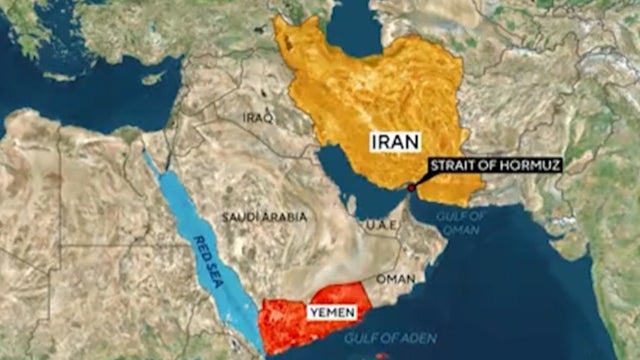
Well, what we have to think about today is not just how to enhance physical security protections that target. Certainly, the government has a role to play in helping synagogues, churches, mosques, schools, and others in putting up security barriers, training security officers, and those physical security enhancements. We also really have to double-down on information and intelligence sharing. That's a government function, but it also has to include the public. And what I mean by that is the threat landscape is so dispersed. There's so many tentacles of this that when individuals and communities see an individual that may be exhibiting signs of violence, they have to ask for help from law enforcement, from a social worker, from mental health worker, because the pathway and the path to radicalization and mobilization is just so rapid. And I do think, Jonny, that the Iranian regime has demonstrated an incredible capacity to be flexible and adaptive. They played a long game here. They have invested in propaganda and tools in this country, as well as just hiring people to do their dirty work for them to such an extent that I am concerned that they have the intent and the capability to if not direct attacks here in the homeland to inspire them. I'm with you 100% on that, Sam. Well, I'm not a spokesman for the US government. I would add, though, that our intelligence community has been very focused on that threat in recent years, as well as federal law enforcement. So, Kevin, we heard from one of the president's advisors. He's got a broad array of them. David Sacks-- he's not a national security guy. He's a tech guy. But he had an opinion, and he went public with it. And he said, the US is a much more powerful country than Iran, but they have a dead man's switch over the economic faith of the-- fate, excuse me, of the Gulf states and beyond that. There seems to be pressure to end this sooner rather than later. Is there a time frame on these projections you're looking at in terms of the pain threshold for oil and gas for Americans? Margaret, Iran's asymmetric control over the strait is a pretty powerful tool, and we're seeing that right now for all these producers who require that seaborne access to their markets. They're shutting in supply right now so that they don't overflow their own storage. What that means is that the inventories that are forward-positioned in the world are going to be exhausted. The strategic reserves that are coming to the rescue will be used, but we're looking at weeks before things start to get very tight. Already, in Asian economies, you're seeing refiners cutting their runs. You're seeing export controls so that products that are refined in those economies aren't going to global markets. We're very insulated here in the United States. We're net exporter. The world itself uses 36% less oil per dollar of real GDP than it did 25 years ago, but we're talking about 3% to 4% of the energy that supplies global consumption going offline. We're going to feel that. Was there any justification to make up for the fact that America is helping put money in Vladimir Putin's pocket by lifting these Russia sanctions? Is that going to make a dent in the oil price? I think one way to think about it, Margaret, is that both the strategic reserve drawer and the Russia sanctions relief are tools that are available to the US government right now. The price might be higher without them. But we can't quantify it, really.

JONNY GANNON:
00:08:06

It's hard to prove a negative. Is it just to show they're doing something? Well, there is a certain every person in public office tries to show responsiveness in crises like this. The problem is that as the price rises, interventions become more significant. Sometimes the best thing is to do nothing, and let the market work it out. But no one gets elected to office on that basis. Fair point. Jonny, the US intel assessments say Iran's government is not at risk of collapsing. You've been thinking about Iran for a while. What do you think of this new supreme leader who we haven't seen out in public? Well, most of Khamenei is clearly not a charming public face. What he is is a systems operator. So he was a gatekeeper for the supreme leader's office in the past. He has strong ties to the IRGC and the Basij. He knows how power actually operates, and he is effectively a symbol of continuity right now. And I think that's more important than being an actual-- in an actual managerial role. He is the message from the regime that they are still in control. And the stability of that regime. The stability of the regime and the command and control over the asymmetric capabilities that Iran has to include, for example, proxies that may seek to do Americans harm, sleeper cells in the United States, and more. So, as we do think about the new supreme leader, I'm thinking about from a homeland perspective, whether that individual has a command and control over the tools that could, in fact, harm Americans. Margaret.

MARGARET BRENNAN:
00:09:32

And these are open questions we're going to try to get answers to. Thank you to all of you. That's it for us today. Thank you for watching. Until next week. For Face the Nation, I'm Margaret Brennan.

View CBS News In
CBS News App Open
Chrome Safari Continue