Watch CBS News

Becker on "national security issue" in proposed election laws

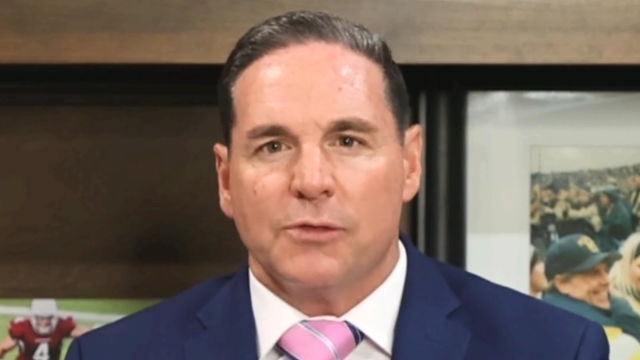
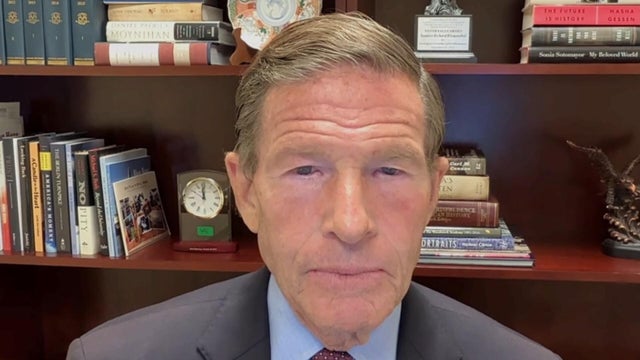
David Becker, the director and founder of the Center For Election Innovation and Research, says there are a lot of "highly partisan efforts to make it harder for some people to vote."
Jul 18, 2021 (06:00)

TRANSCRIPT FOR: “BECKER SAYS PROPOSED CHANGES TO ELECTION PROCEDURES COULD BE "NATIONAL SECURITY ISSUE"”

JOHN DICKERSON:
00:00:00

Since the November election, 17 states have enacted new laws that tighten rules around casting ballots and running elections. In an effort to keep Texas from becoming the 18th, Democrats in the state legislature staged a dramatic protest flying to Washington to block Republicans from passing a more restrictive voting law. To help us put those challenges into perspective, we're joined by David Becker, the director and founder of the Center for Election Innovation and Research. Welcome, nice to have you here, David.

DAVID BECKER:
00:00:30

Thanks-- great to be here, John.

JOHN DICKERSON:
00:00:32

There's a lot going on. So just give us the basic perspective of what's going on with all of these different voting rights efforts.

DAVID BECKER:
00:00:40

So we're seeing a lot of highly partisan efforts to make it harder for some people to vote. They do appear to be targeted in some ways, to ensure that in particular, the Republican Party right now, might be perceived to have a better chance of winning some elections. But what I'm also very concerned about are unprecedented efforts to inject toxic partisanship into the counting of ballots and the certification of election results that occur during election and after an election, where you're going to see potentially chaos from things like what we're seeing in Texas, where they're introducing efforts to allow for partisan pollwatchers to roam free within the polling place, interfering with the process, where we're seeing efforts to criminalize activities by professional election administrators who are trying to make it easier and more efficient and more secure for elections to be run. We've never really seen that before, and it could be potentially a national security issue.

JOHN DICKERSON:
00:01:34

So I'll get to the national security issue in a second. But essentially, do we have two baskets of concern here? One is limits and challenges to just getting to the polling place and the right to vote. And then the second is what you do after those votes are cast and who gets to oversee them and who gets to question them and that kind of thing. Is those are the two basic categories?

DAVID BECKER:
00:01:51

I think that's basically right. And it's important to note that these are all being based on a complete lie, that the election somehow some had some irregularities. Were now well over eight months past the election. The losing candidate hasn't brought forth any evidence that's been considered by any court or anywhere else that's been valid that the election was not secure. And in fact this election was, as the attorney general, as Attorney General Barr said, as the DHS said under Trump, as the FBI said, and as many others said, this was the most secure and transparent and verified election we've ever held in American history.

JOHN DICKERSON:
00:02:23

Yeah, actually, just reset the table here. How many actual people, humans, have been charged or anything with fraud in 2020, in the whole country?

DAVID BECKER:
00:02:33

I mean, very few-- it's a handful. I believe it's under 10 at this point in time. The total number of potential fraud cases that we might see in an election of this size-- 160 million people voted in November, which is amazing. But the total number of fraud cases, we might see is going to be measured in the dozens out of 160 million, not anywhere near anything that could have affected the outcome.

JOHN DICKERSON:
00:02:53

So back to the two categories you were talking about-- the problems of voting and then the problems after the vote is cast-- Republican leader, Senate Republican Leader Mitch McConnell said these are common sense measures out in the country. They're just trying to unwind the measures that were brought in Under the age of COVID and sort of restore things to the way it was before. Is that an accurate characterization of the scope of things that are being suggested?

DAVID BECKER:
00:03:16

I don't think it's entirely accurate. I think what we're seeing-- in light, it's always a good idea after an election to look at what actually worked based on facts, and maybe consider ways to improve that. And there are ways to increase integrity while also increasing access. What we're seeing here are things like in Georgia for instance, where they ran not only the most successful highest turnout election they've ever held, but they actually ran two of them within a two-month period of time. But they did this with paper ballots for the first time in two decades. And they were able to count every one of those presidential ballots three times, three different ways, once entirely by hand. We should be applauding those efforts. I think another thing that's really important here is when we talk about election integrity, it is actually good for election integrity when we have more people voting in different ways over a period of time. We don't want to have a single point of failure on election day, where if something goes wrong, we can't fix it. If we learn of a problem at 1:00 PM on election day, it's very hard to fix by the time the polls close. But if we have people voting by mail, people voting early in person, and people voting on election day, as we saw in most states in 2020, we can actually find problems early and fix them so they don't affect the outcome of the election. That's a very good integrity measure.

JOHN DICKERSON:
00:04:26

So if those ways of voting are limited, then does that mean there's the opportunity for more chaos? Is this what you were talking about in terms of national security? There's more opportunity for chaos. And America's enemies love opportunities for chaos.

DAVID BECKER:
00:04:38

That's right. Imagine now, we're in a highly partisan environment. We're concentrating more voting on election day in polling places where there might be long lines, where partisan poll watchers have free reign to engage in chaos. And then we are now injecting partisanship into the counting and certification process, where partisans might be tempted to overturn the will of the people. And they are somewhat empowered to do that by their legislators. This is something-- this could be a void that our adversaries see and try to exploit in some ways.

JOHN DICKERSON:
00:05:10

So in about the last 30 seconds we have, tell me about what your sense is, the prospects of abilities to push back against some of these measures that you find alarming that Democrats certainly find alarming, either in Congress or at the local level.

DAVID BECKER:
00:05:23

Yeah, we don't have many ways to fight back at this point. We've gone 7 months into the year. Clearly one thing we need to do is everyone needs to stand up and say, this election was valid. It was secure, and applaud the election officials who ran it. But secondly, maybe Congress does have a small window here, where Republicans and Democrats of goodwill can come together on some kind of bill that actually could establish a foundation for democracy, that could get 50 votes. So far we haven't seen an election bill that could get 50 votes, and so the filibuster is not necessarily relevant as of yet.

JOHN DICKERSON:
00:05:55

All right, I'm going to have to cut you off. We're out of time, David, Thanks so much. And we'll be right back.

View CBS News In
CBS News App Open
Chrome Safari Continue