Watch CBS News

7/23: CBS Morning News

President Trump accuses former President Obama of treason; General Motors' profit shrinks $1.1 billion after taking tariff hit.
Jul 23, 2025 (41:19)

TRANSCRIPT FOR: “7/23: CBS MORNING NEWS”

ERROL BARNETT:
00:00:28

And the House adjourns early with no vote on the Epstein files. And that's why you see so many political games being played because Republicans know they're in trouble.

ERROL BARNETT:
00:00:40

The man who pleaded guilty to killing four University of Idaho students will be sentenced today. I don't want a gruesome crime scene photos or blood or gore, anything like that, but I need to know the facts of what-- how many times was my daughter stabbed.

ERROL BARNETT:
00:00:55

And we're getting a look at the conditions of holding cells inside a New York City ICE center. LILIA LUCIANO (VOICEOVER): Men seen sleeping on the floor on thin thermal blankets with reports the lights are kept on around the clock, and nearly 30 people sharing a single toilet.

ERROL BARNETT:
00:01:09

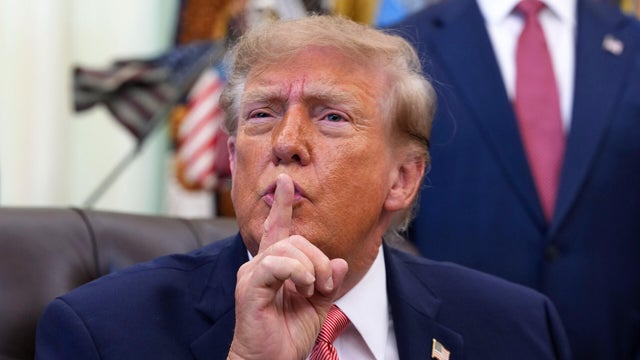
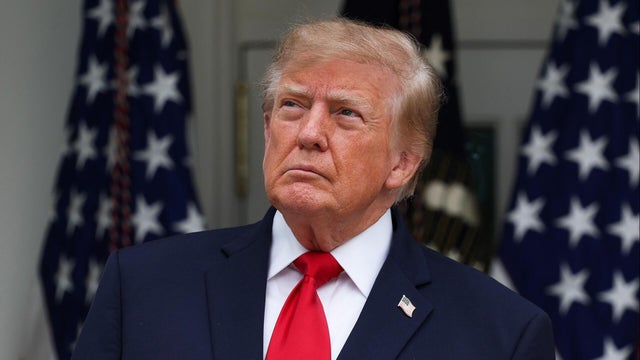
Plus, the Trump administration is set to make a major announcement on AI today. What we're learning and the impact the moves could have. Your CBS Mornings Newsstarts right now. [THEME MUSIC] We begin with the ongoing controversy over the Jeffrey Epstein files. When asked about the convicted sex offender, President Trump continues to divert attention to other topics. He took to social media, writing, quote, "We had the greatest six months of any president in the history of our country, and all the fake news wants to talk about is the Jeffrey Epstein hoax," end quote. CBS News correspondent Natalie Brand is at the White House with more on what's really happening. Natalie, why is President Trump now making allegations against former President Barack Obama? Good morning, Errol. Well, this has been something that the president has fixated on for years. And it took center stage again yesterday, as CBS News's own Ed O'Keefe was in the Oval Office trying to ask him about the latest developments with the Epstein case, the DOJ's new request to speak to Epstein associate and convicted sex trafficker Ghislaine Maxwell. That's when President Trump lashed out against the Obama administration and past officials, raising a new memo written by his DNI, Tulsi Gabbard, which basically alleges that the Obama administration tried to manipulate intelligence and politicize it regarding Russia's attempts to interfere in the 2016 election. There was an investigation back then. She's trying to call into question and basically argue that that intelligence back then was aimed at undermining the Trump presidency. Well, yesterday in the Oval Office, President Trump even suggested that the DOJ should go after former President Obama and past administration officials. Take a listen. It's a sort of a witch hunt, just a continuation of the witch hunt. The witch hunt that you should be talking about is they caught President Obama absolutely cold. It's there. He's guilty. This was treason. This was every word you can think of. They tried to steal the election. Now, former President Obama's office did issue a statement saying these bizarre allegations are ridiculous and a weak attempt at distraction. It goes on to note, nothing in the document issued last week-- referencing Gabbard's document-- undercuts the widely accepted conclusion that Russia worked to influence the 2016 presidential election, but did not successfully manipulate any votes. And Errol, those were the findings of a series of investigations, that there were attempts to interfere or meddle, but that no votes, no hackers, actually changed votes. That was the finding of bipartisan congressional investigations as well, including one led by then-Senator Marco Rubio on the Senate Intelligence Committee.

ERROL BARNETT:
00:04:26

A very important fact to remind everyone. Natalie, thank you. Lawmakers in the House are starting their summer break a day early, with final votes taking place today. The move by Speaker Mike Johnson is viewed by some as an effort to block any votes on releasing the Epstein files. He says he wants to give the White House space to release information on its own. The chamber was scheduled to be in session through tomorrow. Ohio Democratic Congresswoman Joyce Beatty discussed the decision on The Takeoutwith Major Garrett last night. Well, that's because he doesn't want Democrats to be able to go back to their districts and share the information. And I wouldn't be surprised if we come back after the recess, and Speaker Johnson has another answer. We know that he can't govern. We know that he puts bills on the floor, and he has to hold the vote open for historical record amounts of time so he can either wake up people who were asleep or give Republican members something to change their vote. It's a joke. It's embarrassing to the House floor. It's embarrassing to the Congress and the country.

ERROL BARNETT:
00:05:37

Yesterday, the House Oversight Committee approved a motion to issue a subpoena compelling Ghislaine Maxwell to appear for a deposition. The motion was introduced by Republican Congressman Tim Burchett. President Trump is now touting a massive trade deal with Japan, as well as with the Philippines and Indonesia. The deal calls for 15% tariffs on imports from Japan. Trump says Japan will also invest $550 billion in the US and open its country to American cars, trucks, and rice. Tariff rates for both the Philippines and Indonesia will be 19%, as you see on your screens there. The Philippines will go open market with the US. And Indonesia will drop its tariff rate to 0 for 99% of its trade with the US. President Trump is set to unveil his administration's AI strategies today that will reportedly work to the benefit of tech companies and investors. The WashingtonPostis reporting Mr. Trump will unveil three executive orders to boost the technology in the US. The AI action plan will reportedly be a break from Biden administration policies and remove many restrictions. Later this hour, I'll speak with the AI correspondent for Puck News about what this action plan could mean for the US. [MUSIC PLAYING] All right, a New York man indicted, accused of leaving homemade bombs at multiple sites around New York City. Investigators say Michael Gann built these devices with chemicals he ordered online, stored them on the roofs of two apartment buildings, and threw one onto a subway track. None of those devices exploded. Gann was arrested June 5 and now faces several charges, including attempted destruction of property by means of explosives. So far, there's no motive for this alleged bombmaking. Turning now to developments out of Ukraine, the country is seeing its first major anti-government demonstrations since the start of Russia's full-scale invasion more than three years ago. Now, these protests started after lawmakers in Kyiv approved a bill that critics say weakens the independence of Ukraine's anti-corruption agencies. For more on this, let's speak now with CBS News foreign correspondent Ramy Inocencio. Ramy, what more do we know about these amendments and this visceral reaction in Ukraine? Errol, yes. Good morning. Absolutely visceral here. Protests of outrage that we're seeing have popped up across Ukraine, from Kyiv, the capital, to Lviv in the west, Dnipro in the east, and Odesa in the south. Thousands of people have been demanding that Volodymyr Zelenskyy veto that law. But now we know that he did, in fact, sign it. He signed it quietly last night and after it had been fast-tracked, in fact, through parliament, the Rada. Now, this means that Ukraine's equivalent of its attorney general, they call it, prosecutor, has more control over not one, but two anti-corruption agencies. And these really are agencies-- you got to understand, are historically fiercely independent and regardless of political party. For example, just back in April, there was one former politician from Zelenskyy's administration who was charged with money laundering and also with accepting a bribe, excuse me. Some critics allege that this bill, though, is political retribution. The EU is also watching. The bloc's commissioner, who's in charge of the expansion of this bloc-- and reminder, Ukraine does want to join the EU, said that it was a serious step back. They said that it's important because fighting corruption is crucial for Ukraine to join that bloc. Well, we're expecting Ukraine and Russia to hold another round of peace talks in Turkey this week. Where does all that stand? Right. Don't hold your breath, apparently, Errol. Volodymyr Zelenskyy on Monday said that talks were scheduled for today. We are still waiting for confirmation on whether those talks will actually happen. Yesterday, the Kremlin did pour cold water on any expectations if those talks happen. That came from Dmitry Peskov. He's a spokesperson, saying that Moscow did not expect-- his words-- "a miraculous breakthrough," and that the two sides were basically opposed to each other. We know Russia wants Ukraine to give up territory that Russia controls and wants Ukraine to give up its ambitions for the EU and for NATO, as we just talked about. And it also wants Ukraine to downsize its military. But we're seeing that if there's any movement, it might be in the area of prisoner or hostage swaps. Over the past two months, for example, both sides did swap more than 1,000 prisoners. So we might see, potentially, some movement if talks do go ahead. All right. We'll watch that closely. Ramy, thank you. President Trump's Middle East envoy, Steve Witkoff, is scheduled to travel to Europe this week. He will discuss the ongoing war in Gaza, according to a US official. A State Department spokesperson, Tammy Bruce, suggested that Witkoff could soon go to the Middle East, but didn't provide specifics on that. And this comes as indirect ceasefire negotiations between Israel and Hamas continue. This morning, the man who was the subject of a violent arrest in Jacksonville, Florida, which has gone viral online, he will speak out. Video of the incident has been viewed millions of times across social media. You see it here. It began as a routine traffic stop and ended with the driver being hit several times. And you see him there being struck in the face. The sheriff's department says the video doesn't tell the whole story. CBS News correspondent Nicole Valdes has more. OFFICER 1: Can you call your supervisor? OFFICER 2: All right, go for it. [GLASS SHATTERING] Exit the vehicle now! Exit the vehicle! Show me your hands. Here. NICOLE VALDES (VOICEOVER): The Jacksonville Sheriff's Office is under pressure after this routine traffic stop last February turned violent. The driver, William McNeil, Jr., filmed the incident on his phone before getting pulled from his car and charged with resisting arrest. He says he suffered a concussion, a chipped tooth, and needed nine stitches. But the sheriff's office says the video doesn't tell the whole story and released body cam footage to defend their actions. One piece of evidence considered in a vacuum without any context can lead to skewed conclusions. Yes, sir? NICOLE VALDES (VOICEOVER): Police say McNeil was initially pulled over for not having his headlights on in rainy conditions and for not wearing a seat belt. When asked for his license and registration, he refused and locked the door.

OFFICER:
00:12:14

Step out of the vehicle. No.

OFFICER:
00:12:16

Step out of the vehicle. NICOLE VALDES (VOICEOVER): He was asked seven times to exit the vehicle, but never did.

OFFICER:
00:12:23

Open the door and exit. You are under arrest for resisting. NICOLE VALDES (VOICEOVER): That's when officers broke the window.

TK WATERS:
00:12:29

Yes, there absolutely was force used by the arresting officers. And yes, that force is ugly. And just because force is ugly does not mean it's unlawful or contrary to policy. NICOLE VALDES (VOICEOVER): Rodney Harrison is the former commissioner for the Suffolk County Police Department in New York. It was a very, very difficult and dangerous situation because the person was not complying. The concern that I do have is the punch to the face, once the individual had his hands up and didn't seem to be at any type of threat to the officer. NICOLE VALDES (VOICEOVER): The officer involved is on administrative leave pending an internal investigation. But the state's attorney said no criminal charges would be filed. Nicole Valdes, CBS News. We're following the highly anticipated sentencing of a man who stabbed four Idaho University students to death. Later today, Bryan Kohberger and the families of the victims will get the chance to speak at the hearing. We'll have a preview for you. Also, new video gives us a glimpse of what's happening inside an ICE facility here in New York City. Detainees there say they're being treated like animals, a claim DHS denies. [MUSIC PLAYING] Welcome back. We have an update for you in the tragic death of a nine-year-old girl who was reported missing in upstate New York over the weekend. Melina Frattolin's cause of death has now been ruled a homicide. State police say an autopsy determined she died by asphyxia due to drowning. Melina's father, who reported her missing Saturday night, has now been charged with second-degree murder and concealment of a corpse. He has pleaded not guilty. A sentencing hearing today for the man who admitted to killing four University of Idaho students back in 2022. Bryan Kohberger pleaded guilty earlier this month to the murders as part of a plea deal. The agreement spared him the death penalty. He now faces life in prison without the possibility of parole. The 30-year-old was arrested six weeks after the victims were stabbed to death in an off-campus home. The family of the victims, Kaylee Goncalves, are still searching for answers. Our Gayle King spoke to them last week. By hiding the truth, we're protecting our killers. We have to show the ugliness of what this person did. We're writing our victims' impact statements, and we don't even know what the impact is because they've hid the impact from all of us. I don't want gruesome crime scene photos or blood or gore or anything like that, but I need to know the facts of what-- how many times was my daughter stabbed? Was she choked? What happened? CBS News legal contributor Caroline Polisi joins me now to speak about this. Caroline, good morning to you. Help us understand what the family means there when they say they're not happy with this plea deal arrangement. What will happen today? Might they ever get the specifics they're asking for? Yeah, it's a good question, Errol. It is definitely going to be a difficult day, an emotional day. The majority will be spent on those victim impact statements, the family reading just how this horrific crime affected their lives. We may hear-- remember, there were two surviving roommates in the house that evening. We may hear from them, friends and family. But one thing, as you noted there, the family is divided. Some of the family members are in agreement that this was the right move for prosecutors to grant this plea agreement, take the death penalty off the table, get a quick conviction, life without the possibility of parole. But then others want answers. And prosecutors alluded to potentially revealing more information about the facts of this case. Remember, there has been a gag order in this case for the past two years. While Kohberger has maintained his innocence, the public has very little information, although I'm not sure that those family members are going to get what they want, which is a motive. Prosecutors do not need to prove or show a motive, but we may get some more answers. I know specifically, the Goncalves family wants to know where the murder weapon is. Remember, that knife sheath was found that evening. But the murder weapon has never been discovered. So I'm not hopeful that they will get the answers that they want. Nonetheless, there will be some finality in this case today.

ERROL BARNETT:
00:16:57

Right. And I think what you said there about prosecutors didn't need to prove a motive, so they may not have that information to share. Hopefully, none of our viewers knows what it's like to have a relative murdered. They're going through so much trauma and trying to understand why the man did this. What might they be able to glean from the facts that might come out today? Yeah. As I said, I'm not optimistic. Remember, one of the motions that Kohberger's lawyers made in order to try to get the death penalty off the table was his recently diagnosed autism spectrum disorder, things like-- we've heard that monotone voice, these antisocial behaviors. There are a lot of conspiracy theories swirling around there regarding the motive. I don't want to say any of them because none of them have been confirmed. But again, the closure that these families are looking for might not happen today. Typically, when you go into a sentencing, you don't know what the sentence will be because of this plea deal that is not in question. He's going to get four consecutive life sentences behind bars without the possibility of parole, additionally, a 10-year maximum sentence for that burglary charge. This has been just torture for the families for the past two years. And the state made the decision, a calculated decision, to give him that plea deal, they say, in order to really end that trauma for the families, that they won't have to go through this torture of a trial and hear those gruesome details. So people have different opinions about that. But today, nonetheless, we will have some finality. Heartbreaking for everyone involved and connected. Caroline, thank you so much. Appreciate your insight. Thanks, Errol. Video has emerged from an ICE detention center in New York City highlighting poor conditions migrants face there. Many detainees say they've had limited access to basics, like food. Our Lilia Luciano spoke to a woman whose husband was held there. LILIA LUCIANO (VOICEOVER): Men seen sleeping on the floor on thin thermal blankets with reports the lights are kept on around the clock, and nearly 30 people sharing a single toilet. Video released today by the New York Immigration Coalition gives a first look inside some of the holding cells of the city's federal immigration offices.

MAN:
00:19:12

[SPEAKING SPANISH] LILIA LUCIANO (VOICEOVER): A man is heard saying, "Look how they have us, like dogs in here." He said it was very bad. They treated them like animals. LILIA LUCIANO (VOICEOVER): Samara's husband, Joan-Paul Alcivar, was held at that facility for several days last month. She said he was fed just a sandwich and a bottle of water a day. Then he was sent to a detention center in Louisiana. He was a whistleblower. So it wouldn't be safe for him to go back? No, not at all. LILIA LUCIANO (VOICEOVER): She told us he was fleeing persecution in Ecuador and was detained by ICE when he showed up to an asylum hearing. He did not deserve any of this. He made sure he followed all the laws. He's never been arrested. He's never had any criminal record. LILIA LUCIANO (VOICEOVER): Samara is an American citizen. The two were married in May. And when he was arrested, she was pregnant. That kills a person, when the love of your life is just ripped from your hands. It was kind of very traumatic for me. You blame the miscarriage on that trauma. Yes, I do. LILIA LUCIANO (VOICEOVER): Now, she also fears for his life, she says, being denied access to life-saving medication for a liver condition. Do you fear his continued detention or his deportation more? If I was to choose one, being in a detention center. That's scarier-- Yes. --than him being deported. Because he's suffering in there. He's in so much pain. If they continue what they're doing and not giving him what he needs, he's going to die in there. LILIA LUCIANO (VOICEOVER): Lilia Luciano, CBS News.

ERROL BARNETT:
00:20:43

Now, CBS News has reached out to DHS, who told us detainees at the New York facility were held there briefly and that, quote, "Any claim that there is overcrowding or subprime conditions at ICE facilities are categorically false," end quote. And New York Democratic Congressman Adriano Espaillat told our Major Garrett on TheTakeout yesterday that legal action is being considered over the treatment of these detainees. Listen. I hate to think that the law allows for people to sleep on the floor, to have 30 men in one area with one toilet, no showers. And there are some-- some of them, allegedly, for over a week. So any time anybody's held for over 24 hours, that automatically makes it a detention center. And as such, we should have not only access to it, but they should be running it in accordance to the-- in accordance to the law.

ERROL BARNETT:
00:21:39

And of course, you can stream The Takeoutwith MajorGarrettweekdays at 5:00 PM Eastern, right here on CBS News 24/7. CBS News has learned a 55-year-old man from Vietnam died while in ICE custody over the weekend. This marks the 14th detainee death reported by the agency in the 2025 fiscal year. ICE reported 12 detainee deaths in the previous fiscal year. Internal government data says there are more than 57,000 detainees facing deportation in ICE detention centers across the US. And the Department of Justice says it wants to interview Jeffrey Epstein's convicted accomplice, Ghislaine Maxwell. Next, what this means for the investigation and why President Trump claims he didn't know about the DOJ's plan. The White House taking action on AI today, with the president reportedly ready to sign orders to boost the technology. Why this plan is already stirring up debate. [THEME MUSIC] Good morning, everyone, and a warm welcome back. I'm Errol Barnett here in the middle of the week for you with today's big stories. Ukraine is expected to hold another round of peace talks with Russia today. Earlier, Ukraine faced its first major anti-government protest since the start of the war. President Zelenskyy signed a bill into law that gives the country's prosecutor general control over Ukraine's anti-corruption agencies. And critics say it takes away the agency's independence. The US is bringing its push for a ceasefire between Israel and Hamas to Europe this week. Special Envoy Steve Witkoff will meet with leaders there. A State Department spokesperson suggested Witkoff could soon travel to the Middle East, but didn't provide details about that. And the president says he's reached trade deals with several Asian nations. He posted that Japan will invest $550 billion in the US and pay 15% tariffs on goods that the US imports from Japan. He also announced 19% tariff rates for the Philippines and Indonesia. Well, Speaker Mike Johnson is adjourning the House early following pressure from both sides of the aisle to vote on a resolution to release the Epstein files. President Trump is trying to take attention away from that controversy. He posted this on social media yesterday saying, quote, "We had the greatest six months of any president." He also said all the media wants to talk about is Epstein. CBS News Senior White House correspondent Weijia Jiang joins us now with more on all of this. Good morning to you, Weijia. What is the Trump administration's strategy, I guess, other than deflection, for handling this public desire for the Epstein files? Well, Errol, it's not just from the public, but also from members of the president's own party. That pressure continues to mount for the administration to release all information related to Jeffrey Epstein. And so the White House is trying to signal that they are making moves to do that. The president last week ordered the unsealing of grand jury testimony and documents related to that. And then, just yesterday, we learned that the Department of Justice plans to speak to Ghislaine Maxwell, who, of course, is the convicted co-conspirator and former girlfriend of Jeffrey Epstein, who is serving 20 years in prison. Our Ed O'Keefe, our colleague, who also covers the White House, of course, asked President Trump if he supported that move. Take a listen.

DONALD TRUMP:
00:25:12

I don't know anything about it. They're going to what? Your deputy attorney general is-- reached out to Ghislaine Maxwell's attorney, asking for a new interview. I don't know about that. But I think it's something that would be-- sounds appropriate to do, yeah. But the issue with both of these moves, Errol, this one to start, is that the deputy AG is Todd Blanche. And that is the president's former personal attorney who represented him in the so-called "hush money" trial. So there are already questions about how that could impact an interview with Maxwell. Will he be asking the tough questions? Will he be trying to shift the interview into a different direction if he doesn't like what he hears? And then as far as the grand jury testimony, that is very limited in what information it has, which is why there continue to be calls for them to just rip the Band-Aid off and release all of the documents, Errol, which, the White House says, is up to the attorney general. And as we've seen, Donald Trump has been pictured with Epstein, spoke about him often for decades. And we just saw some images of Trump and Maxwell also. So certainly questions there. Weijia, thank you very much. You're welcome. Now, the White House is poised to release more details on its artificial intelligence strategy. Back in January, President Trump ordered an AI action plan to be released by today. And Trump is set to speak at an AI summit in Washington at an event called Winning the AI Race. It's being hosted by the All-In Podcast, which his AI and crypto czar David Sacks co-hosts. Ian Krietzberg is here. He is the newly appointed AI correspondent for Puck News and can tell us what to expect and what to look out for. Congratulations, by the way, Ian. Thank you. Fancy new job. I'm glad that you have that, taking all your insight to the Puck newsletters. So which nation leads the way in AI? Is it the US? Is it China? And how can the US really do something to get to the forefront? This is a very good question. It's interesting because it's very unclear. There's a lot in this industry that's very vague and hard to determine. And so you have benchmarks, which has been the leading way that the industry has determined the capability of the models that we're talking about. The problem is there's increasing studies and research that these benchmarks don't really equate to real-world performance. And so as it comes to benchmarks, it seems like there's about parity in terms of model capability. So models made by Chinese developers are about as capable as models made by Western developers. In terms of who's ahead in this race, there's a lot of terms and definitions in this field that are not well-defined. And when we talk about the race and winning the race, it's unclear what people are referring to there.

ERROL BARNETT:
00:28:07

Right. And each side wants to make it seem as if they are winning the race. I want to ask you about what Trump is saying, which is that he wants to loosen regulations around AI. What does that mean? And is that a good thing? [CHUCKLES] I would say it's not a good thing. But yes, he wants to loosen regulations. That's been his standpoint from the minute he stepped in. One of the first things he did was rescind Biden's executive order on AI, which was all about balancing safety and civil rights with pushing innovation in the field. Trump comes in, and he launches an executive order about removing barriers to American leadership in AI. So there's immediately a language shift. And the meat of that executive order, which came out in January, was calling for this action plan that is supposed to come out today. Based on early previews and drafts that are going around of what this action plan might look like, deregulation definitely seems to be a core of it. And the way that it'll shake out looks like it's going to be in a couple of different categories. One of them is a streamlining of permitting for data centers. So all these AI models need these massive, really deeply energy-hungry data centers to run. And the AI companies want more of them, and they want them faster. And so there's an expectation that we'll see an easing of the permitting process so they can get those data centers going. And with that, there's a general rule of thumb of, we're going to pull back on regulation. Tied to that component of one of these pillars is an expectation that we might see a prohibition of federal AI funding to states that have overly restrictive AI policy. We're just out of time, but that's really important for us to watch closely. And I want to encourage viewers to search for your work online-- Appreciate it. --not the AI summary. Read the articles. Ian Krietzberg, thanks so much for coming in. Thank you.

ERROL BARNETT:
00:30:11

We'll watch this closely for sure. [MUSIC PLAYING] Prosecutors have indicted a man accused of leaving homemade bombs around New York City. CBS News New York's Elijah Westbrook is at the Williamsburg Bridge, which appears to be one of the alleged targets. Good morning. Well, certainly, some disturbing details surrounding this case here. I can tell you, according to federal prosecutors, they're alleging that 55-year-old Michael Gann had created at least seven IEDs. They stand for Improvised Explosive Devices, and that he allegedly threw them off of places like the Williamsburg Bridge, you see there behind me, down into the East River and onto the FDR Drive. As you mentioned, he's now facing several charges. There, on your screen, you can see what they include-- unlawful manufacture of a destructive device, unlawful possession of a destructive device, and transportation of explosive materials. Now, here are images of one of the devices Gann is accused of making. Prosecutors claim that he set one of them off on June 5, near the East River and the FDR Drive. The explosion apparently frightened Gann, who then said he started to consider getting rid of them, either by hurling them into the river or by handing them over to the FDNY, according to the complaint. We're also learning he allegedly threw three devices from the Manhattan side of the Williamsburg Bridge. Two of them landed in the water, and one landed on active subway tracks. Authorities say they found another device in Gann's bag, and one was in his pocket. The charging documents reveal that the suspect stored these explosives on the rooftops of Manhattan apartment buildings in Soho. And it was there where investigators found four shotgun shells, which he intended to combine with the IEDs and 30 grams of explosive powder. Mind you, that's 600 times the legal limit for consumer fireworks. Authorities say Gann has 30 prior arrests, including 28 convictions. I do want to mention that CBS News has reached out to his attorneys for comment, and they are waiting back to learn more. That's the latest at this time. From Williamsburg, Brooklyn, Elijah Westbrook, CBS News, New York.

ERROL BARNETT:
00:32:19

All right, Elijah Westbrook, thank you. A heat dome has more than 88 million Americans trapped in extreme temperatures this week. Maybe you're feeling this already. And this is slowly moving east. Severe storms are on deck for the Midwest and Great Lakes once again. Damaging winds and tornadoes are possible through the evening. For more on your forecast, let's jump to meteorologist Tony Sadiku with CBS News, New York. Good morning, Tony. Good morning, Errol. So we're still tracking that persistent heat dome bearing down in the middle of the country. In the northern periphery of that, the pattern has been active. And it continues again today across the Northern Plains and parts of the Midwest, where we could see some flooding, downpours, and storms capable of gusty winds and hail. Tornado threat is not zero, but it's pretty low, and the focus anywhere from Denver to Michigan. Level 2 risk from, say, Sioux Falls to Sioux City, Iowa, the Twin Cities, into northern Wisconsin and the UP of Michigan. We'll have to watch for that later this afternoon and evening. Remember, there's plenty of heat and instability for these storms to take advantage of ahead of a cold front. I'll tell you, though, you would not mind a cold front from Minnesota to Mississippi, as the heat continues to build. Heat alerts for many of those places, Memphis all the way down to New Orleans. Triple-digit feels like temperatures. Just look at this, 90s right through the corridor, the middle of the country. Kansas City, 92, will feel like about 101. That heat continues to shift in the days ahead. Make sure you are staying out of the sun, staying hydrated the best you can. Eventually, up and down the East Coast, including New York City, could see triple-digit heat, Errol, by Friday.

ERROL BARNETT:
00:33:56

All right, Tony, thanks for that. President Trump is calling for an end to cashless bail. Later this hour, we'll break down the impacts of bail reform and the difficult task of reducing inequity in the judicial system. [THEME MUSIC] Welcome back. This week, President Trump called for an end to cashless bail in a social media post. He said, in part, quote, "Crime in American cities started to significantly rise when they went to cashless bail. It is a complete disaster and must be ended immediately," end quote. Now, to be clear, studies have not found a measurable correlation between cashless bail and crime rates. But what exactly is cashless bail? Well, the traditional cash bail system requires a defendant to pay a specific dollar amount to be released from jail while awaiting trial. Cashless bail replaces that, with the defendant simply promising the court to return without a financial payment and sometimes with pre-trial monitoring. Only one state, Illinois, has completely eliminated cash bail. New Jersey and New Mexico, plus Washington, DC, only allow it in very limited circumstances. Eight other states, along with some counties and cities, including Los Angeles, have reforms in place to limit its use. In New Mexico, once someone is charged with a crime, the court will actually use a public safety assessment tool to create a score. That measures how likely someone is to appear for their court date and/or commit a crime before then. A judge then uses that score to decide on conditions to impose before a trial, like electronic monitoring. Think of those ankle monitors. If prosecutors want a person facing a felony charge to be detained, they must argue for that in a separate court hearing. Otherwise, a person is released. Now, bail reform advocates, they argue that cash bail unfairly puts people behind bars simply for their inability to pay. For example, here in New York City, the average cash bail in 2021 was about $38,000-- this is according to the city's comptroller-- while the median income for a New York City resident that same year was about $2,000 less than that. And data from places that reduced cash bail have not shown an increase in recidivism or people committing crimes again. A study of 33 cities by researchers at the Brennan Center found no statistically significant relationship between bail reform and crime trends. Still, it's a real patchwork out there. Some jurisdictions have rolled back or added new restrictions to their bail reform efforts. For example, New York has increased the types of crimes that are eligible for cash bail and pretrial detention three times since the original 2020 law went into effect. Now, President Trump's tariffs are beginning to take a toll on US automakers, with GM and Stellantis both reporting billions of dollars in losses. Next, we'll discuss how future levies could affect this industry long-term. [THEME MUSIC] A showdown between the executive and judicial branch. Federal judges in New Jersey removed President Trump's pick for interim US attorney and instead installed her top assistant. Trump's former personal attorney, Alina Habba, had been serving in an interim capacity since March. Her term was set to expire this week. The state's district judges voted to replace her, instead appointing top assistant and longtime prosecutor Desiree Leigh Grace. But hours later, Attorney General Pam Bondi said the Justice Department had removed Grace, accusing the, quote, "rogue judges" of threatening the president's Article II powers. [MUSIC PLAYING] General Motors is the latest carmaker to feel the pain of President Trump's tariffs. The company says it lost $1.1 billion from its bottom line this past quarter. And this comes as the latest CBS News polls show 60% of Americans oppose new US tariffs, and 61% think the Trump administration is focusing on them too much. Laila Maidan is a reporter for MarketWatch. She's actually been here twice in a couple of weeks, so she's officially a friend of the show. And she joins us now to talk about all this. Good morning, Laila. Great to have you back. Welcome back. Stellantis is also reporting a massive loss-- let's see-- $2.7 billion. And they're citing tariffs as a major factor into that. So how significant of a loss amount is this for these US automakers? Well, it's significant right now. We're getting the sense that these automakers are really hoping that this is temporary. And the reason why I say that is because so far, they haven't passed on these costs to the consumer. What they've done a little bit is halted production, both GM and Stellantis, to try to avoid taking on more tariff costs. So that tells us that they're in a wait-and-see mode. But it's quite substantial. I mean, Stellantis imports 40% of its vehicles into the US. They're reporting about $350 million was an impact directly from tariffs. Part of that was the actual tariff costs. But then there were losses from production halts. Now, Stellantis is expecting that number to double in the second part of the year. And GM, also, they're expecting about a loss of maybe $5 billion for the rest of the year. So that $1.1 billion for GM is small in comparison to the $5 billion top line that they're projecting as well. But overall, industry data is telling us that general outlook for the industry is that no costs have been passed on to consumers just yet. They've been absorbed by the profit margins of these vehicle companies. But again, we don't know how long they're going to be able to take that on. And how sustainable is that, I wonder? I want to quickly ask you about this trade deal with Japan the president has announced. It will open its market to US-made trucks and cars. Is that relevant? Do Japanese folks want American-made vehicles? I don't know. Possibly. But what it does do, though, in the US market, it creates an unfair competition. So automakers-- Japanese automakers will have less lower tariffs, for example, than other automakers, like GM and Stellantis, for example. The deal with Japan is a 15% reciprocal tariff. And so that is as opposed to 25% that we're seeing from Canada and Mexico, which, if there's not a deal struck by August 1, we can see those tariffs go up even higher for automakers that are not Japanese automakers. So you're going to see costs-- maybe potentially cost pressures on companies like GM, and then a cost reduction on vehicles like Toyota or Nissan or any vehicles that we import from Japan. So that's creating a little bit of that-- I bet. OK. --unfair competition. Well, we'll keep watching this closely. And that means you have an open invite to come back and tell us about what this looks later on. Laila Maidan, thank you very much. All right, friends, that's it for me. CBSMorningsis next with Gayle, Tony, and Nate. They're remembering actor Malcolm-Jamal Warner. [THEME MUSIC]

View CBS News In
CBS News App Open
Chrome Safari Continue