Watch CBS News

1/18: Face The Nation

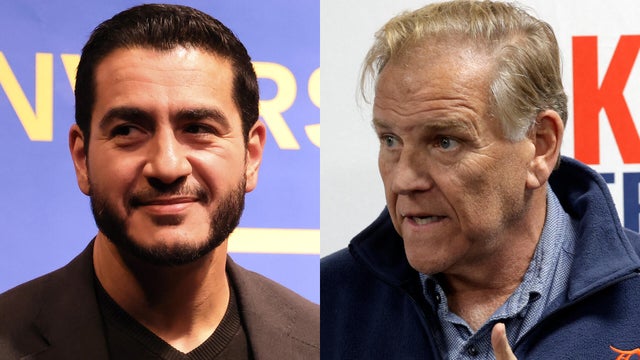
This week on "Face the Nation with Margaret Brennan," Homeland Security Secretary Kristi Noem joins to discuss recent federal action in Minneapolis. The city's mayor, Jacob Frey, also joins, along with Sen. Mark Warner and Rep. Mike Turner.
Jan 18 (45:45)

TRANSCRIPT FOR: “1/18: FACE THE NATION”

MARGARET BRENNAN:
00:04:05

You don't have a number or a date? We wouldn't be in this situation-- we wouldn't be in this situation if Joe Biden hadn't allowed our open-border policies to be in place and allowed up to 20 million people unvetted into this country. We have no idea how many dangerous people are here. When you have millions of people coming in that are terrorists, suspected terrorists, criminals come from countries in the mass migration that the Biden administration facilitated, I can't tell the people of Minnesota exactly how many dangerous criminals they have. I do know that they're extremely grateful every time we get a pedophile off the street. We arrested an individual this week that was raping children. I think those parents in Minnesota can sleep better at night knowing that person isn't free. Sure. But you just said millions. What's the breakdown of the percentage of those who you have in custody who have actually committed a criminal offense versus just the civil infraction? Every single individual has committed a crime, but 70% of them have committed or have charges against them on violent crimes and crimes that they are charged with or have been convicted of that have come from other countries that are here illegally, first of all. And then they have committed a criminal act while they've been here or in their home countries, as well.

MARGARET BRENNAN:
00:05:20

It's not 70%. Yes, it is. It absolutely is, Margaret. 70% of everyone you have detained--

KRISTI NOEM:
00:05:26

You guys keep changing your percentage. You pick and choose what numbers you think work. But that is the facts, is that 70% of the people that we have detained have charges against them or have been convicted of charges. And they need to be brought to justice. And we're going to keep doing that no matter how much you guys keep lying and don't tell the public the truth. It absolutely is that these law enforcement officers are out there every day doing the work to protect the American people, and they will keep doing that because they believe in enforcing the law, which is exactly what President Trump has charged them with. OK, well, our reporting is that 47%-- based on your agency's own numbers, 47% have criminal convictions against them. But let's talk about the other numbers. Which means you're wrong again, absolutely. We'll get you the correct numbers so you can use them in the future. Well, that's from your agency. Let's talk about our numbers here at CBS. 54% of Americans think the ICE agent shooting of Renee Good was not justified. 60% say the Trump administration responded to the ICE agent's actions unfairly. These numbers show you do not have the American public on your side. Does that concern you? Well, the facts are that this individual weaponized her car and threatened the life of the law enforcement officer and those around him. And that is what the media needs to cover, people understand is the truth when they have the chance to hear the facts around the case. And this individual was impeding law enforcement operations for quite some time before this incident happened. It's a tragedy that this situation has happened in this country, and we hope there's never another situation like this before. But this officer relied on his training to defend his life and to defend those around him. And we're grateful that we're in a situation where we hope that more people don't weaponize their vehicles like this. We're seeing it happen over and over again. We've seen over a hundred different vehicle weaponized and attacking law enforcement officers. I would hope that Mayor Frey, when he's on here, that he'll announce that he's going to start working with us to bring safety to the streets. If he would set up a peaceful protest zone so that these individuals can exercise their First Amendment rights and do so peacefully, we would love that because then we could work together to make sure we're getting criminals to justice and letting people still express their First Amendment rights.

MARGARET BRENNAN:
00:07:47

Well, you know that it is in dispute about weaponizing a car versus driving forward. But I'll put that aside. No, it's really not. Now, tell me about-- Everybody can watch the videos and see that. Well, let me talk to you about the officer, Jonathan Ross. He was struck. He was hospitalized. Well, don't say his name. I mean, for heaven's sakes, we shouldn't have people continue to dox law enforcement when they have an--

MARGARET BRENNAN:
00:08:08

His name is public. --8,000% increase in death threats against them.

MARGARET BRENNAN:
00:08:09

He was struck and hospitalized. I know, but that doesn't mean it should continue to be said. His life-- he got attacked with a car that was trying to take his life. And then people have attacked him and his family, and they are in jeopardy. And we have law enforcement officers every day who are getting death threats and getting attacked at their hotels. And they're getting--

MARGARET BRENNAN:
00:08:28

Well, can you tell me about his status right now? --ice thrown at them.

MARGARET BRENNAN:
00:08:30

Well, of course, no one condones violence against anyone.

KRISTI NOEM:
00:08:33

I can tell that he's healing. But here, CBS reported that he did have internal bleeding in the torso. But he was released that same day. So is he back at work? Did you give him the required-- I'm not going to share his-- -- three days of suspension? We followed the exact same protocols that we always have for years as to investigations into these situations.

MARGARET BRENNAN:
00:08:51

Three days administrative leave? I'm not going to talk about his medical records. I know that you know that in itself is his prerogative to discuss his health. But we're hopeful that all of our law enforcement officers know that they can go out and do their job, apply the law equally to everyone, and that they can do so safely and that the media and people aren't going to attack them for standing up for what's right. I'm asking you about your policies. I asked if you had put him on administrative leave. This is in question because the governor of Minnesota said the only person not being investigated for the shooting of Renee Good is the federal agent who shot her. Is he correct that the federal agent is not being investigated in any way? Is there any review of protocol here? We are following the exact same investigative and review process that we always have under ICE and under the Department of Homeland Security and within the administration, the exact same policy that the Biden administration used, the exact same review.

MARGARET BRENNAN:
00:09:49

So his actions are being reviewed? So we haven't changed any of that. I would not listen to Governor Walz. He has a very bad track record. All this billions of dollars of fraud was stolen from people under his watch. He allowed it to happen. And he also ignored the law and allowed the city of Minneapolis to burn down in 2020. He certainly isn't-- have good judgment in these types of situations, and I'm not going to be taking any advice from him and how we implement the law and protect people. So do I understand you saying that the Office of Professional Responsibility is doing its own probe to determine that the ICE agent violated protocol and that he was on three days of administrative leave, because that is what is in the handbook? The protocol and the advice and the guidance within that handbook and within our policies is being followed exactly like it has been for years. OK, so there is some review of his actions is what I understand you saying there. Margaret, there always is. Every law enforcement officer knows that. When they take the oath to step up and to protect the public and put their lives on the line, they absolutely know that everything that they do will be analyzed and investigated, but also what they don't-- I don't think they realized until just recently is how the liberals and the Democrats and the media would attack them and try to ruin their lives for doing what's right. And we're seeing in Minneapolis an unprecedented fraud history going on by elected leaders and individuals in that state, but also criminal activity. And it's being allowed to happen. When we did these operations in other cities across the country, we didn't see this kind of violence. We didn't see organized, funded protesters come in to conduct acts of violence against our law enforcement officers like we're seeing in Minneapolis.

MARGARET BRENNAN:
00:11:28

Well, let's talk about that. The elected leaders. And Mayor Frey is allowing that to happen and allowing this kind of violence to happen, when we didn't see it in Louisiana, we didn't see it in Florida, we didn't see it in other cities.

MARGARET BRENNAN:
00:11:39

We will talk to Frey about what's happening in his city. And we shouldn't have to be watching it here in Minneapolis. But we have heard-- and I'm asking you here about the security of your agents that you say you are concerned about. The local police chief said your agents are being forced into situations out in Minneapolis that they're not prepared to deal with. And we looked, and the Government Accountability Office said back in 2021, most ICE agents are not trained to handle crowd control. So are you looking at expanding the training for the agents that you are putting in this situation that you describe as dangerous out in Minneapolis? They are absolutely trained for the situations that they're put in. We would never put an officer in a situation that they would be beyond their training and skill set. And so these are highly trained individuals that are here and in Minneapolis doing operations they are. And frankly, the Minneapolis--

MARGARET BRENNAN:
00:12:30

On crowd control and de-escalation? --chief of police is not an expert. Absolutely, they are trained to that. They're specialized skill set is being utilized for where they are located and the jobs that they are doing in Minneapolis and across other cities across the country. We do-- they have an incredible amount of training, that is ongoing throughout their careers, in crowd control--

MARGARET BRENNAN:
00:12:48

Do you want to expand that? --in handling enforcement operations that they have-- do I want to expand it based on the Minneapolis police chief's advice? Well, some Republicans-- Not on his advice. No, but some Republican lawmakers have called for that. If you remember-- well, Republican lawmakers and Democrat lawmakers, they absolutely can continue to debate. That's what they're supposed to do is work on policy and pass laws. What I know is that, under the Department of Homeland Security, has always been entrusted with training our federal law enforcement officers. We do it for many different agencies. We train those within the ATF, the DEA. We train those that are established across the country. We are the largest law enforcement operation and department in the government beyond the Department of War, and we're proud of that. And we've done it with excellence for years and are continuing to put the resources and people into our law enforcement officers. They need to change and to challenge these situations they're facing on the ground. Yeah, but you've described this situation as unique. You've acknowledged that. I want to talk to you about some of the incidents that the public has seen. There was a US citizen, Aliya Rahman, on her way to a medical appointment out in Minneapolis. She was dragged out of her car and detained. Video of her arrest was spreading on social media. There were allegations there of aggressive tactics. You've seen other incidents. For example, out in Minneapolis, this family with six children, with one as young as six months old, got kind of caught in the incident as they were driving to basketball practice. The mother, Destiny Jackson, told CBS ICE agents stopped the car, told them to leave. But the agents were in the way, and they feared that they would have happen to them what happened to Renee Good. They didn't drive off. ICE released a canister of tear gas, and the mother described giving her infant CPR. We're showing that video there. Do any of these tactics seem, to you, heavy-handed? That family was caught up in that situation because of violent protesters that were impeding law enforcement operations. And that family would have never been in that situation if those protesters had been acting peacefully and law enforcement was able to do their job without being threatened. And so it's a terrible situation that that family had to go through, and I hope it never happens again. But we need to remember that because the mayor and the governor have allowed this kind of violence to be perpetuated across Minneapolis is why there's other innocent people that are impacted throughout the city, but throughout their state as well. And it doesn't have to be this way.

MARGARET BRENNAN:
00:15:23

But this doesn't seem targeted. They could establish a peaceful protest zone. They could enforce their laws. And if Governor Walz didn't recognize that what he is doing there is poor leadership, he wouldn't have put his National Guard on standby in order to respond. And I'm hopeful that he does recognize that he needs to start working with us. I have--

MARGARET BRENNAN:
00:15:41

Are your agents going to comply with-- --asked him to. I know the White House has asked him to.

MARGARET BRENNAN:
00:15:44

Sorry, with the federal order on Friday to not use chemical agents. [CHUCKLES] That federal order was a little ridiculous because that federal judge came down and told us we couldn't do what we already aren't doing.

MARGARET BRENNAN:
00:15:58

Well, we just saw video of chemical agents being used. We only use those chemical agents when there's violence happening and perpetuating, and you need to be able to establish law in order to keep people safe. That's the only situation. So that judge's order didn't change anything for how we're operating on the ground, because it's basically telling us to do what we've already been doing.

MARGARET BRENNAN:
00:16:21

Madam Secretary, thank you for your time this morning. Face the Nationwill be back in a minute. Stay with us. We're joined now by the mayor of Minneapolis, Mr. Jacob Frey. Good morning to you, Mr. Mayor. The Secretary-- Good morning.

MARGARET BRENNAN:
00:16:37

--specifically called on you to set up a safe zone where protests would be contained. Is that something you're looking at? First Amendment speech is not limited to one park or one section of the city. You are allowed to protest so long as you're doing it peacefully. And by the way, we've got tens of thousands of people in Minneapolis that are grinning down the bear that are peacefully expressing their First Amendment rights. So no, you can't have just one section of a city. That's not the way First Amendment works. I want to ask you a number of things about what's happening in the city, but I just want to get out of the way. These reports that have been in the press since Friday that you and Governor Tim Walz are under federal investigation-- CBS reporting is that this is for alleged conspiracy to impede immigration agents. The deputy attorney general also said earlier this week he's going to stop you, quote, "from your terrorism." Have you received any subpoena or any official notice that you are under investigation? And if so, for what? We have not received any official anything at this point. And so I can't comment on what I don't know about. That being said, this whole dynamic is deeply concerning because supposedly, they would be coming for me and targeting me for something that is core and critical to my job as mayor, and that is speaking for my residents and my constituents. That we are at a place right now where the Department of Justice or the federal government could be coming after senators and governors and mayors simply for speaking for their respective constituencies and disagreeing with this federal administration, I mean, this kind of thing happens in other countries. This cannot happen in America. Well, our reporting is it's impeding immigration agents. But the specifics of that, we would love to see some paperwork on from the administration. In terms of what's happening in your city, the Minnesota National Guard was mobilized Saturday by the state, which the police chief supported as potential support for his local law enforcement. They have not been deployed. Do you think your city needs them? And how would you describe the protest this weekend? We are doing the work to keep people safe in our city. And specifically, it is our local police officers. It is the state of Minnesota and our governor. We are doing everything possible to keep the peace, notwithstanding this occupying force that has quite literally invaded our city. I mean, we've got 600 cops in the city of Minneapolis, and we're talking about 3,000-plus ICE agents and border control that have come in. They're not making our city safer. In fact, our city has been safe. Crime is down in virtually every category and virtually every neighborhood of the city.

MARGARET BRENNAN:
00:19:43

You said occupying force. Don't you think that's a-- it's a bit much? I mean, look, you can go through whatever rhetorical flourish you want, but when you have 3,000 ICE agents and border control come to the city, when you've got this supposed threat of 1,500 military coming to the city, yeah, that's very much what it feels like. When you outnumber local police officers 5 and 6 to 1, that is the vibe. And so the bottom line is, if the goal were safety, this is not how you get there. If the goal is safety, I can give you a very antidote to some of the violence that we're seeing, and it's have them leave. Well, they argue-- the administration, that is-- that this is a sanctuary county and a sanctuary city, and they are enforcing federal immigration law, and that, therefore, this is called for, that they're cleaning up a mess that the last administration created. I mean, is-- how do you prescribe, in this unprecedented situation, for local and federal officials to work together here? We have worked together. We do work together when this is about getting murderers and rapists and all the other bad stuff that Kristi Noem just said off the street. We have worked with the DEA and the FBI. We've worked with the ATF and the US Attorney's Office to drive down crime, get violent criminals off the streets. And on the North Side, shootings are the lowest that they've ever been, I believe, on record. And so nobody's against that. But that is not this. This is not about safety. What this is about is coming into our city by the thousands and terrorizing people simply because they're Latino or Somali. And yeah, people in Minneapolis are speaking up. They're speaking up peacefully. They're standing up for their neighbors. And this is not just about resisting Trump. This is about loving and caring for the people that call this city home. And it's been inspiring. Well, on the ICE actions themselves, your attorney general out in Minnesota, Keith Ellison, has asked Minnesotans to gather information about federal actions and post them on his website. What's the intent of those incident reports? And I understand, in theory, what this is. But if you are saying that it is not safe for civilians to be inserting themselves in enforcement operations or even surrounding enforcement operations, aren't you asking them to do something that is endangering them? No, civilians should not be involved in enforcement operations. Taking a cell phone out and videotaping what's going on is not enforcement. That's transparency. Sunlight can be the best disinfectant. And in this case, yeah, they're disinfecting some of the really horrible things that are taking place on our street because to the extent that ICE agents are doing things that are unconstitutional-- and by the way, they are-- this is their opportunity to make sure that it is seen, that it is judged, and that we get our day in court, they do. Well, I think the whole country is hoping for stability and peace and security Mr. Mayor, thank you very much. We'll be right back. [THEME MUSIC] Welcome back to Face the Nation. For more from our new CBS poll, we're joined now by our Executive Director of Elections and Surveys, Anthony Salvanto. Anthony, a lot of focus on immigration here this morning. That issue, the mass deportation election promise from President Trump, it used to really be a winning one for him. He began the term with majority support. He's now down to 46% approval. What accounts for that drop? So for the program, it's about the who and how that's driving views of it. And here's what I mean. The who-- who do people think the administration is targeting for deportation? It used to be more people thought it was just dangerous criminals. Now it's more people who think it's expanded beyond that. That goes with more disapproval of the program. Then the how-- when I ask people, what do you think of the ICE operations, the tactics that you see? Are they about right? No, more people now say they think they're too tough. That goes with more disapproval. A couple of important points, though-- number one, Republicans remain very strongly supportive of this program. And Republicans stand out by saying they think the protesters against ICE operations have gone too far. So there's that dynamic, too. But sum it up this way, difference between the perceived goals and the approach. The goals, divide the country, are more mixed. But the approach, it gets more negative ratings, goals versus approach. So we've also seen the president very active abroad in this first year of his presidency, from Iran, potentially to Greenland. Americans seem to say Trump's policies are going to decrease peace and stability in the world. That's what you found. What's behind it? So underneath that, a couple of things-- start with Greenland. the notion of using military force to take Greenland gets wide and bipartisan opposition. The notion of buying Greenland also gets opposition, gets disapproval.

MARGARET BRENNAN:
00:25:14

Interesting. But it's the why here. What are the implications of it? You follow that up, yeah, some Americans say it might give the US access to resources it needs. But the larger implications, that the US might leave NATO, that there might be as you mentioned more less peace and stability in the world. Those things underpin those views. Iran, a little bit different here-- still majority opposition to the idea of taking military action to support the protests there. But it's the why. You do see a sizable number saying the US might have a moral responsibility to do it, certainly to have strategic interests in the region, but also a majority saying they don't think the US has effective plans for what to do about it. And that's important. Anytime people evaluate foreign policy, they want to see the plan. They want to see that laid out. And until they get that, you might see that majority disapproval. And when you've been here throughout the past year, you have just emphasized, even with the last president, it's the economy, the economy, the economy. That's what Americans are really judging performance by. I have, because that's what Americans keep telling us is very important. Really specifically, it's about prices. And this is not new. This has been not just this year, but it's been going back to the pandemic, really. People are still trying to adjust to a world in which they have these really high prices. What they're really concerned when they say they want the administration to focus on lowering prices more-- and a majority is consistently said that they do-- is they're talking about buying power. So I asked them, is your income keeping up with inflation? And big majorities say, no, it's not. That's been consistent across. Are they looking for prices to go down? Yes. They're looking systematically for deflation? Not necessarily. But it's that buying power that underpins all that. Prices are the way that people evaluate the economy. Always, right?

ANTHONY SALVANTO:
00:27:06

Yeah. It is an election year, as you know. And in the midterms, people judge often the party by its president. But what are you hearing when it comes to Democrats? A couple of things for Democrats, a couple of challenges, if you will. First, does their party convince its voters that they have an effective way to challenge Donald Trump, which their voters want them to do. Right now, and increasingly, those voters say, no, they don't think their party has an effective way. The second part of it is, just in terms of approach, do they need to offer a compelling alternative to the president? Right now, you ask, who has the better approach, Donald Trump and the Republicans still lead the Democrats on the economy and on immigration. So going through the campaign, is it going to be enough to just say, we're not Donald Trump, or do they need that alternative. It looks like people are saying they're looking for that compelling alternative. Something we will ask our Democratic guests. Thank you very much, Anthony Salvanto.

ANTHONY SALVANTO:
00:28:01

Thank you. We'll be right back. We go now to the top Democrat on the Senate Intelligence Committee, Mark Warner, who joins us this morning from Virginia. Senator, we have had some extraordinary news this week on the national security front, two of America's closest allies, NATO and Canada. Canada signed a trade deal with China. The prime minister of Canada, Mark Carney, said the US is undercutting the international world order. In the past 24 hours, President Trump seemed to start a trade war with our closest European allies, saying he put tariffs on the UK, France, Denmark until they agree to hand over Greenland. Will there be now any checks and balances from Congress when it comes to the president's use of tariffs in this way? Well, Margaret, that's the question of the hour. I would hope so. We thought, when the president took on the independence of the Federal Reserve, Congress might stand up. We thought, when the president has sent 20% of our fleet down off the coast of Venezuela, Congress might stand up. We got a vote on the War Powers Act. Then the administration rolled back the Republican votes. Now the question is, when the president is taking on potentially a new tariff war with our NATO partners, with threatening Greenland, will my Republican friends, beyond saying quietly to me, Mark, this is crazy, will they say that publicly and stand up against a president that has brought chaos to the international order? And got to tell you, it's not making Americans safer. When you threaten, for example, the security of NATO, the most successful alliance in modern history, the only country that is, frankly, benefiting from the most from this chaos are both Russia and China. And I'm going to get to some of that in detail with Congressman Mike Turner shortly. But just on this point, there is an effort by some Republicans. Lisa Murkowski's one of them. She and Jeanne Shaheen are working on a bipartisan bill called the NATO Unity Protection Act to prohibit the use of federal funds to blockade, occupy, annex, conduct military operations against, or assert control over the territory of a NATO state. That is extraordinary, that that is being put forward as a bill. Would you vote for it? Of course, I would. But remember--

MARGARET BRENNAN:
00:30:37

But will it ever see the light of day? I don't know. But let's be clear about this. They're currently-- and as vice chair of the Intel Committee, I am very familiar with what's going on. There is no current security threat from Russia or China to Greenland. The only security threat to Greenland right now is the United States. I've been in touch with the bipartisan delegation, who've met with the Danes, who are over there now. The Danish people, frankly, are flipping out that their longest ally, America, is now threatening to invade part of their territory. Those other countries that Trump is now threatening with additional tariffs-- remember, the European Union's already got a 15% tariff. The French, the Germans, the Norwegians have all put small numbers of troops in Greenland to help protect it but also send a signal that, if America attacks, they're attacking our closest allies. And I would also point out, America used to have 17 military bases in Greenland. We decided we didn't need them all. We're down to one military base. And on that base, there are more Danish partners on the base than American military. The Danes have made very clear that if we want more military bases, if we want more ability to extract critical minerals, they would welcome that. But it ought to be done in partnership, and it ought to be done with the NATO allies. And I just point out, Margaret, these are all tied together. This craziness around NATO weakens our ability to have the world rally against the Iranian regime right now, which has been brutal to its people. One of the reasons the president couldn't take military action against the Iranians was because the aircraft carrier that would normally be there to prevent-- to help our forces was off the coast of Venezuela. So all of this international chaos ties itself together, making America less safe. And when you see the Canadian Prime Minister, in effect, saying, China may be a more dependable partner, if that doesn't bring us all back, I'm not sure what would. Well, the president is moving, on the Iran front, is moving an aircraft carrier from the Pacific to CENTCOM, to that Mideast region where there hasn't been an aircraft carrier. He also told PoliticoSaturday, "it's time to look for new leadership in Iran that doesn't kill people by the thousands in order to keep it under control." It was reported that the head of the Mossad, David Barnea, was down in Miami meeting with Steve Witkoff. Do you know the focus of those meetings? Is the United States working with Israel on a plan for what happens next in Iran? I can't talk about anything specific, but what is in the public domain is that Israel, as well as all of our allies in that region, were concerned about a strike in terms of Iranian reprisals. And the fact that we don't have all of our forces there because part of our forces are off the coast of Venezuela make us less of a threat. And there is a real question, what would you bomb? And is there a chance that kind of kinetic action might make more support for the regime, a rally around the flag? That doesn't mean that we couldn't be doing more cyber. It doesn't mean-- and I say I've got a lot of concerns with Elon Musk, but his Starlink operations are brilliant. We should be able to get more Starlink into Iran so the Iranian people can get reconnected to the internet. And our ability, for example, in a normal course, we would be rallying all of our NATO allies to also put pressure because they have relations with Iran. But most of our NATO allies are concerned about Americans' potential military action in Greenland and the threat of additional tariffs. So the ability for America to bring a concerted worldwide confrontation to this awful Iranian regime-- and the Iranian people are extraordinarily brave to stand up. We need to do more. But some of our options are limited because of the chaotic approach that the president is taking around the whole world. Well, let me ask you about Venezuela because you are chair-- or ranking member on the Intelligence Committee. The CIA director, John Ratcliffe, was down in Caracas on Thursday to meet with the interim president, Delcy Rodriguez. A US official described it as intending to improve the relationship between the two countries. Are you comfortable with the administration's plan and what the director has explained to you is the intention to, basically, coerce them into compliance? Well, let's look. What the American military did in Venezuela was extraordinary. Nobody else could do that. And the president's goal, which he's made clear, was mostly about oil, not about the Venezuelan people. It will take years for the Venezuelan oil fields to get up back operating to anything close to efficiency. Maduro was awful on that. But our ability to strangle off and keep the chokehold on the Venezuelan regime keeps that fleet blockading Venezuela. Are we going to keep that fleet, 20% of our fleet, off the coast of Venezuela for the next three years?

MARGARET BRENNAN:
00:35:48

I think it's, like, 14% now. Is that really in America's long-term--

MARGARET BRENNAN:
00:35:50

Have you asked the administration that? We have asked, and we have not gotten a response on how long the fleet will be there. And one thing that I would also point out-- and let me be clear. The Biden administration screwed up in 2024 when the Venezuelan people voted overwhelmingly to throw out Maduro, and we didn't push him out. But to suddenly say to the leader, Machado, who was the leader of the Venezuelan opposition, who got the Nobel Prize-- I mean, does President Trump not realize he looks kind of silly taking that prize from her as she tries to basically suck up to him? And the fact is, what she has said, and again, publicly, is that, yes, you got rid of Maduro. But the same people who tortured and imprisoned the Venezuelan opposition are still in control of the regime. Where does that leave the Venezuelan people? And where does that lead us to a better relationship-- frankly, a partnering relationship with Central and South America and not a colonial relationship, which is, again, what the president seems to be intending. All right, Senator Warner, a world of problems to talk to you on that front, but I got to leave it there. Thank you for your time today. We'll be back in a moment. We're joined now by Ohio Republican Congressman Mike Turner. He is the head of the US delegation to NATO's parliamentary Assembly. Congressman Turner, I imagine that many of those NATO partners are calling you right now and saying, what is the president doing with this threat of escalating tariffs against us unless we hand over Greenland? What are you saying to them? Margaret, as you know, this is-- Greenland and the United States, and America, is not a new issue. I mean, five times the United States--

MARGARET BRENNAN:
00:37:30

Threatening to invade it is a new issue. Right. It certainly is a new issue. Five times the United States has had a discussion about Greenland, all the way back to the 1800s, four times in the 1900s. And the presidents raised it twice. We have a 1951 defense agreement with respect to a presence, that we have a military presence there. The president's not wrong that there's a national security issue with respect to Greenland.

MARGARET BRENNAN:
00:37:56

Senator Warner said there was no direct threat other than from the United States. But there are national security issues there. Generally in the Arctic? In the Arctic itself and with respect to Greenland. But there certainly is no authority that the president has to use military force to seize territory from a NATO country. And certainly this is problematic that the president has made this statement and has caused tension among the alliance. And there certainly is going to be a continuation of a discussion among all of our allies as to what does this mean? And certainly people need to have some understanding of what are the basic principles. America still is for democracy. America still is for self-determination of people, for sovereignty of other nations. And that's certainly our basic principles and values. And certainly I think this does put at risk-- we're seeing from our allies their response. They're very concerned about Trump's response. And this it's putting at risk, I think, Trump's peace principles with respect to Gaza, with respect to Ukraine and Russia, his leadership among our allies, because he needs our allies for being a base for his ability to rally. And certainly, one of his principles of trade and his ability to help our economy, it's put at risk his EU negotiations.

MARGARET BRENNAN:
00:39:22

Yes, they're threatening to blow up the trade deal. He had a monumental deal with the EU where he was going to go to zero tariffs with the EU. That's at risk. So certainly, people are concerned. He has prospectively said that he is going to impose these tariffs. So there is, I think, this period of time where there will be a dialogue and discussion. Well, there was this past week. There was a diplomatic meeting, and the outcome afterwards was the president put this tweet up, saying he's putting in tariffs. So it didn't seem the diplomacy actually went anywhere. Well, and I think there will certainly be a discussion. Certainly the American public, I think, are questioning.

MARGARET BRENNAN:
00:39:58

Yeah, well, you saw our poll. Right.

MARGARET BRENNAN:
00:40:00

We shared it with you. 70% of Americans disapprove of using funds to buy Greenland. 86% disapprove of him using military force to take it. How do you justify and explain his strategy when both our allies and Americans say, no? I think people would prefer a focus on the economy instead of a focus on Greenland itself. I think certainly, in Congress, we're looking at trying to make certain we get the budget deal through and we don't have a shutdown. And as we look to the president's proposal on national security, we look at his proposal on increasing our defense budget. And that's how we certainly want to-- Is it legal for him to even try to use tariffs in this way? I mean, Congress could claw back this authority if you wanted to put a check on it. Well, Article 1, Section 8, does reserve to Congress international trade. And the International Emergency Economic Powers Act, on a very limited basis, delegates to the president the ability to do some sanctions. And currently, before the Supreme Court, there is this issue--

MARGARET BRENNAN:
00:41:02

That's right. --as to whether or not he even has the authority to do tariffs at all. Now, depending upon how the Supreme Court rules, they may find he doesn't even have tariff authority. But even if he is found to have tariff authority, I don't believe he has the ability to impose tariffs for the purposes of compelling other nations to sell the United States land for the purposes of us expanding. Now, in this issue-- How many Republicans are with you on that? Well, we'll-- Because Speaker Johnson was in the United Kingdom telling everyone that the president is just playing chess here. Well--

MARGARET BRENNAN:
00:41:34

You're taking him seriously. And if you are, then what do you do? There certainly are national security issues. And the president having identified this, with respect to the fact that this is the Golden Dome and that there are locations that are going to be necessary with respect to the operations of Golden Dome, is absolutely an essential central issue. And the Golden Dome is going to be very, very important. We have other locations that are essential, critical infrastructure overall that we don't own. And I think certainly Greenland and the Greenlanders need to decide their future and their outcome. I think this is more of an issue of asking them to join us as opposed to art of the deal. This is about--

MARGARET BRENNAN:
00:42:13

But we already have the ability to do a lot. And what's so baffling to European allies-- and I know you've heard this from them, as well-- they sent those troops to Greenland to show that they will defend Greenland against those threats. And yet the president interpreted that not as help from our NATO allies but as a threat from our NATO allies. Does he understand how NATO works? And that is certainly, I think-- and when you look at the fact that, of the allies that he's talking about putting a tariff on, seven of them are F-35 partners, three of them, we have US nuclear weapons on their soil, and five of them, we have permanent troops on their soil. These are not just casual allies. These are very strong allies. If we're talking about Greenland, this is not art of the deal. This is more the dating game. I mean, we need to be more on how we would be a partner, not more how we would be compulsory. And this certainly isn't the type of language that someone should be using and trying to ask someone to join you in a partnership. Well, so all those technical points I take. But you also look at this from the other lens, which is Senator Murkowski said that this is creating a dynamic that benefits Vladimir Putin by threatening the stability of the strongest coalition of democracies the world has ever seen, even without doing anything other than a tweet, threatening the alliance. Well, the other thing that is concerning to me is this. We're not in Germany just to-- Doesn't it benefit Russia here? And also, we're not just in Germany to defend the NATO alliance. We're in Germany to defend Israel and Africa and the Middle East. Our worldwide footprint is our worldwide power. I mean, the presidency's authority, his ability to project power is our NATO alliance, the strongest alliance in the world. To threaten the NATO alliance, to say, well, we'll just pack up and go home, means that the United States doesn't have the ability to project power. The ability for the United States president to do things to benefit anyone around the world is to be around the world. It means to be able to have partners, means to be able to do operations. Almost every operation that this president has done over the past year has, in part, been done out of and with and including the bases that we have in Europe and in NATO. But the Treasury secretary said on another network, "The president believes enhanced security is not possible without Greenland being part of the United States." They're being very clear. Well, and I truly believe that it is-- that the president can continue the issue of engagement. But presidential want doesn't translate into presidential authority.

MARGARET BRENNAN:
00:44:53

We will leave it there. Congressman Turner, thank you for your time today. We'll be right back. That's it for us today. Thank you all for watching. Until next week, for Face the Nation,I'm Margaret Brennan. [THEME MUSIC]

Videos
View CBS News In
CBS News App Open
Chrome Safari Continue