U.S. loses its 26-year measles elimination status as cases more than double in a year

The United States has lost its measles elimination status after 26 years. That decision comes from the Pan American Health Organization, an agency within the World Health Organization. Children's Health pediatrician Zachary Stone said certain criteria must be met for this distinction.
"To lose the status of a measles immune and measles free country, it takes sustained transmission over a period of 12 months, and we have officially crossed that threshold," Stone said.
Measles is a highly contagious virus, with a single infected person capable of spreading it to 12 to 18 others in a susceptible population, according to Dr. Stone.
"It's spread typically by coughing, respiratory droplets," Stone said. "They stay in the air for a couple of hours after even being coughed into the air."
Last year, the U.S. Centers for Disease Control and Prevention reported more than 200 measles cases in Texas, primarily among what's described as a close-knit West Texas community.
The CDC shows more than 5,400 confirmed measles cases nationwide, almost 600 hospitalizations, and 10 deaths so far in 2026.
CDC data show that last school year, 92% of kindergartners were vaccinated against measles, and a 95% vaccination rate is needed for herd immunity.
"Whenever you are below herd immunity, it puts the population at a little bit more vulnerability of transmitting that pathogen," Stone said.
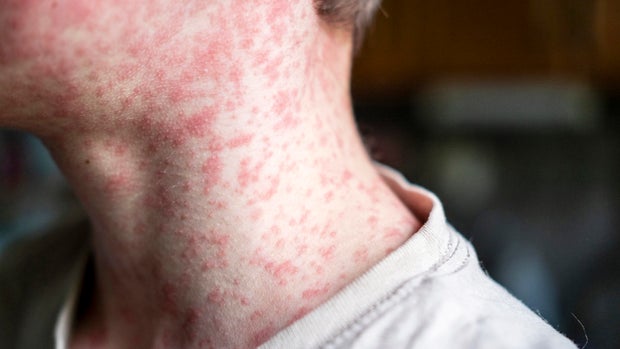
Dr. William Shaffner at Vanderbilt University Medical Center said measles is known for its rash and cough, but it also has other symptoms that can be deadly.
"It affects your nervous system, I believe, for the rest of your life. It can impact pregnant women and their ability to give birth, and then you have the complications of dehydration, pneumonia, and on occasion, encephalitis," Shaffner said.
Dr. Stone said the U.S. has had the most measles cases since 1991, but people can take action to protect themselves and others.
'We recommend a two-dose series one MMR vaccine. One vaccine gets you 93% protection against measles. A second MMR vaccine gets you around 97% protection from measles," Stone said.
U.S. Health and Human Services Secretary Robert F. Kennedy, Jr. posted on social media Tuesday: "MMR vaccination is the most effective way to prevent measles.. we're working to close vaccination gaps and rebuild public trust."
Dr. Stone believes it could take years for the U.S. to regain its measles elimination status.