"Most wanted" for a moment, Mark Hughes recounts being wrongly linked to 2016 Dallas police shooting
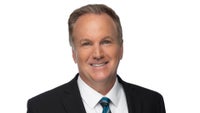
He's a Mansfield tax preparer with a wife and seven children, but for a brief moment, 10 years ago on July 7, 2016, Mark Hughes was the most wanted man in America.
His story is a reminder of the chaos and outrage that followed when five Dallas law enforcement officers were shot and killed on the streets of downtown.
"It's not good memories. I can tell you that much," said Hughes.
Ten years ago, Hughes was among dozens of demonstrators marching in a police protest through Downtown Dallas.
"I took my handgun out there, my wife out there, because previously there was a Trump rally and everyone out there had their rifles," said Hughes.
Near the end of the march, gunshots rang out.
"I actually didn't hear the gunshots," Hughes said. "I was in the middle of the pack and, of course, I saw the crowd take off running and, frantically, I did the same thing."
Hughes says he surrendered his weapon to a nearby officer.
"When I gave my gun to the officer, he gave me his business card," said Hughes. "He told me that on Monday morning, I can come up and retrieve my gun."
Hughes said he remained in the area where five police officers were killed, unaware that he was about to become a wanted man.
"So then we stayed," he said. "We stayed around for another hour, helping with traffic control."
He said that's when a friend sent him a social media post from DPD with a photo of Hughes that said, "This is one of our suspects. Please help us find him."
"And she sent me the picture," said Hughes. "When I opened it up, I don't think I've ever been scared for my life, because I was surrounded by police officers."
JD MILES: Do you think you could have died that night?
HUGHES: Oh, absolutely.
Hughes tried to clear things up with a nearby officer, who he says wasn't so sure he was innocent.
"He took me to command," said Hughes. "Went to command. I told them the story and they were like, 'okay, can you go to headquarters?'"
But once at DPD headquarters, it only got worse.
"Get to headquarters. And I can't remember exactly the floor number, but I remember the floor that they pushed said 'Homicide.' And again, I'm sitting there, I'm like, 'Homicide?' And when the door opened, it reminded me of First 48 or something. I think of every police officer that was in that room, was staring me, was like, 'Yeah, we got him.'"
JD MILES: And so, at that moment, you thought you were going to be, you know, implicated in this horrific murder.
HUGHES: Oh, absolutely.
Both the police chief and mayor went public with Hughes' arrest.
"I was very numb to the situation," said Hughes. "They took me into an interrogation room. They were asking me questions, and one question they asked me was 'How long you and your brother wanted to kill police officers?' And of course, I'm like, 'Wait, what y'all saying?'"
Later in the night, SWAT officers killed the actual shooter with an explosive.
JD MILES: Did you have any knowledge of Micah Johnson or ever meet him or know him?
HUGHES: Not at all. I don't even think that he was a part of that protest.
After several hours in police custody, Hughes was released without an apology or even a public declaration of his innocence.
"And that's what DPD did. They pretty much took my image at that point in time and shattered it," said Hughes.
JD MILES: Did DPD or the City of Dallas ever officially clear you?
HUGHES: Not at all.
Hughes says his business suffered, and he was spat on by a stranger outside his office. His lawsuit against the city was dismissed, and since then, he has gotten married and started rebuilding his life.
While he was able to use his ordeal to speak out on race and gun issues, Hughes says the city's leaders at the time only validated what he was protesting about on that dark night.
JD MILES: What does Mark Hughes want to say to the city of Dallas about all this?
HUGHES: You got to do better, city. Dallas has to do better. And that goes from the mayor to the police department ... I'm grateful that I was able to survive it. And now I'm just. I'm just building my life and moving on past it


