Iran's top negotiator says country ready for war as peace talks inch along
Follow updates on the war in the Middle East for Wednesday, July 1, here. See earlier developments below.
What to know about the Iran war today:
- Iran's top negotiator told state television that the country is ready for war if the U.S. doesn't fulfill its commitments.
- Iranian and U.S. officials have traveled to Qatar, but aren't expected to hold direct talks.
- An agreement signed four days ago between Israel and Lebanon links an Israeli withdrawal from Lebanon to the Iranian-backed group Hezbollah being disarmed. Analysts say that could mean Israel occupying southern Lebanon indefinitely, which could continue hampering efforts toward a full U.S.-Iran peace deal.
Trump's envoys meet with Qatari prime minister
Steve Witkoff, President Trump's special envoy, and Jared Kushner, the president's son-in-law, met with Qatari Prime Minister Sheikh Mohammed bin Abdulrahman Al-Thani on Tuesday, Qatar's Foreign Affairs Ministry said in a statement.
The officials discussed the ongoing peace talks between the U.S. and Iran and the ceasefire in Lebanon, according to the statement.
A senior Trump administration official told CBS News that Witkoff and Kushner had very positive conversations with regional leaders and that good progress continues to be made as technical talks continue.
Iran has exported over 40 million barrels of oil since end of U.S. blockade, negotiator says
Iran's chief negotiator Mohammad Bagher Ghalibaf on Tuesday said Iran was unable to export any oil during the U.S. blockade on its ports, noting that exports have since surged.
"From the day the blockade was lifted until today, we have exported more than 40 million barrels of oil," he said in an interview on state television. "By contrast, during the previous 50 to nearly 60 days, we were genuinely unable to export even a single barrel of oil."
Iran prioritizing diplomacy but also "prepared for war," chief negotiator says
Iran's chief negotiator Mohammad Bagher Ghalibaf said Tuesday that Iran was prioritizing diplomacy with the United States, but remained ready for war.
"We are pursuing dialogue, but if the dialogue is not implemented, we are also prepared for war and will respond accordingly," Ghalibaf said in an interview on state television, as Iranian and U.S. delegations were due to hold separate discussions in Doha, Qatar.
House sinks Rep. Rashida Tlaib's second war powers resolution on Lebanon
For a second time, the House on Tuesday voted against limiting President Trump's authority to engage the U.S. military in warfare in Lebanon without congressional authorization.
The war powers resolution, which was introduced by Democratic Rep. Rashida Tlaib of Michigan, is an updated version of a measure that also failed earlier this month after Democratic leaders came out against it.
Tuesday's vote ended with 189 voting in favor and 235 voting in opposition of constraining the president's authority.
Iran's national team heads home after World Cup knockout
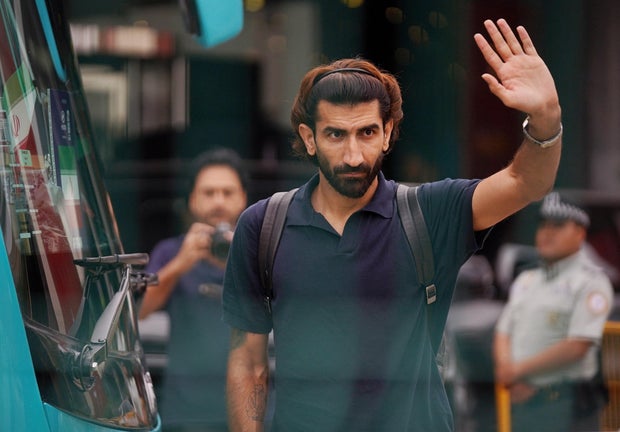
The Iranian national team left North America on Tuesday, departing from its World Cup home in Mexico following a tournament marked by repeated disagreements with U.S. officials, flashes of athletic brilliance and, ultimately, disappointment over barely missing out on advancing beyond the group stage.
After its three group stage matches ended in draws, Iran's World Cup future depended on either Algeria or Austria winning their match on Saturday. Their draw ensured Iran's elimination.
Consumer confidence ticks up as gas prices fall, but Americans still gloomy about economy
Americans' attitudes toward the economy improved slightly this month as gas prices declined, but their outlook is still mostly negative by historical standards.
The Conference Board said Tuesday that its consumer confidence index rose 0.6 point to 91.2 in June, a figure that is still below its year-ago reading of 95.2.
Consumer attitudes worsened after the Iran war caused oil and gas prices to spike, accelerating inflation and causing Americans' inflation-adjusted incomes to decline. Before the pandemic, the index regularly topped 120.
The report suggests that consumer confidence is recovering only slowly from the hit caused by the Iran war.
Even so, Americans have continued to spend despite their dour outlook, which has kept the economy growing even as inflation accelerated. Measures of consumer sentiment have been less predictive of how Americans actually shop since the pandemic.
Inbound vessels drive pickup in Hormuz traffic after Sunday lull
Strait of Hormuz traffic picked up on Monday largely driven by vessels entering the Gulf, after a weekend lull as the U.S. and Iran traded strikes, maritime tracking data showed.
Nineteen commodities vessels entered the Gulf on Monday, matching the number of entries by such ships recorded last Wednesday, when total crossings reached a wartime high of 70, Kpler data showed.
Of the ships entering since Monday, at least nine were supertankers, which had mostly avoided entering over the weekend.
Monday's total of 40 transits in both directions is in line with last week's wartime record number of crossings. However, these numbers are still far below peacetime traffic when around 120 ships crossed the strait each day.
Just 15 commodities vessels crossed on Sunday.
Vessels are still using multiple routes to cross the vital chokepoint, despite Iran's warnings on Sunday not to use routes it did not approve of. MarineTraffic showed a steady stream of ships passing through northern routes in Iranian waters from early Monday, including at least 10 container ships.
The website only shows ships crossing with their transponders on, meaning more ships may have crossed with their signals switched off.
Netanyahu, in south Lebanon, says Israel will stay as long as Hezbollah "threatens us"
Israeli Prime Minister Benjamin Netanyahu on Tuesday visited troops in southern Lebanon, where he vowed that his country's forces would stay as long as Iran-backed Hezbollah remained a "threat."
"Our position is clear: we will not leave southern Lebanon until the threat has disappeared," he said, according to a statement from his office. "And as long as Hezbollah, armed, is here and threatening us, we will stay here."
He added that "we say to Iran and to Hezbollah: leave this place, you no longer belong here... There are two sovereign states that want to live in peace."
Netanyahu visited a "security zone" with Defense Minister Israel Katz and IDF Deputy Chief of Staff Major General Tamir Yadai. Israeli troops are operating in the self-declared "security zone," which stretches about six miles inside Lebanese territory.
Lebanon and Israel signed a framework agreement under U.S. sponsorship last week to pave the way for peace between them and disarm Hezbollah. The deal makes any Israeli withdrawal from occupied Lebanese land conditional on Beirut disarming Hezbollah by creating "pilot zones" that the Lebanese military will take over.
—CBS/AFP
Iran prepares for late supreme leader's funeral
Giant portraits of Ayatollah Ali Khamenei, Iran's late supreme leader who was killed in U.S.-Israeli airstrikes at the start of the war, hung from Tehran's Grand Mosalla on Tuesday as workers raced to prepare for his grand funeral ceremony.
His funeral, initially delayed at the height of the conflict, will take place as Iran and the U.S. uphold a fragile ceasefire after signing a preliminary agreement.
Khamenei, a spiritual figure for many Shias, was killed at the age of 86 at his compound in the center of the Iranian capital on Feb. 28, the first day of the war.
His public funeral will begin on Saturday, with his body lying in state at the colossal complex in central Tehran that hosts major Friday prayers, official ceremonies and religious gatherings.
The bodies of his slain relatives will also be presented.
The ceremonies are expected to draw 15-20 million mourners, according to officials, which would make it the biggest state funeral in the country's history.
Workers applied fresh paint across the venue, while a heavy police presence could be seen around the site. Footage aired by state television showed workers welding metal structures as cranes lifted construction material around the complex.
With huge crowds expected, state television has been urging mourners to use public transport to reach the venue and issued public safety messages urging people to stay hydrated with temperatures set to rise during the funeral period.
An AFP journalist saw some lanes on major highways across the capital already closed, adding to Tehran's notoriously heavy traffic.
State television has also devoted much of its programming in recent days to documentaries on Khamenei's life.
U.S.-Iran communication line "not a military-to-military hotline," says Iran
The line of communication between the U.S. and Iran is "not a military-to-military hotline," an Iranian official said Tuesday.
"Rather, it is a communication channel between the political authorities of the two countries," foreign ministry spokesperson Esmaeil Baqaei said in a press briefing.
Pakistani and Qatari mediators said Monday that Iran and the U.S. had agreed to establish the line of communication following their first round of direct talks, held Sunday in Switzerland.
In a joint statement, the mediators said the line would be established "to avoid incidents and miscommunication with the aim of safe passage for commercial vessels through the Strait of Hormuz."
U.S. stocks open mixed in last session of winning quarter
Wall Street stocks were mixed early Tuesday in a cautious open to the concluding session of a buoyant semester for U.S. equities.
The broad-based S&P 500 has gained nearly 9% in the first half of 2026, reflecting confidence in the AI boom that has offset concerns about the U.S.-Iran war and the surge in oil prices.
About 10 minutes into trading, the Dow Jones Industrial Average was down 0.2% at 52,075.80.
The broad-based S&P 500 added 0.1% at 7,449.12, while the tech-rich Nasdaq Composite Index gained 0.3% to 25,890.09.
"For the most part the equity market shrugged off the war and focused primarily on earnings, and estimates continued to rise through the quarter," said Jack Ablin of Cresset Capital.
Oil prices edged higher early Tuesday after strikes over the weekend between the U.S. and Iran added to questions about the durability of their memorandum of understanding.
AFP
UNESCO shared coordinates of heritage sites in Iran with "all parties to the conflict"
Eleven historical buildings in Iran have been damaged in the U.S.-Israeli war on Iran, according to the Reuters news agency, despite UNESCO sharing coordinates of heritage sites in the country with "all parties to the conflict."
The world body told Reuters it had not been consulted about which cultural sites to avoid during the war, adding "UNESCO calls all parties to conflicts to respect international law, including the protection of cultural property, and to take all necessary measures to prevent damage to cultural heritage."
President Trump has pulled the U.S. out of UNESCO twice, in 2017 and – after President Biden reversed the decision – again in 2025, decrying what he described as "woke, divisive cultural and social causes."
Iran to hold talks with Qatar on frozen assets Wednesday, says foreign ministry
Iran will hold talks with mediator Qatar on Wednesday regarding its frozen assets, the Iranian foreign ministry said, denying that any meeting with the U.S. was planned in the Gulf state, where delegations from both sides were expected.
"What is expected to take place in Doha, probably tomorrow, will be discussions regarding the implementation of provisions of the memorandum of understanding, including the provision concerning the release of Iran's restricted assets, and these discussions will be held with the Qatari side," foreign ministry spokesman Esmaeil Baqaei told reporters at a weekly press conference.
AFP
No frozen assets have been transferred to Iran, says Qatar
No frozen assets have been transferred to Iran, Qatar said Tuesday, after Iran's president said $6 billion would be released under the memorandum of understanding signed by Iran and the U.S. about two weeks ago .
"So far, no funds have been transferred," foreign ministry spokesman Majed Al Ansari said Tuesday.
"Qatar is not the owner of these funds," Al Ansari added. "It only plays the role of a financial mediator managing these accounts within the framework of this agreement between the parties."
"The matter of transferring funds or not is carried out according to mutual agreement between the two parties and according to the progress of negotiations, which has not yet taken place," he said.
On Monday, Iranian state media quoted President Masoud Pezeshkian as saying the country was set to receive $6 billion in frozen assets currently held in Qatar. The unfreezing of Iran's financial assets is one of the conditions in the U.S.-Iran memorandum of understanding.
Vice President JD Vance said last week that Washington would ensure any Iranian funds released as a result of the ongoing negotiations would not finance terrorism.
"If we ever unfreeze Iranian assets, we can ensure that ... Iranian money goes to help the people of Iran and not to fund terrorism," he told reporters a day after the first, and so far only, round of direct talks with Iran were held as a result of the MoU.
Ambassador Mike Huckabee says Israel and U.S. "will continue to be partners as long as we exist"
U.S. Ambassador to Israel Mike Huckabee again compared the relationship between the two countries to a marriage, saying "we will continue to be partners as long as we exist," in remarks reported by Israeli news site Ynet.
Speaking at an Israeli-American Council (IAC) event commemorating 250 years of American independence, Huckabee said: "When people ask: 'Is it possible that the U.S. and Israel will split and no longer enjoy this extraordinary partnership?', I say: 'No. I hope we will never be that foolish. We will continue to be partners as long as we exist.'"
"It's like a marriage," he added. "If we separate, neither country will be able to afford the alimony."
Huckabee said in February that Israel had a right to much of the Middle East, telling Tucker Carlson "It would be fine if they took it all."
His comments prompted condemnation from the governments of numerous Arab and Muslim majority states.
Witkoff and Kushner meet mediators in Qatar, but no "direct meetings scheduled" with Iran
U.S. envoys Steve Witkoff and Jared Kushner – the president's son-in-law – met Tuesday with Qatari mediators trying to broker a permanent peace deal with Iran, the Gulf state's foreign ministry spokesman said.
"Mr. Steve Witkoff and Mr. Jared Kushner are here in Doha to meet with mediators, with Qatari officials, and the talks will be around all regional issues," foreign ministry spokesman Majed Al Ansari said.
The talks were expected to include discussions on Iran and Lebanon, the spokesman said, adding: "They are not here for their negotiations with the Iranians."
Both the U.S. and Iran had said they would send officials for meetings in Qatar to discuss the memorandum of understanding signed by President Trump and his Iranian counterpart. Mr. Trump first announced the meeting, claiming Iran had requested it in a social media post on Monday.
"To the best of my knowledge, there are no direct meetings scheduled between the two parties in the coming days," Al Ansari said Tuesday.
He added that an Iranian "technical delegation travels to and from Doha based on the progress of negotiations," and "there is currently no high-level delegation present."
Qatar initially refused to mediate after Tehran launched unprecedented aerial attacks on Gulf states in retaliation for the joint U.S.-Israeli strikes launched on Feb. 28, but the Gulf emirate has played an active role in negotiations in recent weeks after an initial April ceasefire was brokered by Pakistan.
CBS/AFP
Analysts say Lebanon ceasefire could complicate things, as "Israel won't withdraw" and "Hezbollah won't disarm"
An agreement signed four days ago between the Israeli and Lebanese governments, which links Israel pulling its forces out of southern Lebanon with Hezbollah being disarmed, could effectively keep Israeli troops in the neighboring nation indefinitely, analysts say, and that could make a final peace deal between the U.S. and Iran harder to achieve.
Hezbollah has thus far refused to lay down its weapons, and the Lebanese government has proven unable to make the well-armed Iranian-backed group do so.
"This is not an agreement, it is an imposed settlement," a senior Lebanese politician, who declined to be named, told the Reuters news agency. The lawmaker was quoted as saying Lebanon's army is simply incapable of forcing Hezbollah to disarm.
"This agreement has put all the burden on Lebanon," Michael Young, a Beirut-based analyst, told Reuters. It "creates a structure that allows the Israelis to remain [in southern Lebanon] indefinitely."
Fawaz Gerges, a Lebanese scholar at the London School of Economics and Political Science, said the deal was "born dead."
Gerges told Reuters the agreement was a "gift" to Israel as it could effectively give Israeli officials a pretext to further consolidate and even extend the occupied "security zone" that extends six miles into southern Lebanon.
The deal "won't lead us anywhere except to civil conflict, and maybe an insurrection by the Shiite [Muslim] community," said Young.
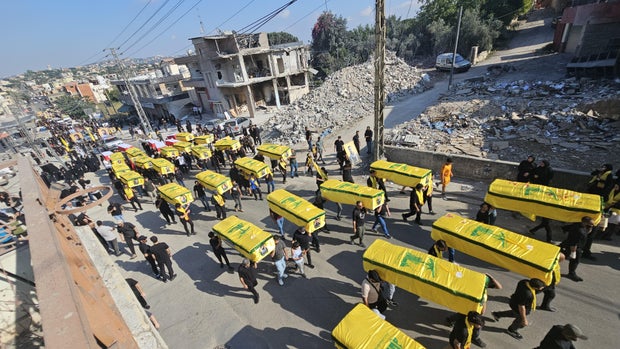
Regional analyst and former Israeli military intelligence officer Danny Citrinowicz told Reuters the dismantling of Hezbollah is "something that would never happen," and the deal ultimately legitimizes an indefinite Israeli military presence in Lebanon.
He said any Israeli prime minister is unlikely to halt the fight against Hezbollah while the group still poses a threat, so "nothing will happen. Israel won't withdraw, and Hezbollah won't dismantle."
Iran and Hezbollah have both insisted repeatedly that Israel must withdraw its forces from Lebanon as part of any full peace deal between Washington and Tehran.
"Terrorists" shoot dead two Guards members in Iran, says state media
Attackers shot dead two members of Iran's Revolutionary Guards at their home in the western city of Paveh, near the border with Iraq's Kurdistan region, state media reported Tuesday.
It was not immediately clear who was behind the shooting but Tehran has frequently blamed Kurdish separatist groups in the area for previous violence, accusing them of links to the United States and Israel.
The two IRGC members were killed in "a terrorist and cowardly act," state television said, while two other Guards members were wounded.
State television said "exact details of this incident and the measures being taken to identify those responsible are under review."
Separately, "a family's vehicle was sprayed with bullets" on Monday in the southeastern town of Saravan in Sistan-Baluchistan province, killing the father and wounding the mother, state television reported.
The woman later died of her wounds.
Authorities did not immediately identify those responsible or provide further details about the victims.
But state television said the attack "was carried out by Zionist-American mercenaries," a term Iranian officials commonly use for separatist and militant groups.
Sistan-Baluchistan, which borders Pakistan and Afghanistan, has long seen clashes between security forces, insurgents and drug smugglers.
One of Iran's poorest provinces, it is home to a sizable ethnic Baloch population, most of whom are Sunni Muslims in a Shiite-majority nation.
AFP
Expert doubts Strait of Hormuz will return to how it was before war
Aaron David Miller, a senior fellow at the Carnegie Endowment for International Peace, expressed doubt on CBS News' "The Takeout" that ships would return to moving through the Strait of Hormuz as freely as they were before the war.
"Whether it's the horse has left the barn or the genie's out of the bottle or I don't know what other cliche you could use, we are not going back to Feb. 27, where the straits were free and unfettered," Miller said, referring to the Strait of Hormuz and the Bab el-Mandeb Strait, another key waterway.
"Iran has their hands all over them," Miller said, "and they're going to seek remuneration to use those straits, weaponizing geography, basically as leverage."
Iran war has cost Americans $1,000 per household, economist estimates
The Iran war has cost Americans roughly $1,000 per household in higher fuel, food and other expenses since the start of the conflict in February, according to an estimate shared last week by Moody's Analytics chief economist Mark Zandi.
Zandi's analysis comes as government data shows inflation in May hit its highest level in three years, and with the U.S. and Iran yet to broker a lasting peace deal.
Trump says U.S. efforts in Qatar will be "perhaps important, perhaps not"
President Trump said U.S. officials' planned efforts in Qatar this week would be "perhaps important, perhaps not" after Iran denied that its negotiators would be meeting with Americans in the Middle East.
"The meeting in Doha is going to be perhaps important, perhaps not," Mr. Trump told reporters in the Oval Office, referring to Qatar's capital. "We're going to find out."
Iran says delegation heading to Qatar won't meet with U.S.
Iran on Monday said a delegation of experts would travel to Qatar's capital of Doha this week for discussions on the implementation of the memorandum of understanding with the U.S., but no meetings would be happening between the two countries.
"An expert delegation from the Islamic Republic of Iran will travel to Doha later this week" to discuss the implementation of clauses of the memorandum, Foreign Ministry spokesman Esmaeil Baqaei said.
"We have not yet entered the stage of negotiating a final agreement," he said, noting that "over the coming days, we will not have any negotiation meetings with the U.S. side at any level."
CBS/AFP