Iran vows harsh response to any attack as Trump says he'd "knock the hell out of them" if nuclear work resumes
Tehran, Iran — Iranian President Masoud Pezeshkian promised on Tuesday a harsh response to any attack, appearing to respond to a warning the previous day by President Trump over Iran's purported attempts to rebuild its nuclear program.
"Answer of Islamic Republic of Iran to any cruel aggression will be harsh and discouraging," Pezeshkian said in a social media post.
Pezeshkian did not elaborate, but his statement came a day after Mr. Trump suggested the U.S. could carry out new military strikes if Iran attempts to reconstitute its nuclear program.
Mr. Trump made the comment during wide-ranging talks with Israeli Prime Minister Benjamin Netanyahu at the U.S. leader's Mar-a-Lago estate in Florida.
"Now I hear that Iran is trying to build up again," Mr. Trump said during a news conference with Netanyahu after their meeting. "And if they are, we're going to have to knock them down. We'll knock them down. We'll knock the hell out of them. But hopefully that's not happening."
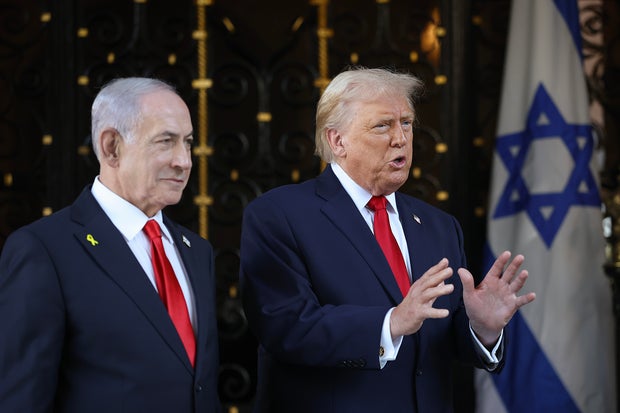
The two leaders discussed the possibility of renewed military action against Tehran months after a 12-day air war in June that killed nearly 1,100 Iranians, including senior military commanders and scientists. Iran's retaliatory missile barrage killed 28 people in Israel.
Mr. Trump repeatedly declared "total obliteration" of Iran's nuclear program after three sites were bombed in a secret attack by the U.S. in June, but questions were raised about the extent of the damage inflicted. An initial classified assessment determined that the strikes had set back Tehran's nuclear program by a matter of months, while Mr. Trump said it was set back "basically decades."
Some Democratic lawmakers, after a classified briefing on the strikes, argued that Mr. Trump had misled the American people about the level of success achieved.
Mr. Trump suggested Monday that he could order another U.S. strike against Iran if he believes it's needed.
"If it's confirmed, they know the consequences, and the consequences will be very powerful, maybe more powerful than the last time," Mr. Trump said.
Mr. Trump said he had heard Iran was rebuilding its capabilities after his closed-door meeting on Monday with Netanyahu, who has pressed successive U.S. administrations for decades to take a harder line against Iran.
"Netanyahu remains focused on reducing threats from Iran to Israel, which he has been for the almost 30 years he's been in office," CBS News national security contributor Samantha Vinograd, a former top Homeland Security official in the Obama administration, said Tuesday.
But Vinograd added that "the United States and Israel may have different intelligence assessments of what Iran's intentions are, what their capabilities are."
She said the U.S. strikes over the summer — known as Operation Midnight Hammer — "did inflict damage to Iran's nuclear facilities, however Iran does retain highly enriched uranium which could be used to breakout to a bomb."
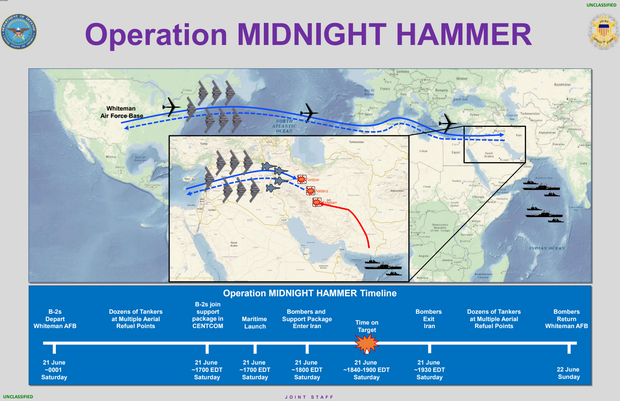
Vinograd said, however, the most immediate threat posed by Iran — not only to Israel but to U.S. forces in the region — may well be its massive stockpile of conventional ballistic missiles, not its potential to try to build a viable nuclear weapon.
"Iran has had more ballistic missiles than any other nation in the region, other than Israel, and it's really their leverage when it comes to wreaking havoc across the region, both against targets in Israel, American troops overseas, via proxies and more."
"It does appear that there is some kind of intelligence gap between what the U.S. thinks Iran is doing and capable of, and what Israeli intelligence is saying on those fronts."
Pezeshkian said Saturday that tension between the two sides had already risen again, claiming: "We are in a full-scale war with the U.S., Israel and Europe; they don't want our country to remain stable."
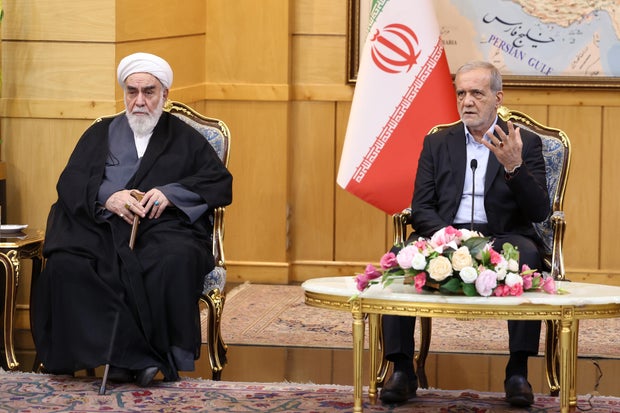
Iran has insisted it is no longer enriching uranium at any site in the country, trying to signal to the West that it remains open to potential negotiations over its atomic program.
U.S. intelligence agencies and the United Nations' International Atomic Energy Agency assessed Iran last had an organized nuclear weapons program in 2003, though Tehran had continued enriching uranium up to 60%, which is a short technical step away from weapons-grade levels of 90%.