I-Team update: He died fighting cancer. His widow is still fighting the workers' comp system
When CBS News Texas first met Fort Worth firefighter Todd Brook in February, he was fighting for time, for his family, and for fellow firefighters.
The 30-year veteran firefighter was battling pancreatic cancer. He said decades of exposure to toxic chemicals while fighting fires contributed to his disease.
He was also speaking publicly about a workers' compensation system he believed had failed him and others.
"It's a job I've done for 30 years, and I feel like somebody needs to do something right," Brook told the I-Team at the time.
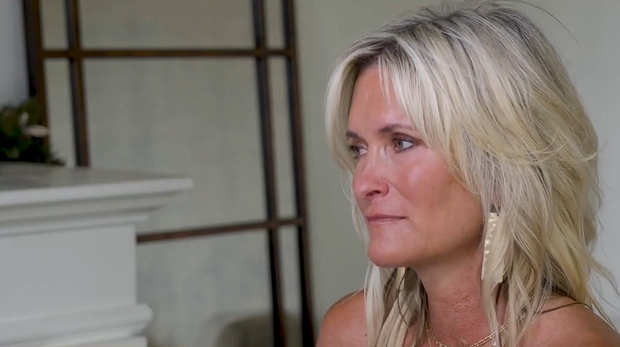
Months later, on June 5, Brook died. Now his widow, Jennifer Brook, is carrying on the fight he left behind.
"Maybe this is one of those times that we just need to be loud and make people hear us that they're not being treated fairly," she said.
Her story has become the latest in an ongoing I-Team investigation into complaints from firefighters and law enforcement officers who say they were injured, became sick or developed cancer because of their jobs, then struggled to obtain medical care and benefits through the Texas workers' compensation system.
A promise after death
Less than a month after her husband's death, Jennifer Brook attended an event for the International Association of Fire Fighters, which honored him with a medal recognizing his pancreatic cancer as a line-of-duty death.
But she said Texas and the City of Fort Worth have not recognized his death the same way.
"He loved that job. For 30 years. He devoted himself. He was proud. He enjoyed going in every day for 30 years. He should receive it," Brook said in a recent interview.
She said the workers' compensation process often discourages families from continuing to fight.
"They deny you and they make you fight. You don't have the strength to fight the city and fight the illness. All of your energy goes into the illness and then they win because then you don't fight."
Cancer claims and denials
Texas law includes presumptions designed to help firefighters diagnosed with certain cancers receive workers' compensation benefits. Eleven cancers are specifically listed in state law. Other cancers can still qualify if firefighters can show they were caused by the job.
Despite the law, in interviews, several firefighters said a workers' comp denial is expected in cancer cases. New state data obtained by the I-Team shows that 46% of cancer claims that firefighters filed in Texas between January 2021 and April 2026 were denied.
Advocates say the actual number may be higher because many firefighters become too sick or too frustrated to pursue claims.
Retired firefighter Mark Ware, who now helps other firefighters navigate the system, described the problem in February: "The system is broken. It's been broken since 2005 and it's still broken today."
Not limited to cancer
The issue first gained widespread attention after Fort Worth firefighter Caleb Halvorson suffered catastrophic injuries when a garage collapsed on him during a house fire last year.
His family publicly accused the workers' compensation system of delaying and denying needed care. It triggered outrage from elected leaders and eventually prompted changes inside the City of Fort Worth, which added two new human resources employees to assist first responders with claims.
After Halvorson's story aired, the I-Team spoke to more than two dozen first responders with similar complaints.
Our reporting continued with those battling denials, delays and disputes over medical care following on-duty injuries:
- Fort Worth firefighter Shonna Moorman said she repeatedly fought denials after being struck by a vehicle while working a crash scene.
- Fort Worth Fire Captain Daniel Terrell said he battled approvals after suffering extensive injuries in a fire engine rollover.
- Arlington firefighter Brady Weaver was shot in the line of duty and still carries a bullet in his body.
"We put our lives on the line, and they treat us like someone who stubbed their toe at work and is just trying to get a payout," Weaver said in an interview earlier this year.
Who is responsible?
The Texas Department of Insurance has told the I-Team that insurance carriers, not the state, make the initial decision to accept or deny claims.
Many cities contract with third-party administrators or risk pools to manage workers' compensation cases.
One of the largest is the Texas Municipal League Intergovernmental Risk Pool. It provides workers' compensation coverage and claims administration services to member cities across Texas, mostly small to mid-sized governmental entities.
TML-IRP's website highlights programs designed to help first responders, including guidance for cities implementing laws that provide enhanced benefits and paid leave protections for firefighters, police officers and EMS personnel injured in the line of duty.
TML-IRP have not responded to the I-Team's repeated requests for comment about the recent complaints raised by injured first responders, surviving spouses, advocacy organizations and lawmakers.
Fort Worth uses Sedgwick as a third-party carrier. It too has not commented on the accusations from first responders.
A deputy's testimony sparks outrage
The issue reached the Texas Capitol in May. Wood County Sheriff's Office Patrol Sgt. Jaclyn Skinner testified before lawmakers after being shot four times in an ambush while serving felony warrants.
Skinner told lawmakers that despite her injuries, she struggled to obtain wound-care supplies, diagnostic testing, therapy and equipment needed for recovery.
"All I want to do is go back to work. If I can get healthy and get this underway ... they are making this impossible," she said
Her testimony stunned lawmakers. Rep. Cole Hefner, a Republican from Mt. Pleasant said, "this is infuriating. I've never heard of someone walking around with bullets in them and not getting taken care of."
Rep. Terry Canales, a Democrat from Edinburg, said, "what we see is insurance dictating your healthcare, not the doctors."
Rep. Janis Holt, a Republican from Silsbee, told Skinner, "you've been failed by the system."
The Mark Pate case
One month later, the issue surfaced again in Burleson.
The widow of veteran Burleson Police Det. Mark Pate fought a workers' compensation denial after she says her husband died from complications following surgery related to an injury he sustained during mandatory police training.
Supporters packed a hearing room as the family challenged the decision.
For advocates, the Pate case became another example of concerns that have been building for years.
"We feel that this has been exposed over the last year, more so than it has been in the past. We've had a lot of big cases," said Jennifer Semansky, deputy executive director of the Combined Law Enforcement Associations of Texas (CLEAT).
A judge ultimately ruled in favor of the Pate family; However, CLEAT tells the I-Team the Texas Municipal League Intergovernmental Risk Pool is appealing that decision.
Momentum for change
Advocates say the recent cases have created momentum for reform.
Semansky said one of the biggest problems begins after a claim is denied.
"Once the claim is denied, their medical care comes to a screeching halt and now they're in no man's land. They cannot receive medical care until they've completed the dispute resolution process, which can take months, sometimes over a year," she said
CLEAT, the Texas State Association of Fire Fighters and the Texas Municipal Police Association are now working with lawmakers on potential reforms.
One proposal would allow injured first responders to receive medical treatment immediately while disputes over who ultimately pays continue separately.
Rep. Jared Patterson, a Frisco Republican, said recent cases have changed the conversation inside the Capitol.
"It has awoken more of my colleagues to the fact that this system is fundamentally broken and that it needs an overhaul."
Patterson said lawmakers are actively working on legislation, and he is leading the effort.
"It's going to take all of us as legislators to take them on and to force them to do what is right," he said.


