Democratic candidates for Texas AG call state's school choice program, Ten Commandments law unconstitutional
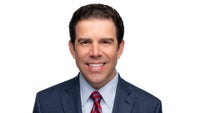
The Democrats running for Texas Attorney General are taking aim at two high-profile state laws approved by Republicans last year.
Former Galveston Mayor Joe Jaworski and State Senator Nathan Johnson of Dallas are vying for their party's nomination during the primary runoff on May 26.
In an interview with CBS News Texas, Jaworski called the Texas Education Freedom Accounts, the taxpayer-funded school choice program approved last year, unconstitutional and said he would consider suing the state if Republican leaders remain in office.
"Absolutely," said Jaworksi. "If you look at the Texas Constitution, it's very clear that the legislature shall make suitable provision for an efficient system of free public education and defunding public education. Taking yours and my tax dollars and saying you can use this in a private school is unconstitutional."
Johnson said the state's Ten Commandments law violates the Constitution.
If elected, he told CBS News Texas, "I will not defend the legislature's passage of unconstitutional laws and laws that violate individual rights. I will not defend the legislature's passage of a requirement that schools place the Ten Commandments in classrooms because it's unconstitutional."
When asked if the state would have to hire private attorneys to defend the law, Johnson said, "Yes. If they want to defend unconstitutional laws. That might be a good conversation for me to have with the legislature before they pass the next ill-advised and unconstitutional law."
Johnson said his goal would not be to sue the Trump administration, but that he would protect the state from federal overreach.
"I probably would have already sued the Trump administration literally dozens of times. It's just because he's so prolific and violating the constitution and the Administrative Procedures Act and state law and individual rights. It's not because I want to sue the president, but whether it's a Democratic president or a Republican president, there is a temptation, a tendency right now in the United States, globally, for the executive to be overly assertive. I believe in the separation of powers."
When it comes to his top priorities if elected, Johnson said he wants to rebuild the culture of the Attorney General's Office.
"My top priority is to populate the Attorney General's Office with really good people. Four thousand employees, 800 lawyers. The ideologues can go somewhere else. People with institutional expertise who are committed to public service, whether they're currently working in the Ken Paxton Attorney General's Office or new."
He said he will ensure that the marketplace will remain competitive.
"Quality has gone down. Prices have gone up, and consumers are being manipulated and taken advantage of in the commercial sector. Attorneys General are supposed to make sure that the competitive market is competitive. It is the natural tendency of powerful corporations to try to get more powerful. It is the duty of government to make sure that they don't control the rules of the game and are forced to compete."
Jaworski said if elected, he would form three new "transformative" divisions within the Attorney General's Office.
"The first would be the division of affordability and value-related concepts. We hear a lot about affordability because everything costs too much and no one's doing anything for the hard-working families. But value also matters. That touches on consumer protection. So, imagine 100 lawyers or more working every day on every possible topic."
He would also implement what he called the Division of Elections and Voter Encouragement.
"The exact opposite of what we have now, which is voter suppression."
Jaworski said he wants to enforce a part of the Texas Election Code.
"Which requires every principal in a high school to offer registration twice a year to the senior class. That's public and private schools. It's just simply not done. I think anecdotally, 30% of all schools actually follow through with this."
Jaworski also said he would establish the Division of Ethics and Integrity.
"That's got a great acronym, DEI. But what it's going to do is hold Dan Patrick, Greg Abbott, and any other powerful politician who plays games with our ethics laws. How is it that Dan Patrick received $3 million from Tim Dunn, Ken Paxton's historically number one donor six weeks before calling the first witness at Paxton's impeachment trial. Patrick was the judge."
When asked if a new state law was required, Jaworski said, "No. There's something called civil investigative demands. I think the voters are entitled to find out what the terms are of the $2 million forgivable loan. What were the terms and what emails might there be?"
Both Jaworski and Johnson landed in the runoff after Johnson almost won the March 3 primary outright with more than 48% of the vote. He needed 50% plus one vote to avoid the runoff. Jaworski edged out Dallas Attorney Tony Box, who told CBS News Texas that he is not going to endorse either candidate for the runoff and instead, will remain neutral.
Republican runoff for Texas Attorney General
The Democratic primary runoff is not nearly as contentious as the primary runoff between the Republican candidates, State Senator Mayes Middleton of Galveston and Central Texas Congressman Chip Roy. Both spoke with CBS News Texas last week.
They emerged from the March 3 primary, finishing in the top two. Middleton received more than 39% of the vote, while Roy finished with nearly 32%. Middleton also received the endorsement from another Republican candidate, Aaron Reitz. No word yet from the fourth candidate in the GOP primary, State Senator Joan Huffman, if she will make an endorsement in the runoff.
Watch Eye On Politics at 7:30 Sunday morning on CBS News Texas on air and streaming


