DNA from BBQ sauce bottle, soda bottles leads to Colorado man's arrest in 1981 Texas murder


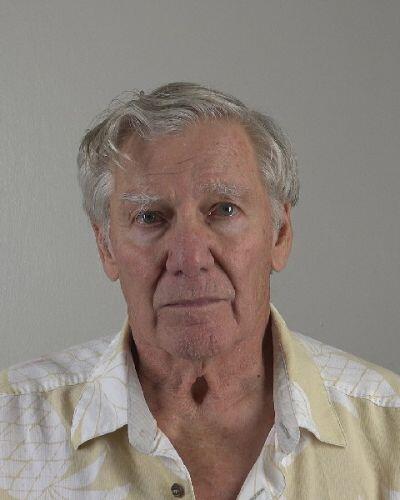
A 79-year-old Colorado man has been arrested in the 1981 strangulation death of a woman in Grapevine, court documents and jail records show.
Larry Dean Brown is being held in the Tarrant County Jail on a charge of murder, intentionally causing death.
An indictment alleges Larry Brown used his hands or an electrical cord to strangle Beverly Bruneau just before Valentine's Day 45 years ago.
How the investigation began
In February of 1981, Grapevine police officers responded to an apartment after a 911 caller claimed he found his girlfriend, identified as 35-year-old Beverly Bruneau, dead on the living room floor with an electrical cord wrapped around her neck and blood on her face.
According to court documents, Bruneau was found with multiple injuries that were consistent with a struggle. Officers also noted that the crime scene showed "obvious signs" of a fight as they found several items and multiple surfaces with blood stains, including bloody fingerprint smudges on the kitchen sink.
Court documents state that officers spoke with a witness who lived directly across from the apartment, and she said she heard a man scream, "Oh God," and ask for the police.
Officers learned that Bruneau was a flight attendant at the same airline, Braniff, now known as DFW Airport, where her boyfriend worked. However, according to court documents, he maintained his innocence and said he was working at the time of Bruneau's murder.
Interviews lead officers to victim's best friend, best friend's husband
Officers then went to speak with Bruneau's best friend, identified as Thelma Brown, who was also a flight attendant. However, she wasn't home due to being on an international flight, and Thelma Brown's husband, Larry Brown, a former pilot and engineer with Braniff, was there to speak with detectives.
Records show Larry Brown told detectives that Thelma Brown and Bruneau were roommates and co-owned a home in Dallas that was badly damaged in an arson a few months prior to Bruneau's murder.
Records note that detectives found Larry Brown's answers evasive and that he had "a fresh wound to his right thumb," just below the thumbnail where the top layer of skin had been torn/ripped off.
However, Larry Brown wasn't arrested in the case.
DNA collected and clothing preserved for evidence
The Tarrant County Medical Examiner's Office ruled Bruneau's death a homicide caused by strangulation and said the tests came back negative for sexual assault.
Bruneau's clothing was collected and preserved at the time of her autopsy.
According to court documents, in 2010, her clothing and other evidence were sent to a lab for examination as technology advanced. A DNA sample indicated blood from an unknown man, and a DNA profile was created and uploaded to CODIS, but no matches came back.
Renewed investigation finds insurance fraud claims
In 2025, Grapevine officers began investigating the cold case and found a mortgage agreement between Thelma Brown and Bruneau.
According to the agreement, if either woman married, which in this case was Thelma Brown, she would remain responsible for her share of the mortgage until alternative arrangements were made. The mortgage loan also included a life insurance policy, and in the event of one of their deaths, a percentage of the loan would be paid.
Police said they learned that after the agreement was made, Thelma Brown married Larry Brown, who had been laid off from the airline where they all worked. Officers said Larry Brown also held a partial ownership in a construction company.
Officers said the couple purchased a home in Grapevine and, according to court documents, pressured Bruneau to find a different roommate for the Dallas home she and Thelma Brown owned together, or to release Thelma Brown from her financial responsibilities.
After Bruneau repeatedly refused these requests, creating tension with the Browns, a fire broke out at the Dallas home while Bruneau was out of town. The same night after the fire was extinguished by Dallas Fire-Rescue, a second fire, allegedly caused by arson, happened and significantly damaged the home.
Following the fire, it was alleged that both Thelma and Larry Brown asked Bruneau to sign fraudulent insurance documents to receive a payout from the insurance company after Larry Brown tried to get an appraisal done through his construction company.
Court documents state that a few days before her death, Bruneau was confronted by Larry Brown about her refusing to sign the paperwork. Larry Brown admitted this to the police in 1981.
Police noted that Larry Brown initially was cooperative in the investigation but later refused to be fingerprinted, undergo a polygraph, and take photographs of his injuries.
How Larry Brown was captured
In February 2026, the Grapevine Police Department contacted the Larimer County Sheriff's Office, where Larry Brown lived in Loveland.
The sheriff's office set up surveillance on Larry Brown's home and collected DNA from his trash that was placed on the curb, including Cola bottles and a BBQ sauce bottle. The DNA samples were sent to a lab, and in May, the results matched the blood found on Bruneau's clothing.
Larry Brown was later arrested and transported to Tarrant County Jail. His bond was set at $100,000, and after posting it on July 21, he was released with conditions.
Grapevine police did not respond to requests for comment. CBS News Texas also contacted Larry Brown's listed attorney, Colin McLaughlin, but did not receive a response.
Advances in DNA technology help crack decades-old cold cases
Criminologist Alex del Carmen, who is not connected to the case, said advances in DNA technology are helping police make major breakthroughs.
"This is nothing more than good law enforcement in action," Del Carmen said. "That's why preserving evidence rooms is so important. It helps maintain the integrity of evidence and, in some cases, DNA over the years. Forty-five years ago, we had no idea we would be where we are today."
The Grapevine Police Department said, in part, that it "is committed to pursuing justice for victims, regardless of how much time has passed."
"If you've been a victim of a crime, don't lose hope," Del Carmen said. "Technology will eventually help us catch the perpetrator. These cold cases are worth revisiting, especially when evidence has been securely preserved and can later be used for effective prosecution."
CBS News Texas will provide updates as more information becomes available.


