World reaction to U.S. strikes on Venezuela pours in
Many U.S. adversaries condemned the U.S. strikes on Venezuela, while other governments called for de-escalation.
Watch CBS News
Many U.S. adversaries condemned the U.S. strikes on Venezuela, while other governments called for de-escalation.

At an emergency United Nations Security Council meeting, ambassador to the United Nations Michael Waltz defended the U.S. military operation in Venezuela that led to the capture of Nicolás Maduro and his wife.

The U.S. military's capture of Venezuela's Nicolás Maduro and his wife reportedly involved preparations that included spies and drones. CBS News senior national security correspondent Charlie D'Agata has more details on the operation.

President Trump claims Venezuela's oil industry will make more money with the U.S. behind it. Venezuela is estimated to have 303 billion barrels of crude oil still in the ground, which is about 20% of the world's reserves. CBS News business analyst Jill Schlesinger explains how it could impact U.S. prices.

In Caracas, Venezuela, residents rushed to grocery stores, pharmacies and gas stations to stock up following ousted President Nicolás Maduro's arrest, unsure what will happen next. Supporters for Maduro made their voices heard, while some of those who fled the regime expressed skepticism of interim President Delcy Rodriguez. Lilia Luciano has more.

Nicolás Maduro's vice president, Delcy Rodríguez, was officially sworn in as Venezuela's acting president. President Trump warned he could go after her if she doesn't comply with U.S. demands, including access to the country's oil supply. Weijia Jiang reports.

The operation to capture Venezuela's Nicolás Maduro and his wife involved more than 150 aircraft launched from 20 different military bases, Gen. Dan Caine said. A source familiar with the operation said a small team of CIA personnel had been on the ground in Venezuela since August, tracking Maduro's movements. Charlie D'Agata reports more on how Maduro's capture unfolded.

Ousted Venezuelan President Nicolás Maduro and his wife, Cilia Flores, are set to be arraigned at a Manhattan courthouse on Monday after they were captured during a U.S. operation in Caracas over the weekend. They're expected to plead not guilty to the charges they face. Matt Gutman reports.

Nicolas Maduro and his wife are expected to face federal charges related to drug trafficking and working with gangs designated as terrorist organizations.
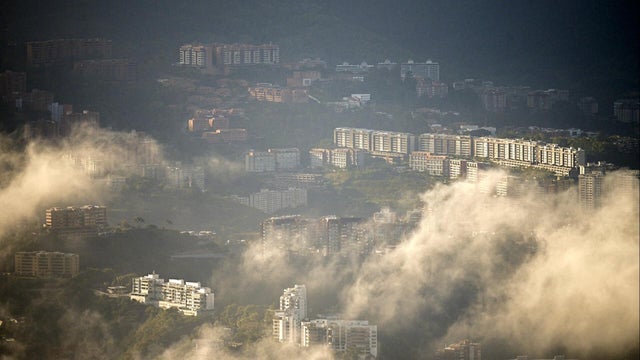
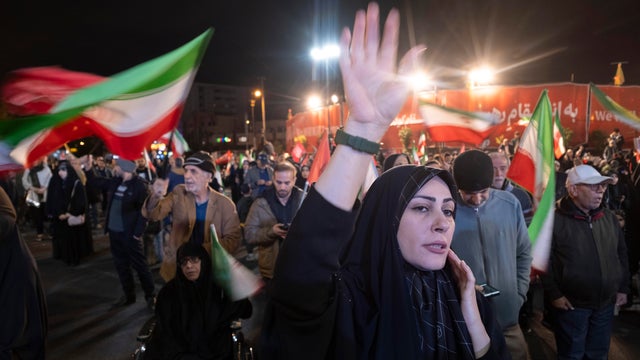
Russia, China and Iran have all publicly condemned the U.S. action in Venezuela. CBS News producer Leigh Kiniry has the latest.

The U.S. military operation to capture Nicolás Maduro and his wife, Cilia Flores, will likely have major ramifications on the world stage. CBS News national security contributor Samantha Vinograd has the latest.

The Trump administration has yet to provide significant details on what the endgame is for Venezuela after the U.S. military operation that captured Nicolás Maduro and his wife. CBS News Pentagon reporter Eleanor Watson has more.

Nicolás Maduro and his wife, Cilia Flores, are awaiting arraignment on federal charges in the Southern District of New York after a U.S. military operation led to their capture in Venezuela. CBS News' Natalie Brand has the latest.

Missed the second half of the show? Senate Intelligence Committee chairman Sen. Tom Cotton, Rep. Jim Himes and Sen. Chris Van Hollen join.

Democratic Sen. Chris Van Hollen of Maryland said that the U.S. strikes in Venezuela have "never been about stopping drugs from coming into the U.S.," but rather "about getting rid of Maduro" and "grabbing Venezuela's oil."

Democratic Rep. Jim Himes of Connecticut said that he has had "zero outreach" from the Trump administration over the U.S. military operation in Venezuela that led to Nicolás Maduro and his wife's capture, and that no Democrat that he's aware of has "had any outreach whatsoever."

After the U.S. carried out a military operation in Venezuela and captured President Nicolás Maduro, Secretary of State Marco Rubio says "the president always retains the optionality" to occupy the country.

Reactions from U.S. lawmakers poured in after the Trump administration announced strikes on Venezuela and the capture of the country's president.

"We spent decades and decades and purchased in blood, and got nothing economically in return, and President Trump flips the script," Pete Hegseth said.

"President Trump sets the terms. And ultimately, he'll decide what the iterations are of that," Hegseth told "CBS Evening News" anchor Tony Dokoupil.

Defense Secretary Pete Hegseth joins "CBS Evening News" to discuss the U.S. capture of former Venezuelan President Nicolás Maduro.

After their capture, former Venezuelan leader Nicolás Maduro and his wife were flown to Stewart International Airport, 60 miles north of New York City, then will be helicoptered to Manhattan. They will be processed at the headquarters of the Drug Enforcement Administration. Ali Bauman reports.

President Trump spoke at Mar-a-Lago after confirming a "large scale" military strike in Venezuela that led to the capture of President Nicolás Maduro and his wife. Mr. Trump said the U.S. will "run" Venezuela until a peaceful transition can take place and said the U.S. is ready to conduct a second, larger attack if necessary. Defense Secretary Pete Hegseth, Chairman of the Joint Chiefs of Staff Gen. Dan "Razin" Caine and Secretary of State Marco Rubio provided other details. Jericka Duncan anchored this Special Report.

President Trump addressed the U.S. after confirming a "large scale" military strike in Venezuela and capturing President Nicolás Maduro and his wife. Mr. Trump said the U.S. will "run" Venezuela until a "safe" transition can take place, but did not provide specific details. He also said the U.S. is ready to conduct a second, larger attack if necessary.

María Corina Machado said Nicolás Maduro will "face international justice for the atrocious crimes" he has committed.