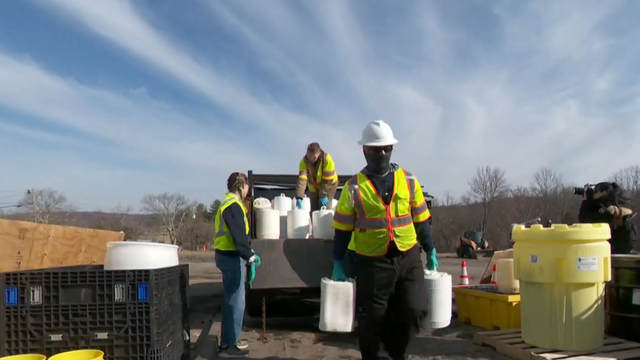
New Jersey works to destroy firefighting foam laced with cancer-linked PFAS
New Jersey is one of more than a dozen states that are working to collect, remove and destroy all of their aqueous film-forming foam.
Watch CBS News
New Jersey is one of more than a dozen states that are working to collect, remove and destroy all of their aqueous film-forming foam.

Fire departments across the U.S. are changing how they extinguish fires. For decades, they used foam that contained so-called "forever chemicals" that are now linked to cancer. More than a dozen states are now working to collect, remove and destroy all of it. Mark Strassmann has more.

Chemical maker Chemours allegedly discharged chemicals linked to cancer and other health conditions in three states.

Australia is suing 3M for more than 2 billion Australian dollars ($1.4 billion) over so-called "forever chemical" contamination from firefighting foam at defense bases, the government says.

California lawmakers voted to phase out a group of chemicals known as PFAS, which are often called "forever chemicals," in cookware.
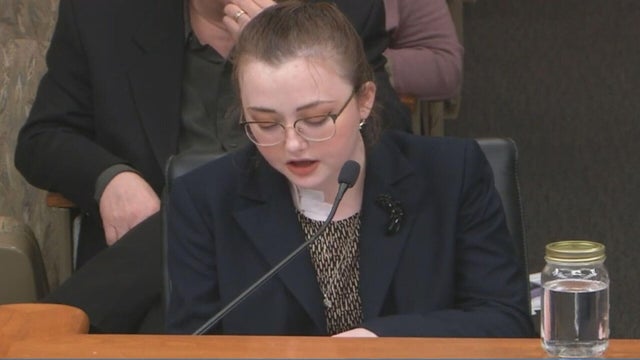
"Amara's Law" will reduce, then eliminate, the manufacture and sale of nonessential PFAS products by 2032.

Starting this year, "Amara's Law" in Minnesota became America's strictest state law policing PFAS, compounds known as "forever chemicals." Mark Strassmann has more on the woman whose testimony helped spur its passage.

Prenatal exposure to toxic substances known as PFAS, also called "forever chemicals," can cause future health issues for teenagers, a new study found. Dr. Leonardo Trasande, a co-author of the American Heart Association's statement on the study, joins "The Daily Report" to discuss.

The Environmental Protection Agency says it will roll back limits on several types of PFAS, known as "forever chemicals," in drinking water.

The Environmental Protection Agency is moving to roll back limits on toxic "forever chemicals." Emily Donovan, co-founder of "Clean Cape Fear," joins to discuss.

A firefighting foam known as AFFF contains PFAS, also known as "forever chemicals," that have been linked to cancer.

A firefighting foam known as AFFF contains PFAS, toxic "forever chemicals" linked to some cancers. Mark Strassmann takes a look at how firefighters are grappling with being exposed to the chemicals for so long and what's being done about it.
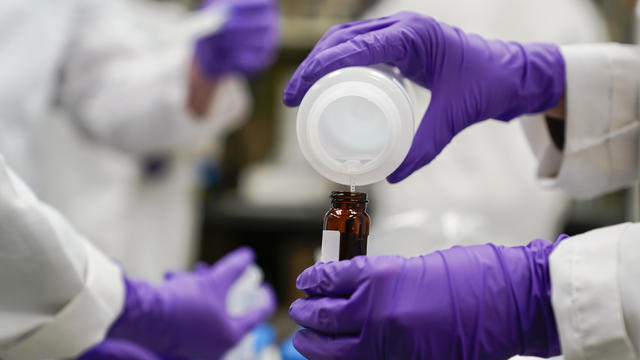
Study finds cancer-linked PFAS chemicals prevalent in drinking water sources across the globe, including many far over regulatory limits.

"They looked me in the eye and told me… 'We would never poison our own people,'" one former water resource management commissioner said. "And they lied. They lied about all of it."

The EPA issued the first-ever national regulation limiting the amount of certain PFAS in drinking water. Here's what to know about potential health impacts of "forever chemicals."

The EPA will require that public water utilities test for six different types of PFAS chemicals to reduce exposure in drinking water.

The Environmental Protection Agency announced Wednesday new regulations to limit the amount of "forever chemicals," known as PFAS, found in drinking water. CBS News senior national and environmental correspondent Ben Tracy has more.

Beginning in 2020, U.S. food manufacturers committed to phasing out PFAS in wrappers, boxes and bags with coating to prevent grease, water and other liquids from soaking through.

The news that PFAS compounds are in their gear — primarily meant to repel water and contaminants like oil and prevent moisture-related burns — is worrisome to firefighters.

The U.S. Geological Survey tested tap water from 716 locations nationwide over five years.
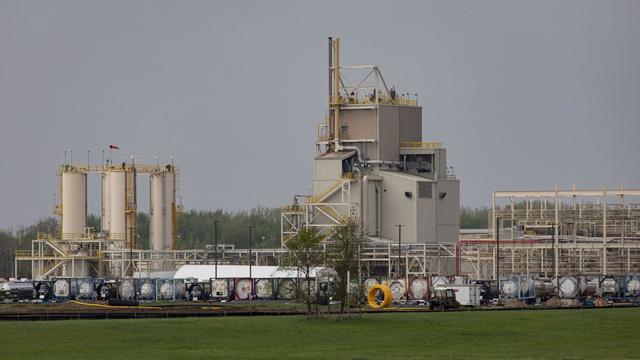
The EPA rule would require manufacturers to report many products that contain a type of chemicals linked to cancer, birth defects, and hormone irregularities.
Also known as PFAS, they never break down, are linked to certain cancers and are found in everyday products such as clothes, cookware, cosmetics and cleaning supplies.

Toxic PFAS, also known as "forever chemicals," have been found in farmland soil throughout the U.S. One family in Maine had to give up their farming dreams because of contaminated soil. Roxana Saberi reports.

Roxana Saberi takes a look at how toxic synthetic chemicals known as PFAS are winding up in everything from our water and food supply to cosmetics.