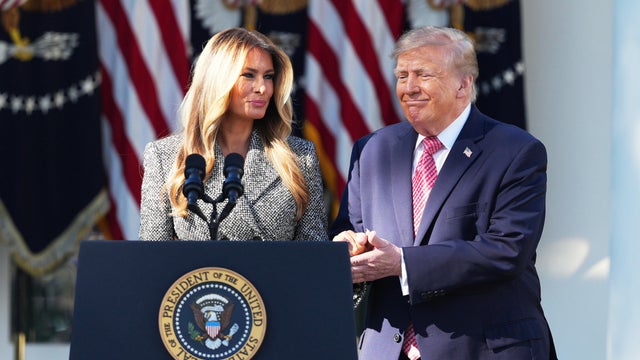
What we know about Mojtaba Khamenei
Iran has named its new supreme leader, Mojtaba Khamenei, son of Ayatollah Ali Khamenei. CBS News' Holly Williams has more.
Watch CBS News
Iran has named its new supreme leader, Mojtaba Khamenei, son of Ayatollah Ali Khamenei. CBS News' Holly Williams has more.

Retired Rear Adm. Mark Montgomery, senior director at the foundation for Defense for Democracies, joins CBS News to discuss Mojtaba Khamenei, son of Ayatollah Ali Khamenei, being named the new supreme leader of Iran.

Mojtaba Khamenei, son of Ayatollah Ali Khamenei, has been named new supreme leader of Iran, Iranian media reports. Lindsey Reiser anchors CBS News' live coverage.

A U.S. service member has died from injuries received during Iran's initial retaliatory attacks, the U.S. Central Command said Sunday. CBS News' Nikole Killion reports.

CBS News chief Washington correspondent Major Garrett interviews Defense Secretary Pete Hegseth about the state of the war with Iran. Hegseth says "there will be more casualties," but says Iran will be forced to surrender. 60 Minutes, tonight.

Olga Stefanishyna, the Ukrainian ambassador to the U.S., told "Face the Nation with Margaret Brennan" that Russia is "absolutely a factor" in the war with Iran as Russia was "investing in regimes like Iran, Venezuela, and Syria, just because they thought it's not possible to have the resolute action as it is now taking place with Iran and as it was before in Venezuela."

In a phone call with CBS News' Robert Costa, President Trump said he "couldn't care less" about threats from Iran's top national-security official, Ali Larijani. Mr. Trump said he is focused on "getting Iran to a point where they surrender," Costa told "Face the Nation with Margaret Brennan."

President Trump, Vice President JD Vance and Defense Secretary Pete Hegseth on Saturday traveled to Dover, Delaware, to witness the dignified transfer of the six Americans killed in action in the war in the Middle East.

Israeli ambassador to the U.S. Michael Leiter told "Face the Nation with Margaret Brennan" that when talking about the Iranian leadership pipeline, Americans have to remember that "pragmatists have been very limited in their ability to influence in Iran" because "the people influencing deciding for Iran are these ayatollahs."

Energy Secretary Chris Wright told "Face the Nation with Margaret Brennan" that he believes that oil and gas prices "shouldn't go much higher than they are here because the world is very well supplied with oil," adding that the conflict in the Middle East is "not a long-term war."

President Trump spoke to the Qatari emir, who emphasized to the president the "need for diplomacy to de-escalate the situation." The question now is whether the Trump administration can keep global energy moving while this war continues. Imtiaz Tyab reports from Doha.

Towering flames cast an eerie orange glow over Tehran overnight after Israel struck what it said was an Iranian military fuel depot. Matt Gutrman reports on the latest from the Middle East.

This week on "Face the Nation with Margaret Brennan," as the U.S. and Israeli forces stepped up their bombing campaign through the weekend, Margaret Brennan speaks to U.S. Energy Secretary Chris Wright, Israeli ambassador to the U.S. Michael Leiter and Democratic Sen. Tim Kaine.
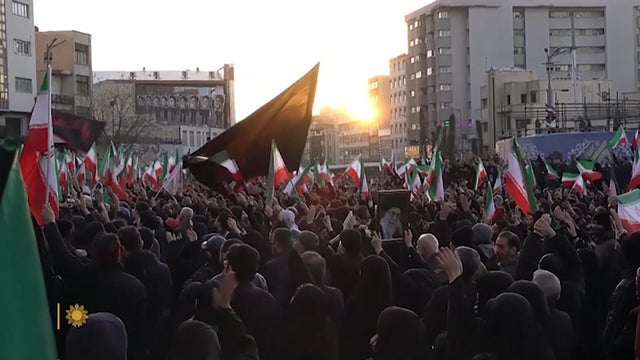
American and Israeli attacks on the Islamic Republic of Iran that killed the Ayatollah Ali Khamenei, prompting retaliatory strikes across the region, are the latest chapter in a nearly half-century stand-off between Tehran and Washington. "Sunday Morning" national correspondent Robert Costa talks with New Yorker writer Robin Wright about Iran's history and ambitions, and about President Trump's next steps after launching strikes.

Last June, President Donald Trump announced U.S. strikes on Iran had "completely and totally obliterated" key facilities of that country's nuclear program. Now, Trump has attacked Iranian territory again, in conjunction with strikes ordered by Israeli Prime Minister Benjamin Netanyahu. CBS News national security correspondent David Martin talks with retired general and CBS News contributor Frank McKenzie about Washington's escalating war with Tehran.
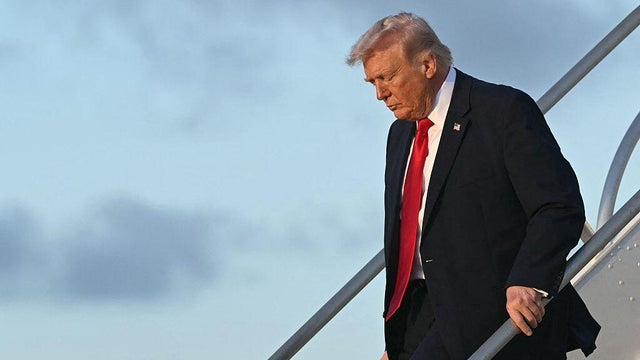
In a phone interview with CBS News, President Trump dismissed threats from Iran's top national-security official, who posted on social media that Mr. Trump must "pay the price" for the strikes on Iran.
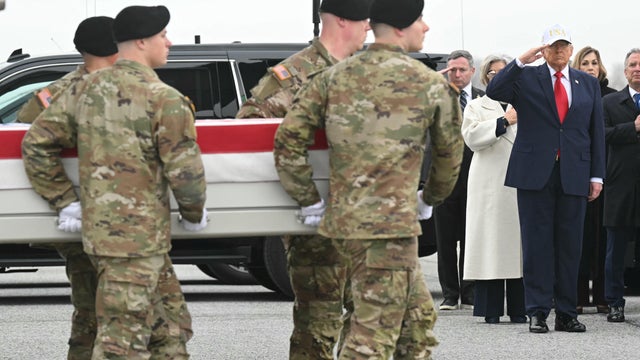
All six service members died during an unmanned aircraft system attack in Port Shuaiba, Kuwait.

China buys nearly all of Iran's sanctioned oil, and due to the U.S. and Israeli-led conflict there, the supply line has been severely disrupted. Anna Coren has more from Beijing.

The war in Iran has ignited opposition groups in the region, desperate for regime change. Holly Williams reports from northern Iraq with members of the Kurdish militia.

In Dover, Delaware, President Trump attended the dignified transfer for six U.S. service members killed in the conflict with Iran. Nikole Killion has more.
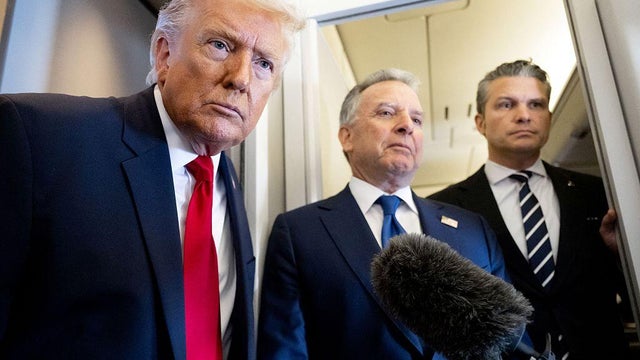
President Trump on Saturday told reporters, without citing evidence, that he believes a deadly strike on a girls' primary school in southern Iran last weekend was "done by Iran."

Retired Marine Corps Col. Mark Cancian joined CBS News to discuss the dignified transfer of six Army reservists who were killed in the conflict with Iran. CBS News' James LaPorta has more.

President Trump attended the dignified transfer of six U.S. service members killed in the opening days of the war in Iran. CBS News national security coordinating producer James LaPorta has more on the significance of the moment.

The U.S. and Israel's war against Iran entered its eighth day, with ongoing strikes on Tehran. CBS News chief correspondent Matt Gutman has the latest from Tel Aviv.

Secretary of Defense Pete Hegseth told CBS News' Major Garrett that "no one's putting us in danger" over reports of Russia sharing intelligence with Iran in a 60 Minutes interview airing Sunday, March 8. CBS News national security contributor Samantha Vinograd has more.