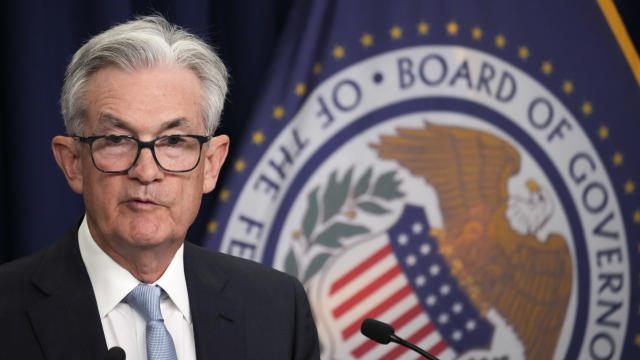
This is how the Fed's latest interest-rate hike will affect you
The central bank said it is boosting rates by 0.75 percentage point. Expect to pay more for credit card debt and loans.
Watch CBS News
The central bank said it is boosting rates by 0.75 percentage point. Expect to pay more for credit card debt and loans.

The $1.6 billion in direct deposits "will provide much needed relief as we head into winter," Governor Mike Dunleavy said.

The Federal Reserve is expected to raise interest rates for a fifth time Wednesday as part of ongoing efforts to curb inflation. Thomas Hogan, a senior fellow at the American Institute for Economic Research, joined CBS News to discuss the immediate and long-term impacts of the increase.

As President Biden sets off to attend the U.N. General Assembly in New York Tuesday, the Federal Reserve is expected to hike interest rates again on Wednesday in an effort to quell high inflation. Nancy Cordes reports from the White House.

Americans are expected to pay more to heat their homes this winter compared to last year. Mark Wolfe, executive director of the National Energy Assistance Directors' Association, explains what's behind the jump in costs.

Americans could pay as much as 17% more to heat their homes this winter, with electricity costs also expected to jump.

Value of U.S. dollar has been on a more-than-a-year-long tear that many experts don't see ending anytime soon.

But "markets have good reason to be braced for headwinds," one analyst said of expectations Fed will hike rates this week.

CBS News senior national correspondent Mark Strassmann reports from Los Angeles on fears that inflation may be much more entrenched and sticky than previously thought.

All three major stock indexes ended the week with losses for the fourth time in five weeks. Victoria Fernandez, chief market strategist at Crossmark Global Investments, joins CBS News to discuss what it means for the U.S. economy.

To compensate for higher costs of living, more Americans are resorting to "buy now, pay later" plans, and regulations have not kept up with the new digital offerings. Finance reporter Ken Sweet from The Associated Press joins CBS News to discuss the risks for consumers.

David Kelly, the chief global strategist for J.P. Morgan Asset Management, joins CBS News to discuss the drop in first-time jobless claims last week and last month's rise in retail sales. He also shares his expectations for next week's highly anticipated Federal Reserve meeting.

The tentative agreement between railway companies and its workers is welcome news to farmers who depend on trains to transport their goods. But it's not the only issue in America threatening farmers. Mark McHargue, president of the Nebraska Farm Bureau, joined CBS News to discuss the impact inflation has had on farms across the country.
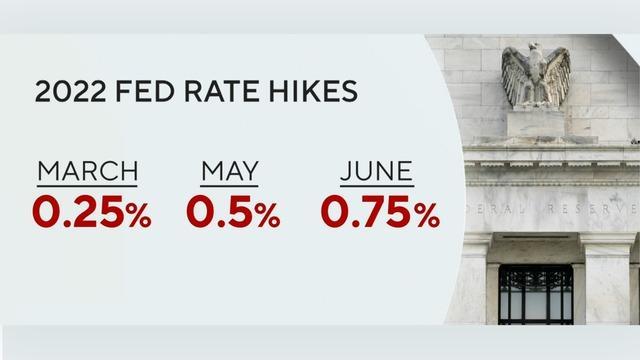
The Federal Reserve announced it is raising its benchmark interest rate by three-quarters of a percentage point, the sharpest hike since 1994, as it seeks to combat the biggest surge in U.S. inflation in four decades. CBS News senior White House and political correspondent Ed O'Keefe and Stephen Gandel, news editor for The New York Times' DealBook, join CBS News to discuss the implications of the decision.

As inflation increases the cost of living, many families are finding themselves forced to quickly adapt to a new environment where their dollars don't go as far. Claudia Hernandez, a single mom, discussed the changes she has had to make for herself and her daughter, Isabella, in response to higher prices. While it's hard to cut back, Hernandez has done so with optimism for the future and has become resourceful with ways in which she is making sure she's taking care of her daughter and herself. She spoke with Anne-Marie Green and Vladimir Duthiers about how inflation has impacted her life and the lessons she's teaching her daughter about financial responsibility.

The average mortgage interest rate in the U.S. rose above 6% for the first time since 2008, and applications have fallen to their lowest level in over two decades. BancAlliance president Lori Bettinger joins "CBS News Mornings" to discuss.

Investors on Wall Street are pessimistic on inflation after August's Consumer Price Index report showed prices rising. CBS News chief White House correspondent Nancy Cordes spoke with Treasury Secretary Janet Yellen about the state of the economy and the impact of a potential rail strike.

The Biden administration is working to avoid a rail strike that could derail the economy that's already been slowed by record inflation. Nancy Cordes spoke to Treasury Secretary Janet Yellen about the looming strike and rising prices.

Inflation "obviously is of tremendous concern to Americans," the treasury secretary told CBS News chief White House correspondent Nancy Cordes in an interview.
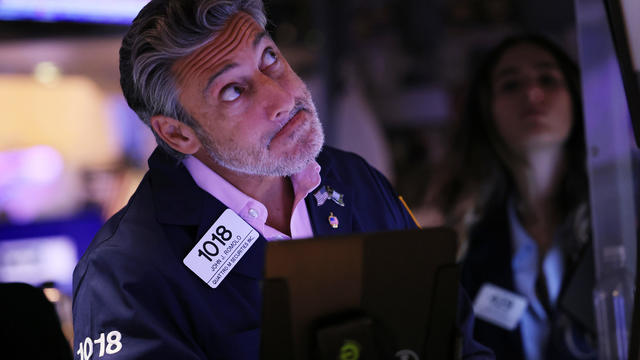
"A sustained rally is likely to require clear evidence that inflation is on a downward trend," a UBS analyst said.

The new wholesale prices report is echoing Wall Street's concerns that inflation isn't easing quickly enough. It comes on the heels of the worst day for stocks in more than two years. Matt Sapaula, founder of Money Smart Guy, joined CBS News to discuss.

Stocks dropped after the latest Consumer Price Index report showed U.S. inflation remains high. The Dow tumbled nearly 1,300 points Tuesday for the worst day since June 2020. Wall Street Journal reporter Dion Rabouin joins CBS News to discuss the market reaction.

CBS News business analyst Jill Schlesinger joins "CBS Mornings" to explain why the stock market dipped and what the economy could look like heading into the holiday season.

President Biden held an event Tuesday to celebrate the Inflation Reduction Act as a new inflation report rattled Wall Street. CBS News Radio White House correspondent Steven Portnoy and CBS News congressional correspondent Nikole Killion join "Red and Blue" to discuss the that and the day's other top political headlines.

Income inequality continues to exist between gendered groups and racial groups.