Women struggling amid pandemic's economic fallout
Women are leaving or losing their jobs at a much higher rate than men during the coronavirus pandemic.
Watch CBS News
Women are leaving or losing their jobs at a much higher rate than men during the coronavirus pandemic.

President Biden met with a group of 10 Republican senators about a COVID-19 relief package Monday, but Democrats are threatening to pass another round of aid without them. CBS News chief White House correspondent Nancy Cordes, CBSN political reporter Caitlin Huey-Burns, Politico White House reporter and associate editor Anita Kumar, and Washington Post political reporter Eugene Scott join CBSN's "Red & Blue" host Elaine Quijano to discuss where the process heads next.

President Biden hosted 10 Republican senators at the White House amid a fight over the size of the COVID relief plan. Ed O'Keefe reports.

New analysis from the Congressional Budget Office predicts the U.S. economy will return to its pre-pandemic peak in the middle of 2021, but the number of people employed won't return to previous levels until 2024. Maya MacGuineas, the president of the Committee for a Responsible Federal Budget, joins CBSN's "Red & Blue" host Elaine Quijano to discuss what she thinks the federal government should do to aid the economy.

As President Biden meets with Republican senators to discuss a coronavirus relief package, some say the next round of stimulus checks should be targeted at those who need help most. CBS MoneyWatch reporter Aimee Picchi joins CBSN to talk about which Americans might get checks this time around.
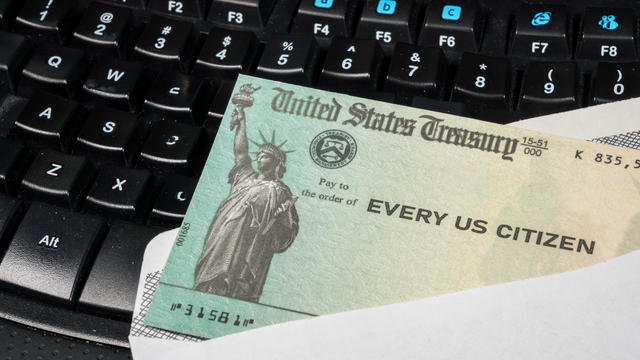
Some Republicans are proposing a lower income threshold, at $40,000 for single people and $80,000 for married couples.

The United Nations' World Tourism Organization says 2020 was the worst year in tourism history, with industry losses estimated to be $1.3 trillion. Lana Zak spoke with Roger Dow, president and CEO of the U.S. Travel Association, about what needs to happen for the industry to rebound.

Kevin Cirilli, chief Washington correspondent for Bloomberg Television, joins "CBS This Morning: Saturday" to discuss President Biden’s $1.9 trillion COVID-19 relief package.

President Biden spent his first full week at the White House focused on getting more Americans vaccinated and his coronavirus rescue package passed by Congress. But his proposed economic relief package is getting some pushback from Republicans in Congress. Christina Ruffini has the latest.

President Biden is temporarily reopening enrollment for the Affordable Care Act as pandemic-related job losses push the number of uninsured onto the exchanges. Nancy Cordes has more.

The Labor Department reported Thursday unemployment claims dropped 67,000 last week from the previous week, even as overall numbers still hover near historic highs. But the economy is showing signs of a rebound. The Commerce Department says the nation's gross domestic product rose 1% last quarter. CBSN's Tanya Rivero spoke with Ellen Hughes-Cromwick, a Third Way senior resident fellow, about what this means for the average American.
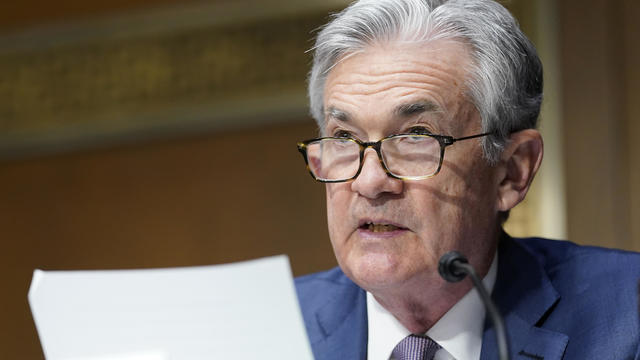
Policymakers say how quickly the economy rebounds hinges on the course of the pandemic and pace of vaccinations.

The Senate on Monday confirmed Janet Yellen as treasury secretary by a 84 to 16 vote. She is the first woman to lead the department in its 230-year history. CBSN's Elaine Quijano reports.

President Joe Biden signed an executive order Monday directing the federal government to increase its purchases of U.S.-made goods and removing loopholes in the process. Watch his remarks explaining the changes.

Former Democratic presidential candidate Andrew Yang recently announced his bid to become mayor of New York City. Yang joins CBSN's Lana Zak to share his vision for the city, and how he believes he can "speed up" its post-COVID comeback.

President Biden focused on the economy on his second full day in office. CBSN political reporter Caitlin Huey-Burns and Joe Minarik, the senior vice president and director of research for the Committee for Economic Development, join CBSN with analysis of the latest executive orders.

In his first three days in office, President Biden has signed nearly 30 executive orders. The bulk of the actions focus on two of his administration's top priorities: the coronavirus pandemic and the economic crisis which has followed. Ashley Allison is a former senior adviser for Mr. Biden's transition team. She joins CBSN to discuss Mr. Biden's first days in office and the administration's plans going forward.

Frustrations are mounting nationwide as vaccination sites close or cancel appointments as the vaccine supply runs dry. Danya Bacchus has more.

Through additional financial relief plans, faster vaccine distributions, and clear public messaging, the Biden administration is pledging to tackle the coronavirus pandemic. Skyler Henry has more on the Biden administration's efforts.

President Biden has signed two executive orders in an effort to help Americans who are struggling economically during the coronavirus pandemic. Nancy Cordes has more.

At a White House briefing Friday, National Economic Council director Brian Deese said "decisive action" is needed to avoid "falling into a very serious economic hole" amid the coronavirus pandemic. Watch a portion of his remarks.

President Biden announced a series of measures to ease the economic burden of the coronavirus pandemic, including more federal food assistance and streamlining the delivery of stimulus checks. Watch his remarks.

A new study from researchers at the University of California, Los Angeles say a national mask mandate could potentially save the U.S. economy $1 trillion. CBS News MoneyWatch reporter Aimee Picchi joined CBSN to break down how that could be the case and discuss economic fallout from the coronavirus.

More than 1.3 million people in the United States applied for unemployment aid last week, the final full week of data for the Trump administration. Washington Post economics correspondent Heather Long joins CBSN's "Red & Blue" host Elaine Quijano to discuss how President Biden wants to pass his $1.9 trillion economic relief bill.

But experts and the U.S. Chamber of Commerce also say a national push for Americans to cover up is a "no-brainer."