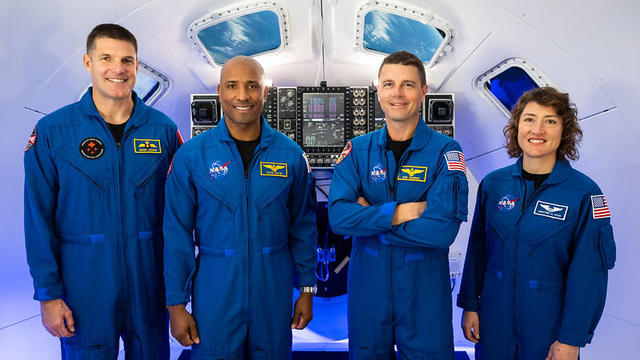
NASA astronauts on being selected for Artemis II mission: "What we live for"
The Artemis II mission is intended to pave the way toward the next moon landing and eventually fly to Mars.
Watch CBS News
The Artemis II mission is intended to pave the way toward the next moon landing and eventually fly to Mars.

Three men and one woman have been selected for NASA's next planned flight to the moon. For the first time ever, the crew of astronauts headed for the moon include a woman and a Black man. Mark Strassmann reports.

NASA has chosen a crew of three men and one woman for a mission to circle the moon next year. CBS News space analyst Bill Harwood joins us with details on the astronauts and plans for their historic flight.

Three NASA veterans, including one of the world's most experienced female spacewalkers, and a Canadian rookie astronaut will fly around the moon next year.

Three NASA veterans and a Canadian rookie will make up the crew of the Artemis II mission to circle the moon next year. Watch a portion of NASA's event introducing the four astronauts, Reid Wiseman, Christina Koch, Victor Glover and Jeremy Hansen.

NASA and Axiom Space are unveiling the design of the new spacesuit that will be worn by the next man and first woman to land on the moon as part of the Artemis III mission. Mark Strassmann traveled to Houston to get a sneak peek of the new suit.

The space agency paid tribute to leaders past and present — and found a way to fly Frank Sinatra to the moon.

NASA is celebrating the success of its Artemis I mission after its Orion capsule returned to Earth over the weekend, completing a 25-day voyage around the moon. Mat Kaplan, a host of the Planetary Society's Planetary Radio, joins CBS News with more on the significance of the mission and what comes next for NASA.

NASA is celebrating the successful return of its Artemis I Orion spacecraft after the agency's most ambitious lunar mission in half a century. As Mark Strassmann reports, astronauts could be climbing aboard next.
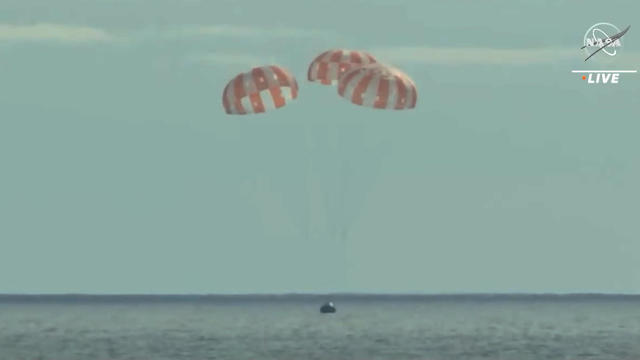
The successful return to Earth marks a major milestone in NASA's plans to return astronauts to the surface of the moon.
The Orion spacecraft sent back some amazing pictures from its 25-day, 1.4-million-mile journey around the moon.

NASA's Orion spacecraft will make its way back to earth Sunday, completing the nearly monthlong Artemis 1 mission. CBS News space consultant Bill Harwood explains the importance of this mission in getting humans back on the moon as we mark 50 years since Apollo 17, the last lunar landing.
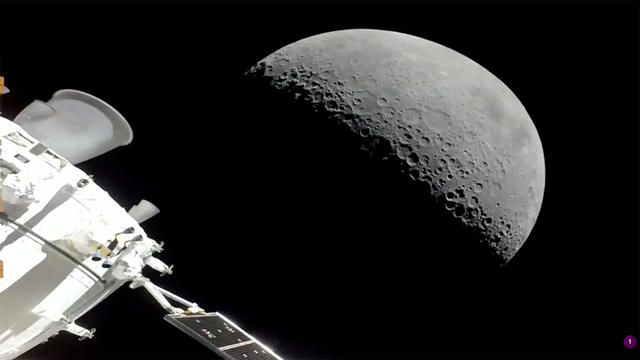
A final major engine firing went off without a hitch to put the Orion capsule on course for Sunday re-entry and splashdown.

NASA's Orion capsule has reached the farthest distance from Earth of any spacecraft intended to carry humans, and it sent back incredible new pictures of the surface of the moon. CBS News' Cristian Benavides reports on the latest on the Artemis I lunar mission.

Managers say the unpiloted Orion spacecraft is "operating just tremendously well" halfway through its planned 25-day mission.

After a spectacular lunar flyby, the Orion capsule is headed toward a distant orbit around the moon.

A critical rocket firing on the back side of the moon sent the Orion capsule toward a distant orbit for extended tests.

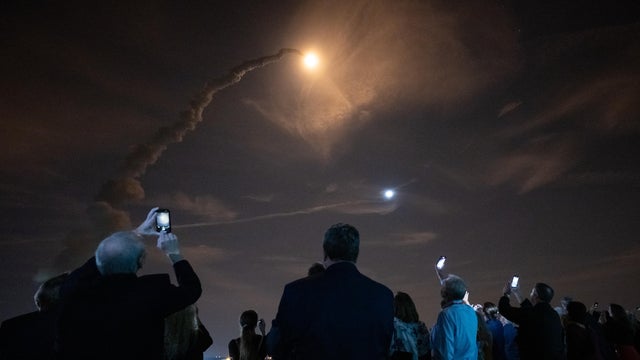
After months of delays, this past Wednesday, Artemis 1, NASA's new moon rocket, carrying an unmanned Orion crew capsule, rose into Florida's night sky. 60 Minutes reported on Artemis, a project led mostly by women, last year.
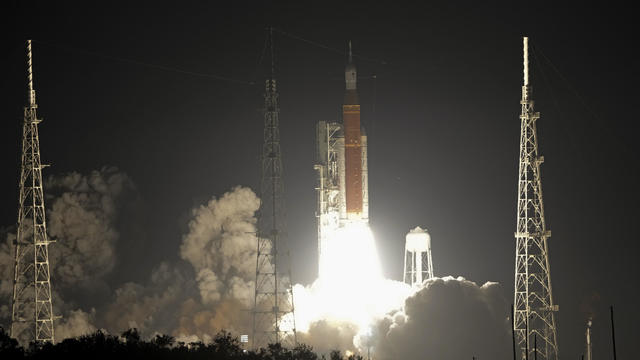
After a series of delays, the 322-foot-tall Artemis moon rocket finally blasted off with an eruption of white-hot fire and an earth-shaking roar

Blackwell-Thompson is the first woman to direct a NASA launch. She celebrated by cutting off the end of her tie.
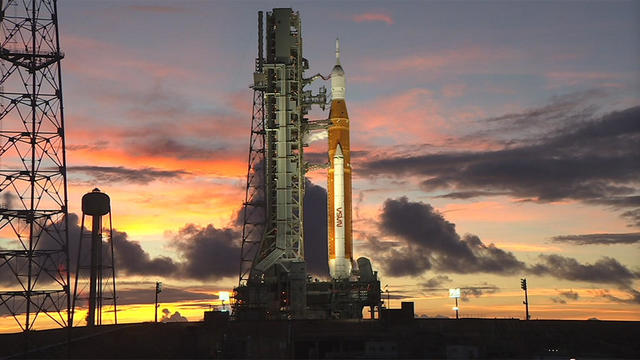
If all goes well, the SLS rocket will send an unpiloted Orion capsule on a nearly monthlong journey to circle the moon and return to Earth.
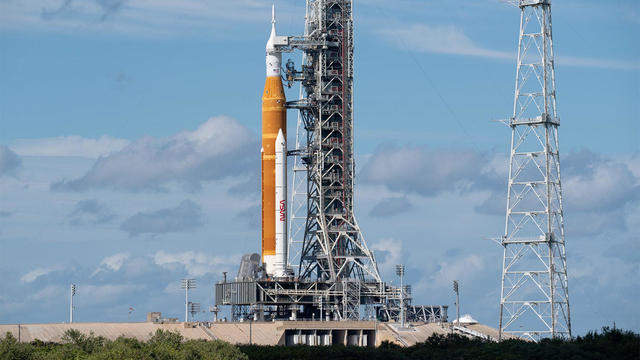
Engineers concluded hurricane-damaged insulation poses no credible threat to the $4.1 billion rocket.

High winds caused a thin strip of caulk-like material known as RTV to delaminate and pull away from the base of the crew capsule's protective nose cone at the top of the rocket.

Initial inspections revealed no major damage, but a detailed assessment will be carried out to make sure.
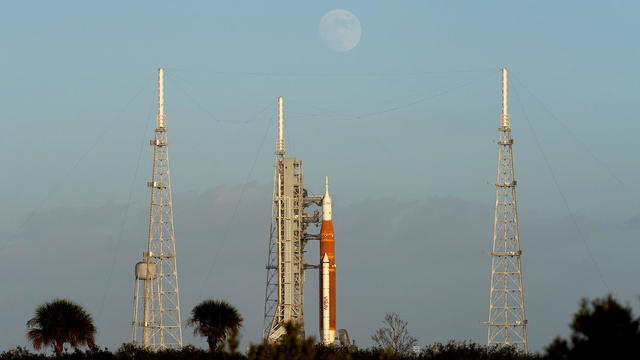
The SLS moon rocket will be exposed to the elements at its seaside launch pad, but NASA says it's tough enough to take it.