Alabama lawmakers race to shield IVF services after state high court ruling
Several providers paused treatment in the wake of a state Supreme Court ruling that frozen embryos could be considered children. The ruling prompted a wave of backlash.
Watch CBS News
Several providers paused treatment in the wake of a state Supreme Court ruling that frozen embryos could be considered children. The ruling prompted a wave of backlash.

In vitro fertilization began in 1978. Today, there are more than 400,000 IVF procedures a year in the U.S., and more than half are implanted. But almost 170,000 are not used. Some owners choose to destroy, store, or donate embryos. Now, a court decision in Alabama may upend the IVF process.

The Alabama Supreme Court ruling categorizing frozen embryos created through in vitro fertilization, or IVF, as children under state law has already halted processes in progress for parents trying to conceive. CBS News' Nikki Battiste is following the ruling's impact.

One day before South Carolina's Republican primary, former President Donald Trump said he strongly supports "the availability of IVF" and called on Alabama lawmakers to reverse the state Supreme Court decision that's caused some facilities to pause treatments. CBS News chief election and campaign correspondent Robert Costa reports.

The Alabama Supreme Court's stunning ruling on in vitro fertilization is upending the final hours of the South Carolina Republican presidential primary. Robert Costa has the latest.

The Alabama Supreme Court has ruled that frozen embryos created through in vitro fertilization have the same rights as living children, prompting the state's largest hospital to temporarily halt IVF treatments.The ruling is having a significant impact on individuals facing fertility challenges in the state.

Republican presidential candidate Nikki Haley says she disagrees with a recent Alabama Supreme Court decision that gives frozen embryos created during in vitro fertilization, or IVF, the same rights as living children. But she told NBC News and later "CBS Mornings" co-host Gayle King that she thinks embryos are babies. CBS News correspondent Meg Oliver has more on the fallout from the Alabama IVF decision and CBS News campaign reporter Taurean Small has more on Haley's comments.

Alabama patients are in limbo with IVF treatments being put on hold following the state supreme court's ruling that frozen embryos are considered children under state law.

Alabama asked the state's Supreme Court to approve a date for Alan Eugene Miller's execution, which would be done using nitrogen hypoxia.

Alabama's largest hospital has paused IVF treatments after the state's supreme court ruled frozen embryos can be considered children. CBS News correspondent Meg Oliver spoke with some parents and doctors about the decision.

The University of Alabama's hospital has paused in vitro fertilization treatment after the state's Supreme Court ruled frozen embryos are considered people. Meg Oliver takes a look at what the ruling means in Alabama and nationwide.

The Alabama Supreme Court ruled Friday that frozen embryos are considered children under state law. Critics say the decision could have implications for fertility treatments. CBS News political reporter Shawna Mizelle has more.

The police in Birmingham, Alabama, said they believe one or more of the victims were targeted.

While many Republican state lawmakers remain firmly against Medicaid expansion, some key leaders in holdout states are showing a willingness to reconsider.

A Tennessee-bound Greyhound bus crashed into a car, killing its 23-year-old driver, the Alabama Law Enforcement Agency said.

In a groundbreaking and controversial move, Alabama executed an inmate using nitrogen gas, a method never before tested or used in the United States. CBS News' Lilia Luciano reports.

When Jason Crawford called 911 to report that his wife Tiffiney had been shot, there was one question that he repeatedly refused to answer, "Who's she been shot by?"
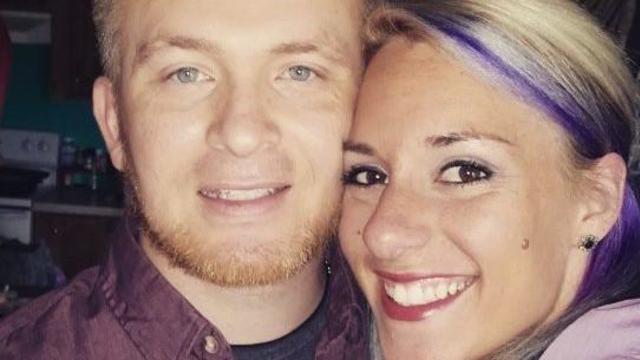
Jason Crawford was convicted of murdering his wife and sentenced to 99 years in prison. In an exclusive interview with "48 Hours," Crawford maintains he's innocent and that his wife shot herself, despite what a jury decided.

When Tiffiney Crawford was found dead inside her van, authorities believed she might have taken her own life. But could she shoot herself twice in the head with her non-dominant hand?
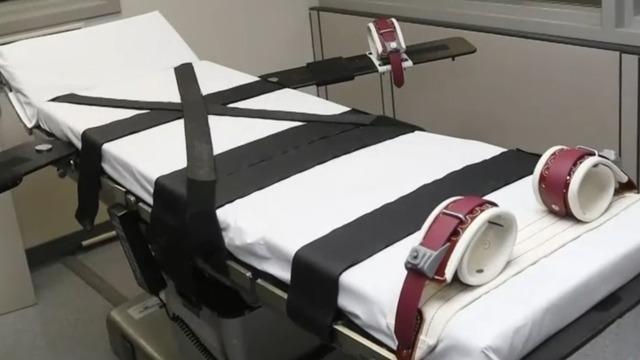
Alabama carried out its first nitrogen hypoxia execution Thursday in the case of convicted murderer Kenneth Eugene Smith. Spectators present during the execution said the process lasted longer than expected, while Alabama's attorney general Steve Marshall said the result was "textbook." CBS News correspondent Lilia Luciano reports.

Alabama Attorney General Steve Marshall said he expects to see nitrogen hypoxia used in more executions.

The state of Alabama was criticized by several groups, including the United Nations and the European Union, after it executed a death row inmate Thursday night using the controversial method of nitrogen hypoxia. Kenneth Smith's spiritual adviser said the nitrogen method amounted to torture, but Alabama officials disagree. Manuel Bojorquez has more.

Alabama authorities executed Kenneth Eugene Smith with nitrogen gas Thursday night despite controversy over the method. Smith was one of three men convicted in the 1988 murder of Elizabeth Sennett. Dr. Keith Ray, associate professor and chair of criminal justice and social sciences at Alabama State University, joined CBS News to discuss the execution.

An Alabama inmate is due to be put to death today after a federal appeals court allowed the state to carry out a first-of-its-kind execution using nitrogen gas. The condemned man faces this untested method after a botched attempt to execute him in 2022 by lethal injection. CBS News’ Lilia Luciano reports.
Alabama went through with its planned execution on Thursday of Kenneth Eugene Smith, who was the first condemned inmate in the U.S. put to death using nitrogen gas.