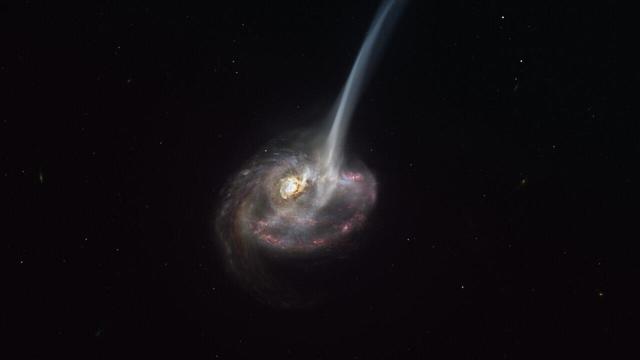
Astronomers observe death of a distant galaxy for the first time
Galaxy ID2299 is losing its ability to form new stars, causing it to die.
Watch CBS News
Galaxy ID2299 is losing its ability to form new stars, causing it to die.

The supermassive black hole at the center of one of the universe's brightest objects is 1.6 billion times more massive than the sun.

Eager skywatchers have a chance to glimpse a planetary triangle in the night sky this weekend.

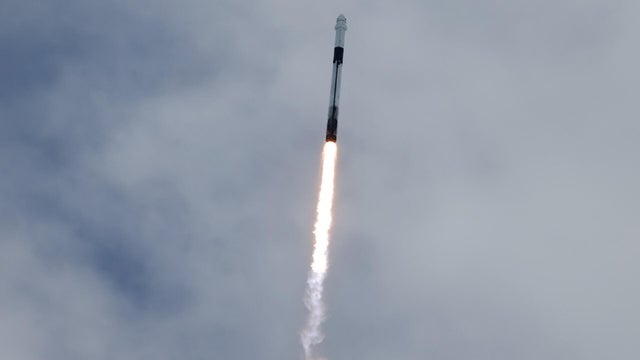
The launching was the first of 40 or more SpaceX flights planned for 2021.

NASA calls the Quadrantids one of the best meteor showers of the year.

The sun is about 3% larger in the sky on Saturday — but it won't be any warmer in the Northern Hemisphere.

"As we prepare to observe the holidays far away from our loved ones, we look down at our precious planet, and it becomes clear how connected we really are," said NASA astronaut Shannon Walker.

Japanese scientists hope they offer clues to origins of solar system and life on Earth.

Astrophotographers have captured incredibly detailed photos of the moment our solar system's two largest planets met in the night sky.

If you look up at the sky just after sunset, you'll see something that hasn't happened in centuries.

The largest planets in our solar system will soon align for the great conjunction — the greatest skywatchers have observed since medieval times.

In response, James Gunn, the director of the "Guardians of the Galaxy" films, tweeted, "Can we sue this dork?"

The launch came two days later than planned because of higher-than-normal pressure in the rocket's second stage liquid oxygen tank that triggered a last-minute "auto abort" Thursday.

Under new management, OneWeb launches a fourth batch of internet satellites.

While Santa is gearing up for Christmas at Earth's North Pole, angels are getting into the holiday spirit on Mars' south pole.