The spotted lanternfly makes its return. Get stomping.
With warm weather returning in parts of the U.S., officials are warning that rising temperatures could help lanternfly eggs hatch earlier. You should kill them if you see them.
Watch CBS News
With warm weather returning in parts of the U.S., officials are warning that rising temperatures could help lanternfly eggs hatch earlier. You should kill them if you see them.

Scientists sequenced the genome of the sled dog, who led a team of dogs carrying a life-saving diphtheria serum to Nome, Alaska, in 1925.

Great white sharks are one of the most famous sea creatures, yet a key detail about their lives remains a mystery.
The great white shark is one of the most infamous ocean-dwellers on the planet and now, researchers are on the verge of discovering where they mate in the Atlantic. Carter Evans joined some of the scientists 12 miles off the coast of North Carolina, as they zeroed in on one of the species' remaining mysteries.

The aurora borealis, or northern lights, were distinctly visible, appearing in skies over a vast section of the country.

At World Bird Sanctuary in Valley Park, Mo., the plight of Murphy, a bald eagle who was reduced to incubating a rock, aroused social media sympathy, until an orphaned eaglet was brought to the sanctuary for care, and the two have hit it off. Jane Pauley reports.

The Frozen Zoo in San Diego is at the forefront of resurrecting DNA to restore animal species in danger of disappearing forever, while Colossal Biosciences in Dallas is exploring methods to clone long-extinct species like the woolly mammoth and dodo bird.

The Frozen Zoo in San Diego is at the forefront of the emerging field of de-extinction – resurrecting DNA to restore animal species that are in danger of disappearing forever, through such methods as genetic editing and cloning. Correspondent Jonathan Vigliotti talks with scientists at the Frozen Zoo (whose bank of frozen cells could help save an estimated one million species) about their efforts to bring back the black-footed ferret. He also talks with the founder of Colossal Biosciences, a Texas company working to bring back long-extinct species like the woolly mammoth and dodo bird.

The free app, first hatched by the Cornell Lab of Ornithology, today can help birders identify more than 6,000 species on six continents by look or song.
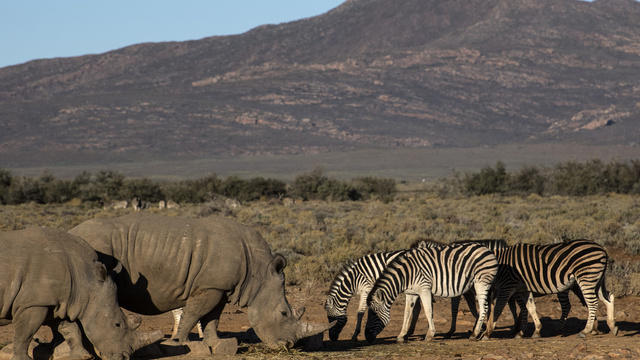
An unprecedented rate of animal species have disappeared from the planet because of humanity's impact on the planet. CBS News' Elaine Quijano explains why scientists say the crisis is only getting worse.