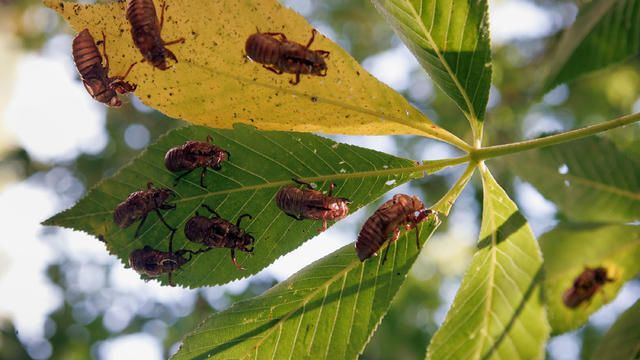
Screaming cicadas are coming back in "once in a lifetime" event
This will be the first time since the Louisiana Purchase in 1803 that these broods of noisy, flying insects will emerge from underground.
Watch CBS News
This will be the first time since the Louisiana Purchase in 1803 that these broods of noisy, flying insects will emerge from underground.

Researchers found that sea level rise could cost the EU and U.K. nearly $950 billion by the end of this century.
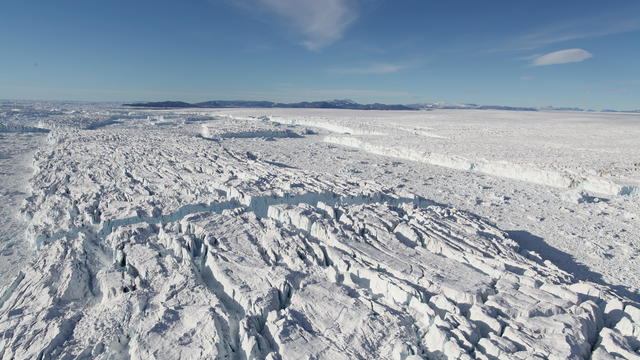
Since 1985, Greenland's ice sheet has lost approximately 5,091 square kilometers of ice, researchers found using satellite imagery.

Scientists overcame years of failure with a new technique — but outside researchers warned the success rate was still very low and raised the usual ethical questions around cloning.

Four new species of octopus, one dubbed the dorado octopus, were found in the ocean off Costa Rica.

Feathery white lines of condensation left behind airplanes, known as contrails, add to warming the planet. A new study suggests artificial intelligence could dramatically reduce them.

In four years of digging, the team of archaeologists have unearthed 43 human skeletons and more than 100,000 artifacts.

The Rich Earth Institute in Vermont collects, pasteurizes and distributes recycled human urine as agricultural fertilizer, to return precious nutrients and minerals to the soil. Pee jokes are an occupational hazard.

Researchers around the world are studying the use of recycled human urine as agricultural fertilizer, to return precious nutrients and minerals to the soil. Correspondent Faith Salie talks with representatives of the Rich Earth Institute about the process of collecting, pasteurizing and distributing massive quantities of pee, and with farmers and gardeners in Vermont who are using urine on their land.

The researchers determined it predated T. rex by up to 7 million years, showing that tyrannosaurs were in North America long before paleontologists previously thought.