Pluto's Tiniest Moons Captured For First Time Ever
The dwarf planet Pluto may be more than 3.6 billion miles away from the sun, but it's certainly not alone.
Watch CBS News
The dwarf planet Pluto may be more than 3.6 billion miles away from the sun, but it's certainly not alone.

Get ready to feast your eyes on an extra special and rare total lunar eclipse Saturday morning that has some Christians worried this Easter weekend.

NASA revealed its plans Wednesday to fly robotic spacecraft to asteroids by the end of the decade.

With all the discoveries about extraterrestrial water this month, the question arose -- where is the BEST place to catch alien waves, assuming you had a "wet suit" to protect you from extreme heat and cold (and give you oxygen), that you could survive a 1-2 year space journey to get there, and had a pretty good sponsor to pony up $10 billion or so. There technically is only one place where the surf truly is up...

The week is ending with a celestial trifecta on Friday involving a rare overlap of a supermoon, a total solar eclipse and the start of spring.

The largest moon in the solar system harbors a salty ocean beneath its icy shell, the latest member to join a growing club of watery moons, NASA said Thursday.

If confirmed, it would make the moon Enceladus the only other known body in the solar system besides Earth where hot water and rocks interact underground.

The universe is filled with wonders of gigantic proportions, but Thursday night's celestial attraction comes in a size that's too adorable to pass up.
From lightbulbs to your bloodstream, genomes to Terminator-type robots, Google is involved in every aspect of your life--and even in extending life--and possibly preserving your digital self forever.
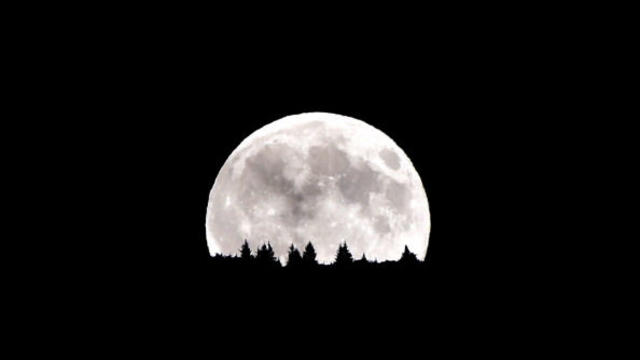
A supermoon is ready to take center stage in the night sky this Wednesday, but with a rare twist: it'll be a new moon.

You think YOUR house is crowded with house guests this season? NASA astronauts have been having Christmas dinner in a dining room the size of a Volkswagen for decades, and this season is no exception, although the International Space Station is far more spacious than the original Apollo capsule where one of the most famous Christmases in space was ever celebrated.
There's a problem with Titan, the largest moon of Saturn. There's a fair amount of methane in its atmosphere and in its big lakes.

A partial solar eclipse will be visible from the Bay Area later this month.

Low clouds made for poor visibility in the Bay Area, but several great photos of the event were snapped elsewhere. Here are a few of the best.
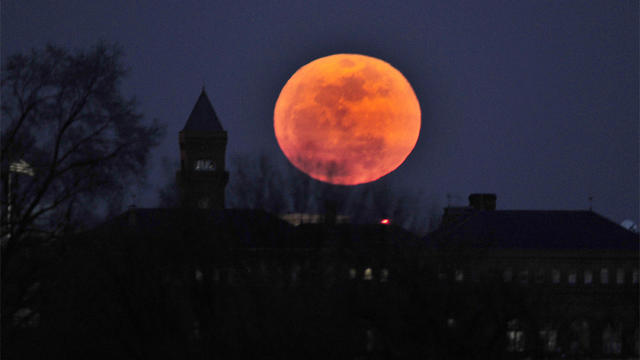
The 2014 summer of supermoons comes to an end Monday as the orbit brings full moon to its closest point to earth for the final time this year.
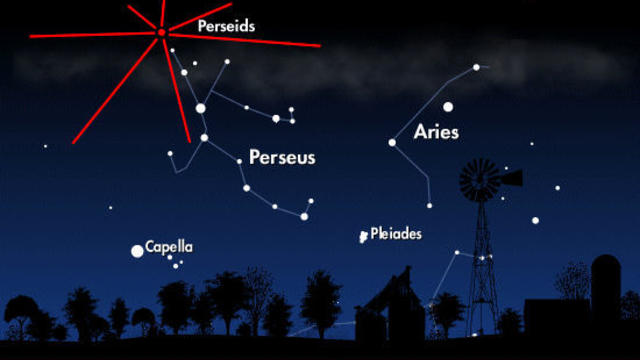
If you thought July 4th's fireworks were exciting, wait until you see a ball of fire explode overhead in the annual Perseid Meteor Shower, set to peak Tuesday night with 100 shooting stars each hour, and continue for several days afterward.
Sunday night's supermoon was the brightest and closest to earth in 20 years, but if you missed it, there is still another spectacular full moon is on tap for September.

The future of space exploration may involve soaring above moons in a mothership and deploying drone-like explorer to probe the surface.
Watch the sky for the next Supermoon as it shines this Sunday...
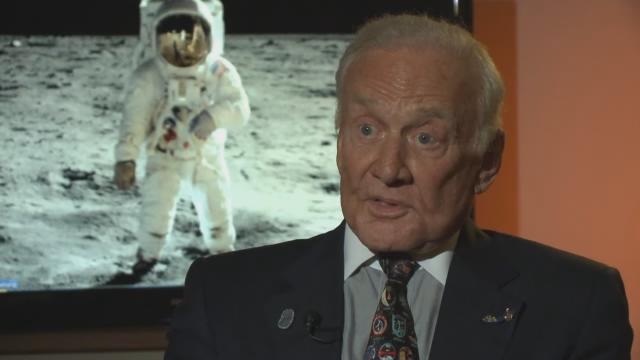
Space pioneer and Apollo 11 astronaut Edwin Eugene "Buzz" Aldrin Jr. is looking toward the next giant leap, a manned mission to the planet Mars.
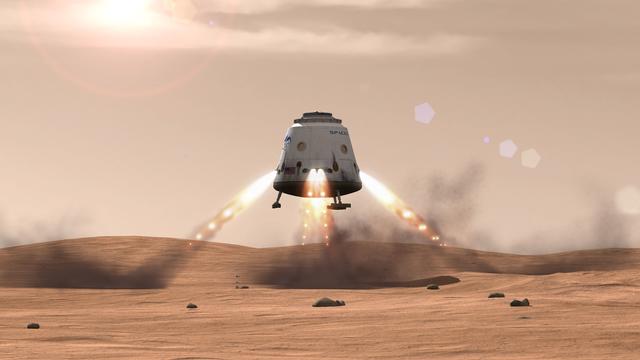
45 years ago, America landed a man on the moon, and years from now, NASA and Tesla founder Elon Musk hope to have already landed a man on Mars, using Musk's SpaceX rocket in a public-private partnership that turns the Apollo program model on its head.

If you missed Saturday's supermoon, don't worry, you ain't seen nothin' yet as the August 2014 supermoon will be the closest the moon comes to earth all year, and should be the best of the five supermoons of 2014 as it passes within 221,765 miles of us.
If you find yourself out gazing at a supermoon with a special someone, here are a few facts to help you impress them because you can actually tell them why the moon looks so huge, and where the term 'supermoon' came from.
Jupiter's moon Europa is one of the most intriguing bodies in the solar system. Its icy crust appears to cover a global ocean that could be many miles deep.
Early risers are in for a skywatching treat at first light Tuesday morning — a close pairing of the crescent Moon and the planet Venus. Venus looks like a dazzling star just to the left or upper left of the Moon.