Sonoma County declares dry water supply for Russian River area despite recent rains
With weather forecasts calling for rain and reservoirs at, or nearing, capacity, it seems strange to think that parts of Sonoma Water are under a "dry water supply" designation. It's a technical term, but it shows how careful they're being when it comes to managing water, especially now that climate change is being taken into account.
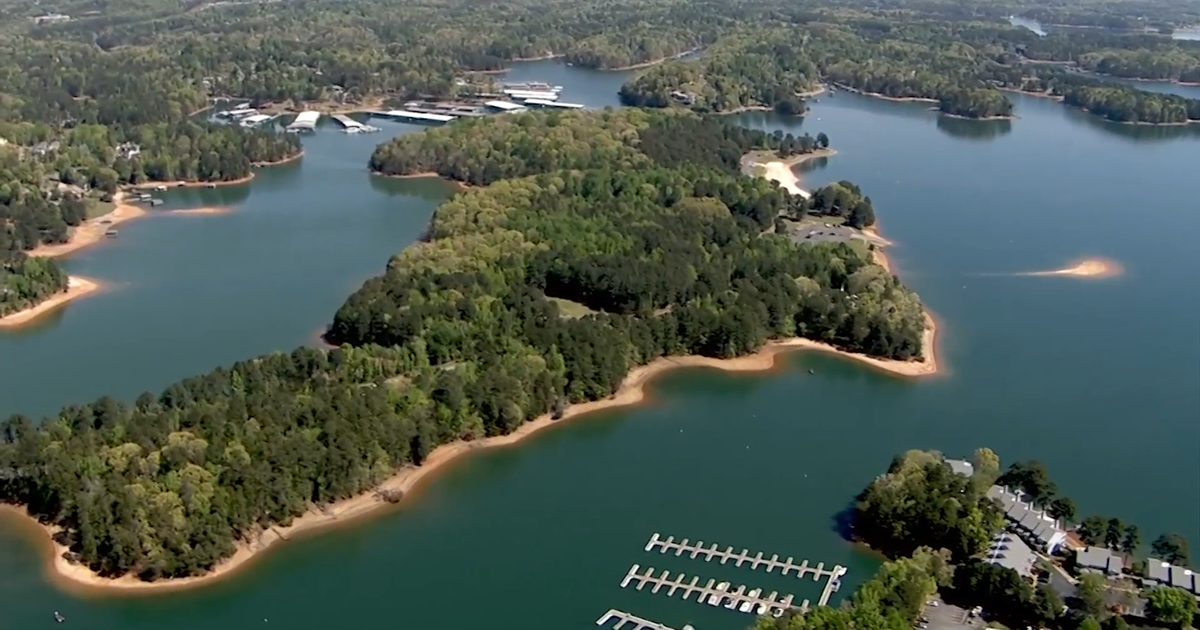
Lake Sonoma near Geyserville is considered full; there really isn't any room for more water. Farther north on U.S. Highway 101, Lake Mendocino stands at about 85% of capacity. That's good news for Sonoma Water, which uses the two reservoirs as its water supply.
But Don Seymour, the agency's deputy director of engineering, said, technically, it's still not up to "normal."
"As of April 16th, the Russian River went from a normal water supply condition to a dry water supply condition, based on comparing storage in Lake Mendocino to storage thresholds that have been developed," Seymour said.
Those thresholds change as the year goes by, and river water flows are maintained. But it shows how carefully they keep track of how much water is being stored and how much is being released.
At Lake Mendocino, that really began in 2013. It had rained heavily in November and December, and the U.S. Army Corps of Engineers, which managed releases from the lake, began releasing water to make room for more to come. But there was no more. It didn't rain again for the rest of the season, but by the book, the releases continued until May. By that time the lake was at 50 percent and much of the summer's water supply was gone.
"That caused the [California Gov. Jerry] Brown administration a lot of issues with how the Corps was operating the reservoir," Seymour said. "And everybody was demanding, 'You guys got to do a better job.'"
So, the stakeholders got together and developed a system called Forecast Informed Reservoir Operations (FIRO). They dumped the old rigid guidelines from the 1950s and began including modern weather forecasting into the calculations. The Army Corps of Engineers now only controls a certain amount of the water for flood control purposes. Beyond that, the responsibility passed to Sonoma Water, which is a lot more interested in conserving water for the use of cities and farms.
The change in rules has been astounding, with Sonoma Water saving about 30,000 acre-feet of water each year, system-wide. That's about 75% of their entire demand for the year.
"It's amazing," said Seymour. "And to build a reservoir, a 30,000-acre-foot reservoir, would be hundreds of millions of dollars."
Seymour says the FIRO program has been so successful that it is now being replicated at reservoirs across the state and the nation. But Don McEnhill, with the conservation group Russian Riverkeeper, said that shouldn't be the end of it. His organization is going to be lobbying whoever the new governor will be to impose a system of early cutbacks depending on water storage and rainfall. He said it makes more sense to mandate a 20% cutback early than to wait for a drought and cut off the supply completely, like they did in 2021 to many farms along the Upper Russian River.
"The only thing worse than conserving is having zero water. Having 80% of your allotment is a whole lot better than having 0%," said McEnhill. "We think doing some interim, smaller measures can avoid these super drastic letters from the governor saying you can't use any water this year."
Seymour said Sonoma Water will re-assess the reservoirs every two weeks until June, tweaking the amount of flows that are required to keep the river at a proper level. It's an acknowledgment that weather patterns are changing rapidly, and it's better be smart with the water you have, than to wait until you run out.