Rising inflation impacting Bay Area small businesses
Inflation is now at 3.8%, according to the Bureau of Labor Statistics, and for the first time in three years, rising prices are now outpacing American wages. People are looking for ways to cut costs - both consumers and retailers - and Bay Area small businesses are feeling the impact.
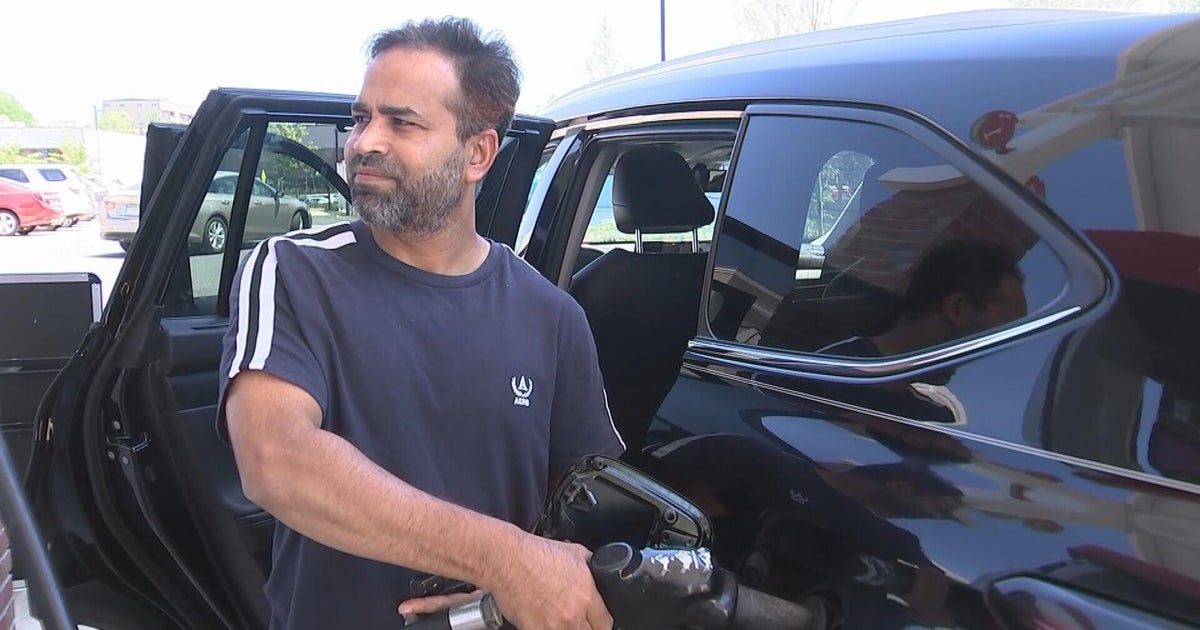
The biggest effects of inflation are usually felt in the smallest of businesses. Operating a food truck in Concord isn't likely to make anyone rich, but with the price of gas going ballistic, Ruben Hernandez was having a hard time even breaking even.
"Yeah, yeah, we have to raise the prices because it's a lot of, very expensive right now, the gasoline," he said. "Yeah, we used to fill it up, my truck, with maybe $90. Now I have to spend, like, $150, almost $160 for one tank. It's really, really hard to work like that."
It's tough raising prices on a food that is meant to be affordable, so what happens when you sell a premium product?
"Concerned? Yeah, pretty concerned," said Coji Fujioka, manager at The Local Butcher Shop in Berkeley.
These days there is nothing cheap about the meats the shop sells. Ground beef was selling for $16.50 per pound and ribeye steaks for $49.50 per pound. Fujioka said his vendors don't always say why the price is being raised, but he realizes it's important for his customers to know.
"Customers ask why our prices go up," he said. "Like, they're already high, the higher end, so if they go up a little more, it's like, well, we want to have a good reason for actually doing it."
The store is one of the last remaining butcher shops in the region, selling high-end grass-fed meats. Ironically, their business model has protected them from some direct sources of inflation. The store specializes in locally produced meats from within about 150 miles. So, Middle East wars and international tariff fights haven't had quite as much of an impact.
"Seems to be a benefit. Or at least it has provided some of that insulation," said Fujioka. "But that doesn't mean we're immune. And I think we have seen some impacts over the past six months, over the past three months."
The shop is an employee cooperative, which means it is owned by the workers. So, everyone working there has a direct interest in seeing it succeed. Fujioka said his customers seem to appreciate the high-quality standards and business ethic the shop practices.
That's why Berkeley resident Maile Sherman has remained loyal to the store.
"You get better beef, yes," she said. "I don't buy as much, and I don't buy as often. But I keep the quality up."
Shane Franklin, chief technology officer with marketing firm Constant Contact, said even in hard economic times, people are willing to spend more money at a place they're emotionally connected to.
"It is about that relationship they're building with their customers," he said. "Because at the end of the day, it is about that relation, who's going to show up at their door, or go to their website, or purchase from them over somebody else. It is all about the relationship that they build."
Still, everyone is a worried about where the economy is headed. There's no escaping the pain of inflation. When consumers' buying power is lessened, everyone suffers. But it's usually the little guy who feels it first.