Trump administration ends funding for fentanyl test strips, baffling public health groups: "It doesn't make sense"
Test strips used to determine if illicit drugs contain deadly contaminants including fentanyl will no longer be covered by federal funding, reversing a position the Trump administration held as recently as July and leaving public health organizations worried that the U.S. will lose the progress it has made combatting fatal overdoses.
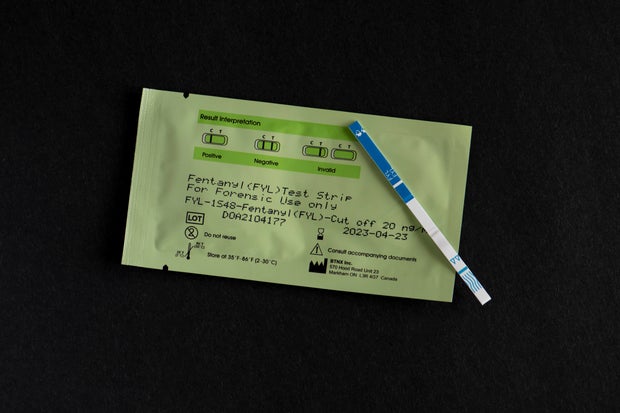
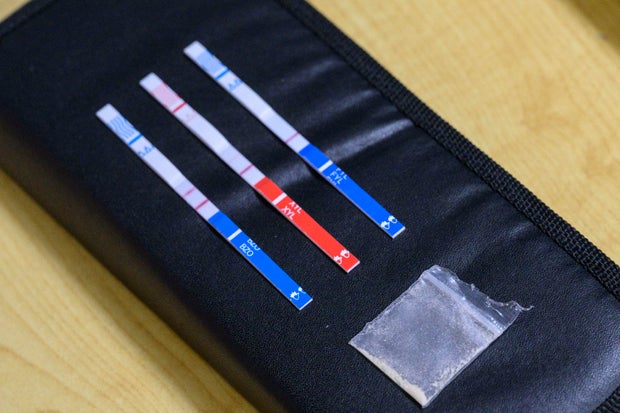
In a letter reviewed by CBS News, the Substance Abuse and Mental Health Services Administration said that agency funding cannot be used to purchase test strips used to check drugs for dangerous adulterants like fentanyl, xylazine and medetomidine.
Test strips cost about $1 each and can be used to check drugs — from powders to pills to party drugs — for contamination. They are a "critical, life-saving tool" that can prevent fatal overdoses, said Maritza Perez Medina, director of federal policy at the Drug Policy Alliance. Medina said the sudden change in policy has left advocates scrambling.
"People are just astonished," Medina said. "There has been a lot of confusion about where this came from."
Letter reverses previous support
The "Dear Colleague" letter references an executive order signed by President Trump in July 2025 that declares SAMHSA funding cannot be used for programs that "only facilitate illegal drug use." A Health and Human Services spokesperson said that the letter clarifies guidance for SAMHSA grantees and furthers the agency's clear shift away from harm reduction and "practices that facilitate illicit drug use and are incompatible with federal laws."
However, fentanyl test strips are not considered drug paraphernalia in 45 states and Washington, D.C. Some states, including Nevada and California, provide information on where to find them online. SAMHSA began supporting harm reduction efforts, including the use of test strips, in 2021. A July 2025 letter from the agency listed test strips as a tool that SAMHSA funding could be used to support. The SUPPORT Act, passed by Congress in 2018 and reauthorized in 2025, also protected their use.
Knowing what's in a given substance allows people to make informed choices and potentially avoid a fatal overdose, Medina said. Cutting support for the tests and other harm reduction efforts is "stripping people of the tools we know save lives," she said.
"It's really a low barrier way to ensure that people know what they're putting in their bodies," Medina said. "Overdose deaths have come down from the peak that we saw during COVID, and that's great, and that was done intentionally, because there was a lot of investment from the government to ensure that communities had what they needed."
Organizations react to sudden budget cuts
Shreeta Waldon, the executive director of the Kentucky Harm Reduction Coalition, told CBS News that her organization was informed Friday that it will be losing a $400,000 grant. The organization distributed 48,465 fentanyl test strips in the first quarter of the 2026 fiscal year, Waldon said. KHRC now only has about a month's worth of test strips before it enters a "full-blown crisis," she said.
"It doesn't make sense that one day something is an evidence-based protocol, and you decide, because of political climate, it is no longer evidence-based," Waldon said. "If they follow the science and the data, we would never move in this direction."
A'zhane Powell, the founder and CEO of Fyrebird Recovery in South Carolina, said her organization has lost a $4,000 grant. The amount is small, but Fyrebird already operates on tight margins, she said, and purchasing bulk supplies of test strips strains their budget.
Lost funding can't be easily replaced: Fyrebird is searching for other sources of funding, including asking for donations. Waldon said she hopes to see states use money they received from opioid crisis settlements to support harm reduction organizations. Christine Minhee, who operates a database of such funds, said that such efforts are complicated by varying state policies and a debate about whether funds should be used to backfill budget gaps.
Lauren Kestner, a division director at the Center for Prevention Services in North Carolina, said she worries the changes will limit the organization's access to pass-through block grant funding, where federal money is disbursed to state governments and then funneled into nonprofits, local agencies and other subrecipients. Those agencies do everything from providing medication for opioid use disorder to treating HIV.
The HHS spokesperson said that SAMHSA still prioritizes life-saving interventions, including the overdose-reversing medication naloxone. Powell said that it's hard to have faith in those priorities after the sudden changes around testing strips.
"How far will it go until we're back to square one again?" Powell said.
"Still in the midst of the overdose crisis"
The United States has seen a sharp decline in overdose deaths in recent years. There were 111,000 overdose deaths in 2023, according to data from the Centers for Disease Control and Prevention. For the 12-month period ending in November 2025, the reported number of drug overdose deaths plummeted to about 68,000, according to the CDC.
The decrease in deaths can be attributed to a number of factors, including the increased availability of the overdose-reversing medication naloxone, a less potent drug supply and harm reduction efforts including the use of test strips. Medina cautioned that funding cuts could roll back the progress that has been made.
"Our fear is that if we are gutting all the things that work, that when people seek help, they won't find any doors open," Medina said. "We're still in the midst of the overdose crisis. Federal funding cuts, coupled with taking away the real tools to help people ... could very well lead to more drug use harms, including overdose."