Kratom drink Feel Free gains popularity despite growing concerns about addiction, health impact and death

Feel Free, a kratom drink, is marketed as healthy. It's easy to buy and increasingly popular, even as doctors and medical experts grow more concerned about its health impacts, addiction rates and deaths.
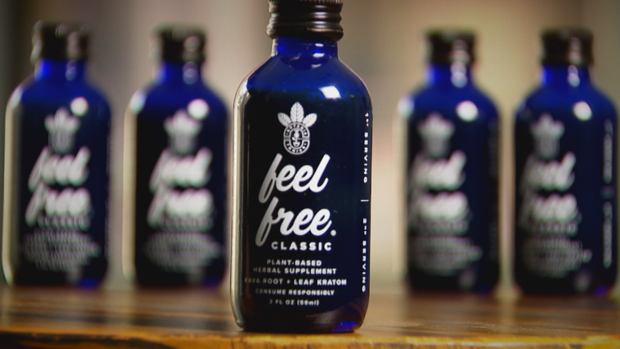
"I first heard of Feel Free on one of my favorite health and wellness podcasts," said McKenzie Wisdom.
Social media posts for Feel Free, made by Botanic Tonics, portray the little blue bottle as a midday pick-me-up, used by everyone from ordinary people to athletes.
Wisdom is in her 20s and was building a business in the health and wellness space a few years ago, so the ads appealed to her. they convinced her to buy her first bottle and then to keep using it.
"It's very much marketed as a wellness tonic," Wisdom said. "For so long I was justifying it, like, 'Okay, well, I'm not drinking alcohol. This is so much better.'"
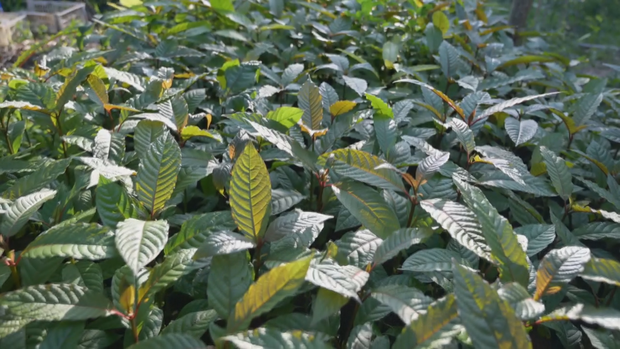
Kratom, derived from a plant native to Southeast Asia, acts as a stimulant in low doses.
"The recommended dose was half a bottle, so I started off with half a bottle here and there," Wisdom said.
She said the tonic helped at first by sparking feelings of happiness and confidence. But that didn't last.
"Over the course of three or four months, my tolerance and usage started growing pretty quickly," she said. "And, over the course of that first year I was taking more and more."
By the time she realized something wasn't right, she was taking several bottles a day, and said she felt like she couldn't stop taking it.
Kratom is sometimes called "gas station heroin" and is readily available at convenience stores and vape shops throughout the Chicago area.
Concentrated forms of it are increasingly blamed for addiction, health issues and even death.
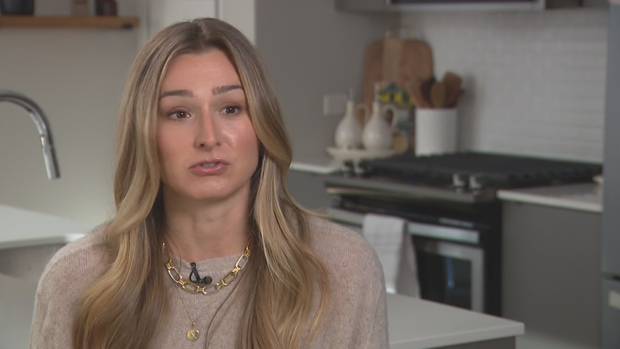
Wisdom sat down with CBS News Chicago Investigators at her Chicago apartment to share her warning about the little blue bottle in hopes she could help others. She said she spent a long time dependent on Feel Free, experiencing highs and lows.
"I was in the bathroom, with what I now know was going through opioid withdrawals," she said. "I was having, like, hot and cold flashes. I was shaking. I was having severe depression, paranoia. My stomach was all messed up. I was sweaty and I was so unwell."
All that eventually led to a five-week stay in rehab.
"I was like a shell of myself, truly," she said. "The biggest traumatic piece of it was how badly it had, like, destroyed my mental health and my physical health at the end."
A class action lawsuit was filed against Botanic Tonics in 2023, claiming the drink caused users to become dependent, experience adverse events related to withdrawal symptoms and was marketed to vulnerable people such as college students and people with histories of addiction.
Botanic Tonics settled the suit in 2024 and 2025 for $8.75 million. As a result, the company also had to strengthen labelling on the bottles, adding the product "may be habit-forming and harmful" and noting it's made for use by people aged 21 and older.
CBS News Chicago Investigators found Feel Free for sale at many stores in the Chicago area and despite the 21+ warning on the label, few store employees checked ID.
The ease of buying it may be leading to increased calls to Poison Centers. Data from the National Poison Control Center shows reports related to kratom more than doubled in 2025.
In Illinois there were 145 reports in 2025, also more than doubling the data from 2024.
But medical experts say the numbers don't tell the entire story.
"A lot of people don't even know about the poison center, so it's almost always an underestimate," said Dr. Antonia Nemanich, a toxicologist at Rush University Medical Center. She said the rising numbers are likely still undercounted.
In 2024, poison control centers started tracking 7-OH, a synthetic kratom derivative. It is often sold in concentrated forms and is more potent and addictive. Feel Free tonic contains a trace amount of 7-OH.
"We're seeing more and more people that report using it," said Dr. Nemanich. "They think it's benign, and then it sort of has this insidious nature where people become dependent without even realizing that it's happening."
"I started working on this over 20 years ago," said Christopher McCurdy, an internationally recognized kratom expert and professor of medicinal chemistry at University of Florida Health. "Most people don't understand that if you don't follow the label like it says on the bottle, it's harmful."
He sees a troubling trend developing.
"What we're learning, over the years, is that there does seem to be a kratom use disorder emerging," he said.
"It looks very much like any other form of opioid use disorder," said Dr. Nemanich. "And we're treating it the same way, with buprenorphine."
Buprenorphine is often used to treat heroin addiction.
"What I'm seeing with the Feel Free is that they have very intense opioid withdrawal and they actually need higher doses of buprenorphine, sometimes, even than my patients who are using fentanyl. So that's what's really concerning to me," said Dr. Elisabeth Poorman, an addiction medicine specialist with UI Health.
"I think people are buying these drinks like Feel Free thinking they're healthy alternatives to alcohol," Dr. Poorman added. "That's how they're marketed. They're wellness drinks. And we're just seeing that people are developing, very quickly, addictive behaviors and very severe withdrawal very fast."
Kratom, in some forms, is currently banned in six states. Illinois is not one of them, though there is new proposed legislation here that would crack down on the sale of 7-OH.
And while the FDA is actively warning people not to use kratom, citing the risk of serious adverse events, the agency hasn't taken further steps.
"I think the way that it's currently so widely accessible and unregulated is dangerous," Dr. Nemanich said.
"I think it probably needs to be regulated much more tightly," said Dr. Poorman.
Botanic Tonics and the Global Kratom Coalition, which both tout the safety of leaf kratom online, denied CBS News Chicago's repeated requests for interviews. Botanic Tonics sent information instead.
The statement cited a few studies that confirm its stance on the safety of the type of kratom predominantly found in feel Free. A company spokesperson added, "If anyone has concerns about potential overuse, we strongly recommend they do not consume our products."
CBS News Chicago Investigators also contacted the U.S. Department of Health and Human Services with questions about kratom and the lack of regulations months ago. After some time, we were told no interview would be possible. Instead, the agency answered written questions. The answers referenced only synthetic kratom (7-OH) and the agency's announcement of a plan to crack down on it last July. The crackdown hasn't happened yet, and if or when it happens, wouldn't impact products like Feel Free.
"I think there should be medical oversight if people wanna take it, more education," Wisdom said.
Until then, Wisdom will keep warning others.
"I just want to help people know that they're not alone and to see that there's hope on the other side. Because when I was in it, I truly was like, I have no idea how I'm gonna get out of this," she said.
Botanic Tonics full response:
Botanic Tonics is leading the industry in our commitment to providing consumer education and transparency and we will continue to prioritize the safety and well-being of our customers above all else. We dedicate more than half of our website to consumer education, and it's a good place to learn more about feel free ® Classic along with background information about the natural kratom leaf that's used in feel free ® Classic: https://botanictonics.com/pages/consumer-education
Below you'll find information on the questions you raised in your email along with links to third party studies on natural kratom leaf.
Critical Context: Natural Kratom Leaf vs. Synthetic Kratom
Before diving in, let's start here. feel free® contains only noble kava root and natural whole leaf kratom — no synthetic ingredients, no alcohol, and no chemical extracts.
This is fundamentally different from concentrated synthetic 7-OH, a which has recently been classified as a street drug by the FDA. This past July, the FDA announced they are moving to ban concentrated synthetic 7-OH and they also recommend that the DEA schedule concentrated 7-OH. You can read more about the FDA's announcement regarding their recommendations to the DEA that concentrated synthetic 7-OH be classified as a Schedule I substance here on our website and here at Stat News.
Our product contains only naturally occurring levels of 7-OH found in leaf kratom. Importantly, FDA Commissioner Dr. Marty Makary has made clear that natural kratom leaf is night and day different from the target of their efforts, the concentrated synthetic drug referred to as 7-OH. You can view his remarks here: https://www.youtube.com/watch?v=JHh50KCPxvM&t=80s
About Botanic Tonics and Feel Free ®
Botanic Tonics uses botanicals rather than synthetic alternatives. We do not use kratom extracts or isolates. feel free® combines two botanicals with centuries of traditional use: noble kava root (known for calming effects) and natural leaf kratom from the coffee plant family (known for energy and focus). The amount of kava and natural kratom leaf in feel free® is based on the traditional use of these botanicals. Noble kava root is at the heart of all our pairings and is the primary ingredient in feel free® and the newest addition to our product portfolio, Kava Maté. These are two different products that each demonstrate Botanic Tonics' innovation in the functional botanical space, maintaining our commitment to botanical wisdom, scientific rigor, and consumer education.
We source only the highest quality ingredients. All products are manufactured in an FDA-registered, cGMP-certified facility. Each batch undergoes multiple tests for active ingredient consistency and contaminant safety.
Unmatched Safety Records, Label Transparency and Responsible Use
Our product has the strongest safety record of any kratom product on the market, backed by government testing, clinical trials, and expert medical review:
· Nineteen recent clinical trials on kratom leaf document no evidence of severe addiction or significant or unreasonable adverse effects. You can read more about the trial's findings here.
· Government testing: The FDA itself conducted a clinical trial using the same natural kratom leaf found in Feel Free® and found no evidence of significant risk to consumers: https://botanictonics.com/pages/consumer-education
· Additional clinical trials: Feel Free® is the only kratom product to undergo a gold-standard, randomized, double-blind, placebo-controlled human clinical trial, published in a peer-reviewed journal. The study found no significant adverse effects: https://www.cureus.com/articles/322479-the-safety-of-multiple-dose-liquid-blend-containing-kava-and-kratom-in-healthy-adults?utm_source=chatgpt.com#!/
· Expert medical review: in the clinical trial mentioned above, independent toxicologists, including the former Senior Scientist of the American Medical Association, Dr. Michael John Glade, and leading kratom pharmacologist confirm Feel Free's® safety and no unreasonable health risks.
We are clear that we make a powerful product and that it is not intended for everyone. We actively discourage use by anyone with a history of substance abuse, those under 21 years of age, pregnant or nursing women, or anyone who may be sensitive to our active ingredients. Additionally, we voluntarily raised the minimum purchase age for all products to 21+ and added visible serving size indicators, clearer ingredient information, and comprehensive warnings. We would rather lose a potential customer than have someone use our products inappropriately. If anyone has concerns about potential overuse, we strongly recommend they do not consume our products.
Each feel free® bottle clearly states:
- Maximum consumption: 2 ounces (1 bottle) within 24 hours
- Not for anyone under 21
- Not for those with substance abuse history
- Not for pregnant or nursing women
feel free® is a dietary supplement for healthy adults. We take every social media post about negative experiences seriously and would rather lose a customer than enable inappropriate use.
You can view our industry-leading label and warnings here: https://botanictonics.com/blogs/press-releases/botanic-tonics-announces-new-industry-leading-label-changes-to-aid-consumers-understanding-and-enjoyment
Class Action Lawsuit
We reached a settlement in September 2024. The lawsuit was about marketing and labeling practices. As part of our ongoing commitment to transparency, we made voluntary enhancements to our labeling, raised the purchase age to 21+, and added even clearer serving size indicators and warnings — though we'd already had age restrictions and serving size information on our labels since 2021.
Full response from a spokesperson for HHS/FDA:
Please refer to FDA and Kratom.
No FDA-approved drugs contain 7-OH, and it is not lawful in dietary supplements or conventional foods. 7-OH is a minor kratom alkaloid and a potent mu-opioid receptor agonist. Concentrated products raise public health concerns.
In July 2025, FDA announced its intent to recommend DEA scheduling for certain 7-OH products and issued warning letters and safety communications. In December 2025, FDA, DOJ, and the U.S. Marshals Service seized about 73,000 units valued at about $1 million.
The results of the single ascending dose study to evaluate the effects of botanical kratom ingestion in humans were recently published in the Journal of Clinical Psychopharmacology.
Editor's Note: The recently published study was small, involving 40 participants followed for 48 hours after taking a dose of botanical kratom. Four of the study authors reported conflicts of interest. One reported serving as an expert witness in several kratom lawsuits. Three reported either being employed full-time or working as a consultant for the drug development company which conducted the study.