Summer begins on Sunday, here are some Pittsburgh summer stats | Hey Ray

Since summer is ready to start, I wanted to share some interesting summer statistics with you.
This year, summer officially begins at 4:24 a.m. on Sunday, June 21st. It will stay summer until September 22nd at 8:05 p.m., when fall begins. This means summer is the longest of all the seasons at 93 days, 15 hours, and 40 minutes.
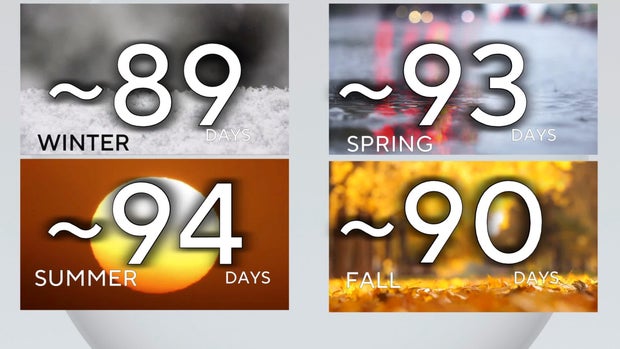
Summer is our longest and hottest part of the year, but it is also the time of the year when the Sun appears to be the smallest in the sky!
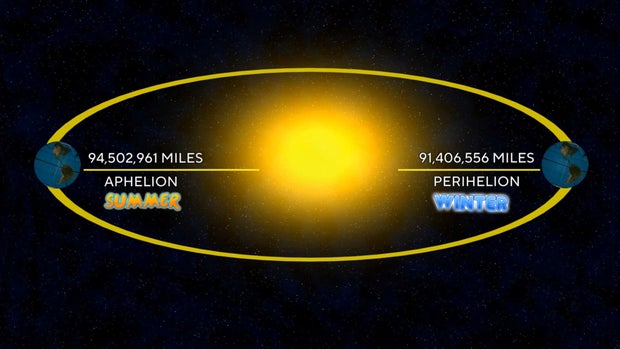
This happens because it is the time of year when the Sun and Earth are at their farthest points from each other.
We call this the aphelion. According to EarthSky.Org, the Earth and Sun will be 94,502,961 miles apart during this year's aphelion, which occurs July 6th at 1:30 p.m.
On the other hand, the Earth and the Sun will be at their closest points, or Perihelion, in early January.
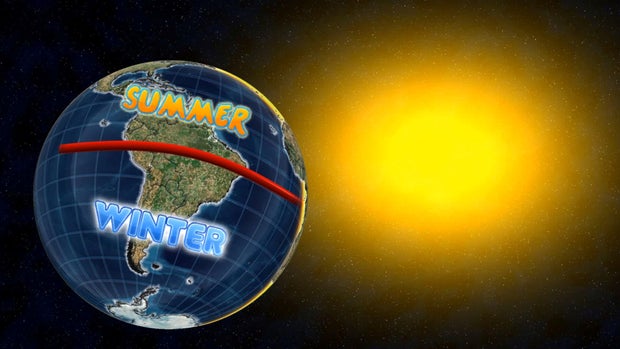
I know this sounds backwards, but the Earth's 23.5° tilt is more important than the distance. In the summertime, the northern hemisphere is tilted toward the Sun, meaning the Sun's energy is more directly focused there, causing it to warm up more efficiently.
In the vacuum of Space, the roughly three-million-mile difference of our farthest and closest points really doesn't matter.
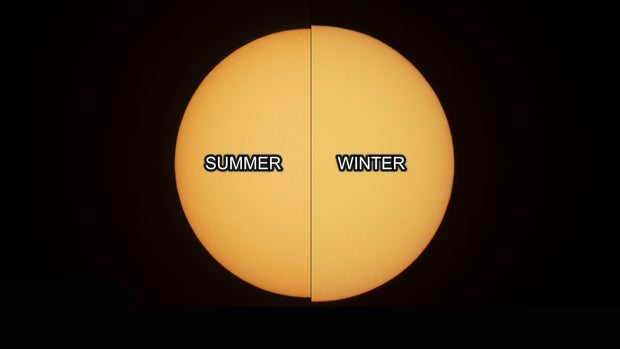
Just like when a "supermoon" appears slightly bigger and brighter than usual when it is at its closest point to Earth, and slightly smaller than usual when it is at its farthest point, the Sun does too.
The difference is so small that most people can't tell without having imagery to compare.


