East Allegheny School District becomes first K-12 public school in U.S. to use immersive reality technology in classrooms

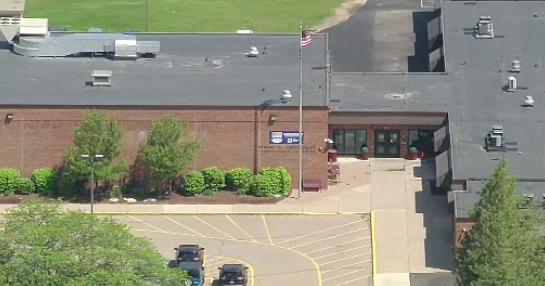
Students in the East Allegheny School District have the opportunity to boldly go where no school students have gone before. On Tuesday, the district unveiled its new immersive reality technology space at the East Allegheny Junior/Senior High School, one day after a similar space was opened at Logan Elementary School.
This interactive technology integrates artificial intelligence and four-dimensional presentation, provided by Xycom, a Pittsburgh-based technology construction group. East Allegheny is the first school district in the U.S. to use the technology in an educational setting.
"Today, as you tour the space, I want you to imagine the possibilities for learning," said Superintendent Joe DiLucente during the ribbon-cutting ceremony. "I want you to think of the excitement of students who don't necessarily get to travel to these enriching places and experience these environments during their weekends and summers."
DiLucente said they had researched previous work Xycom had done with the Watson Institute, a special education school in Sewickley.
"We were impressed by it, and we needed to take a tour ourselves, so we started the partnership," said DiLucente. "We went and we toured the space. We reviewed its possibilities for education. We were impressed by what it could provide for students with sensory needs, but then in an enrichment sense for all of our students. We thought that extension of the classroom was something that we wanted to bring here."
DiLucente said the school district is using the balance of federal grant money that existed, and he wanted to do something that was "student-facing and providing and engaging academics," which is one of the district's core values.
"I think it's very awesome," says Ana Lucas, an East Allegheny sophomore. "It just shows the technology from, say, 2000 to now, basically, and with AI and all that stuff. It's pretty amazing."
One of the things DiLucente said drew the district to the technology was the ability to create content for students of all ages and categories.
"We were impressed by what it could provide for students with sensory needs, but then in an enrichment sense for all of our students," he said. "We thought that extension of the classroom was something that we wanted to bring here."
That extension of the classroom can take them anywhere from the beaches of South Florida to the inside of ancient Egyptian pyramids, all without leaving the walls of their school.
"They can look at it in a 4-D, immersive reality sense where it's all around them," said DiLucente. "They can touch and interact with the wall. These were the types of ways that we wanted to extend the classroom and offer kids that direct insight into their learning."