Carnegie Mellon University professor explains what President Trump's tariffs mean for the economy
Economists are reacting to the new sweeping global tariffs, and some fear that it will impact consumers' wallets.
KDKA-TV got perspective from an expert in Pittsburgh who shared how he thinks consumers and the economy could be impacted.
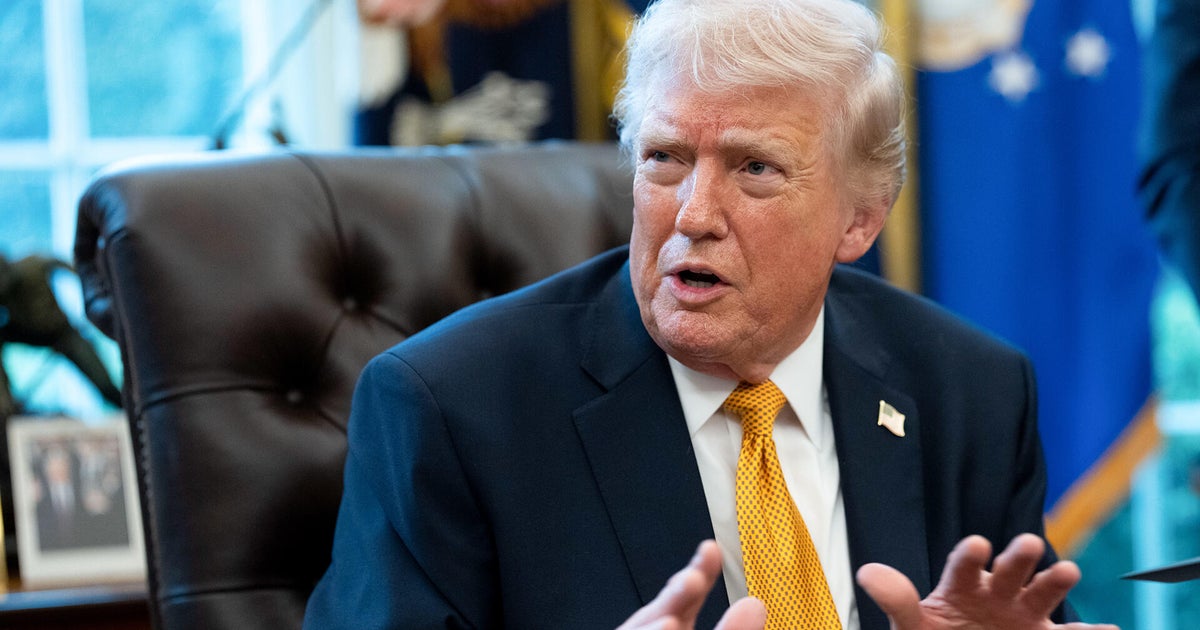
"Our country and its taxpayers have been ripped off for more than 50 years, but it is not going to happen anymore," President Donald Trump said.
President Trump held up charts in the Rose Garden to show how much the United States will tariff each country based on the tariff charged to the U.S.
He told the nation he's placing a baseline ten percent tariff on all countries that export goods to America, and countries that have the highest trade deficit will also face reciprocal tariffs on top of that.
"We will charge them approximately half of what they are and have been charging us. So, the tariffs will be, not a fully reciprocal. I could've done that, I guess. But it would've been tough for a lot of countries. We didn't want to do that," President Trump said.
He has labeled this liberation day because he said the sweeping new tariffs will restore American wealth. But critics said the measures could lead to higher prices for consumers.
KDKA-TV asked Ali Shourideh, associate professor of economics at Carnegie Mellon University, what impact he sees for most Americans.
"These tariffs at this level have never been implemented, at least as far back as those that were done in the 1930s. So we have to see, my guess is they're going to lead to higher prices, but how much is unclear," Shourideh said.
He said the question that he believes most economists have right now is whether tariffs are the right way to go about reshaping the global economy.
"Whether it's going to create jobs, again, since we haven't done anything at this level, it's very hard to tell. The market's reaction was not very encouraging. At the same time, it's possible that companies and other countries go around the tariffs. For example, the current plan did not include any tariffs on Mexico or Canada, and it's possible that, say, China sends goods to Canada then through Canada to the U.S.," said Shourideh.
President Trump told the nation that jobs and factories will come roaring back into our country.
"And you see it happening already. We will supercharge our domestic industrial base. We will pry open foreign markets and break down foreign trade barriers, and ultimately, more production at home will mean stronger competition and lower prices for consumers. This will be indeed the golden age of America. It's coming back. We're going to come back very strongly," President Trump said.