Great Race raises money for amyloidosis, which Pittsburgh doctor says is still underdiagnosed
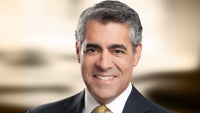
This weekend is the Richard S. Caliguiri Great Race, named for the late former Pittsburgh mayor.
It's been almost 40 years since Caliguiri died, but the annual event continues to raise money to fight the disease that took his life at age 56 — a disease few at the time had ever heard of.
"We had no idea what it was," remembers Ron Klink. As an anchor and reporter for KDKA-TV News in 1987, he was among the many local journalists who had to learn how to pronounce "amyloidosis."
In amyloidosis patients, an abnormal buildup of proteins damages organs. In Caliguiri's case, his heart.
On its own, word of a noted Pennsylvania political figure in his prime announcing he had a rare and incurable disease was enough to generate national headlines.
But just two weeks later came news of what seemed to be an incredible coincidence: Louis Tullio, the longtime mayor of Erie, Pennsylvania, revealed that he had been given the same diagnosis.
Within two and a half years, both men would die of what became known as "the mayors' disease."
By then, Klink and the rest of the Pittsburgh media had learned to pronounce amyloidosis — and to fear it.
"Everybody we knew who was diagnosed with it seemed to die pretty quickly," Klink recalls.
So you can imagine Pennsylvanians' disbelief when, in the summer of 1991, Gov. Bob Casey disclosed that he too had amyloidosis.
"There is one glaring fact related to Casey's announcement," KDKA-TV reported at the time. "He is the third Pennsylvania politician to have the disease."
With Casey's organs failing, UPMC surgeons performed a heart-liver transplant, and Casey lived another seven years, to age 68.
By that time, Klink had left the news business for politics. In 1992, he won the first of four terms in the U.S. House of Representatives. And in 2000, he was the Democratic nominee for U.S. Senate, losing that year's general election to Rick Santorum.
Since then, Klink has remained active in politics and government relations.
Last year, while doing yard work at home on a hot day, he felt light-headed. He mentioned it to his doctor. Tests showed thickening of the walls of his heart. And Ron Klink became the fourth Pennsylvania political figure to hear their doctor tell them they have amyloidosis.
He instantly thought of Caliguiri, Tullio and Casey.
"I brought up their names, I said, 'Wait a minute. This is the same disease?' I want to make sure I heard him right," Klink said.
And while it is the same disease, Klink learned the prognosis can be very different today.
"Fifteen years ago this was a death sentence," says St. Clair Hospital cardiologist Dr. Christopher Pray. "We would manage the patient's heart failure symptoms, try to keep them comfortable, and help them prepare for the end of their life."
There is still no cure. But recently developed medications can dramatically improve outcomes. And Pray says cases can be detected earlier thanks to advanced imaging.
"Once we do find them, we have multiple approved treatments which can dramatically slow, or in some cases, halt disease progression," Pray said. "And we're not far from being able to offer medications, hopefully in the near future, to even turn back the clock and reverse the course."
For Klink, treatment amounts to one pill a day. And he says it's working.
"I'm doing well," he says. "I'm still working full time, I'm starting new businesses, I'm really active."
Pray says outdated ideas about amyloidosis persist even in the medical community. He's become an evangelist, urging more doctors to test for and treat it. He says he's certain that many hospitals have heart patients with amyloidosis right now, but don't know it.
"Unfortunately and embarrassingly, that is correct," says Pray. "The majority of hospitals in the U.S. have never diagnosed a patient with this condition."
And the former journalist in Klink is eager to update the story of what being diagnosed with "the mayors' disease" means today.
"I'm sure there are [many] people out there that have this disease, they're dying prematurely, they don't have a quality of life, and if they only got diagnosed quicker and got on the medication, they would have the same kind of life I'm having and enjoying right now."


