Courtesy Jun Kaneko
Japanese artist Jun Kaneko, based in Omaha, has been re-writing the rules on the size and shape of ceramic art, with his giant, fanciful ceramic sculptures. He is also helping turn the Nebraska city into a magnet for other artists.
By CBSNews.com senior producer David Morgan
Courtesy Jun Kaneko
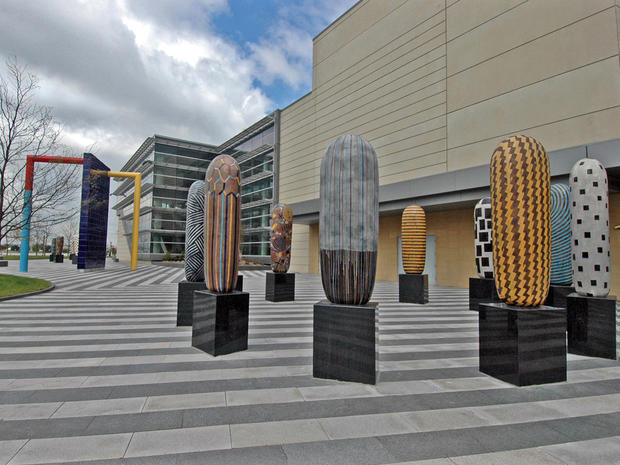
"Rhythm" (2009), a public art installation by Jun Kaneko in Council Bluffs, Iowa. The 16 sculptures are comprised of hand-built glazed ceramic, patinated bronze, stainless steel and granite.
Courtesy Jun Kaneko
Jun Kaneko was born in Nagoya, Japan, in the months after Pearl Harbor. He showed promise early, and at 21 he was sent to America to study painting.
His host family, it turned out, collected ceramic art, and Kaneko's focus soon shifted from two dimensions to three.
Courtesy Jun Kaneko
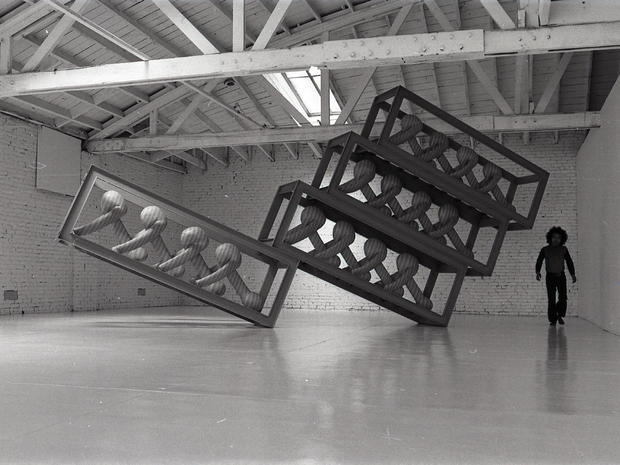
Jun Kaneko's MFA thesis exhibition in 1971, at the Claremont Graduate School in California.
Having studied with artists who were part of what became known as the Contemporary Ceramics Movement, Kaneko later taught at Scripps College in Claremont, Calif., the Rhode Island School of Design, and the Cranbrook Academy of Art in Bloomfield, Mich.
Courtesy Jun Kaneko
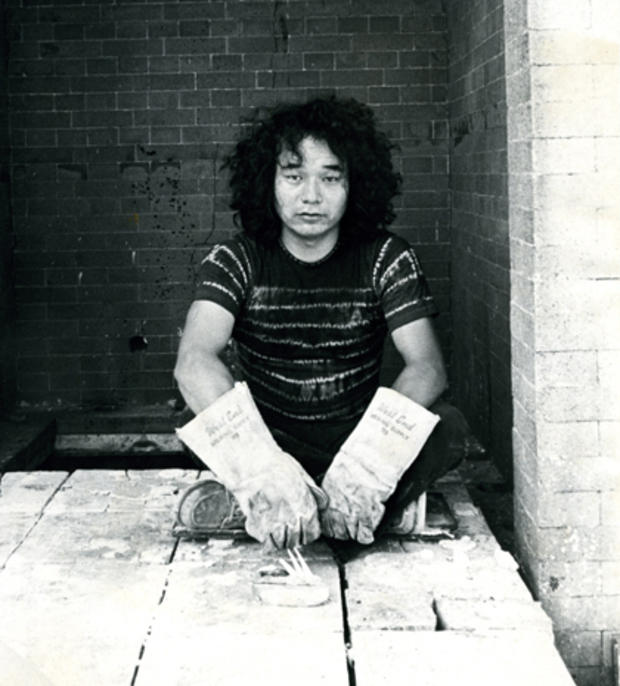
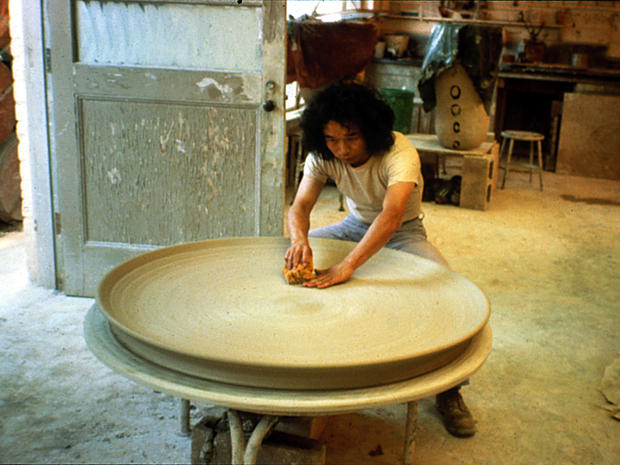
Jun Kaneko at his studio at Scripps College in 1974.
Courtesy Jun Kaneko
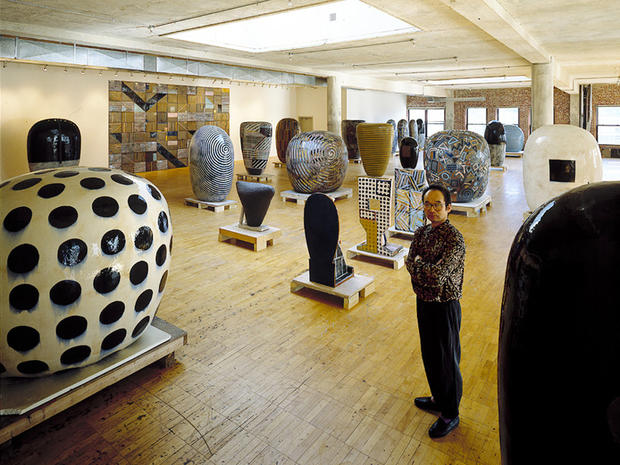
Jun Kaneko settled in Nebraska, where his wife, Ree, runs an artist-in-residence program across the street from his studio - a 400,000-sq. ft. complex stretching across downtown Omaha.
Left: Kaneko at his Omaha studio in 1994.
Courtesy Jun Kaneko
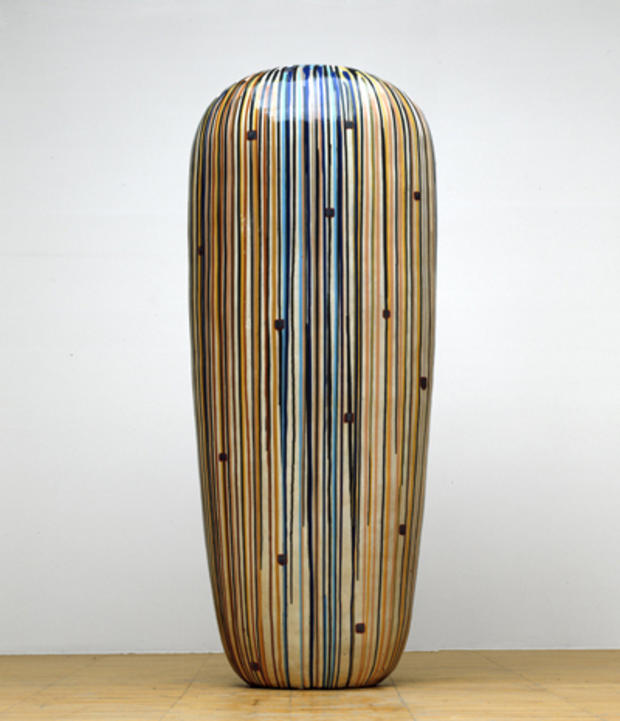
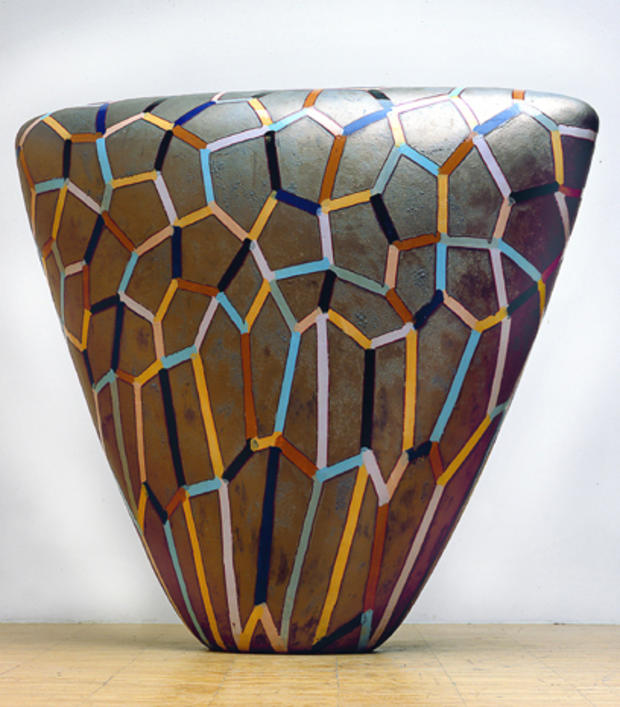
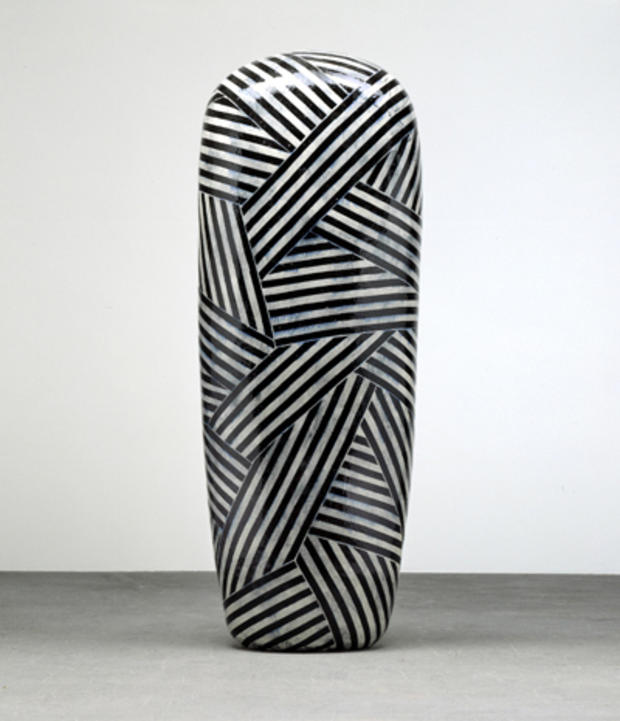
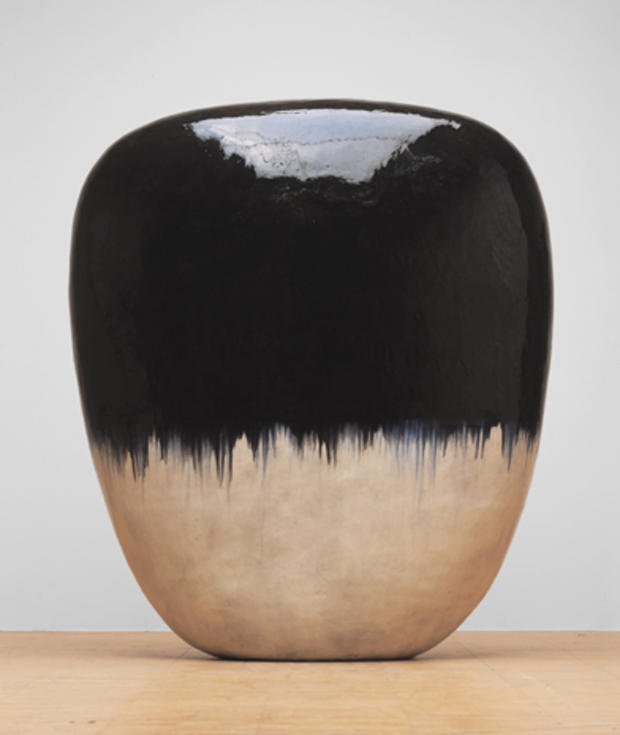
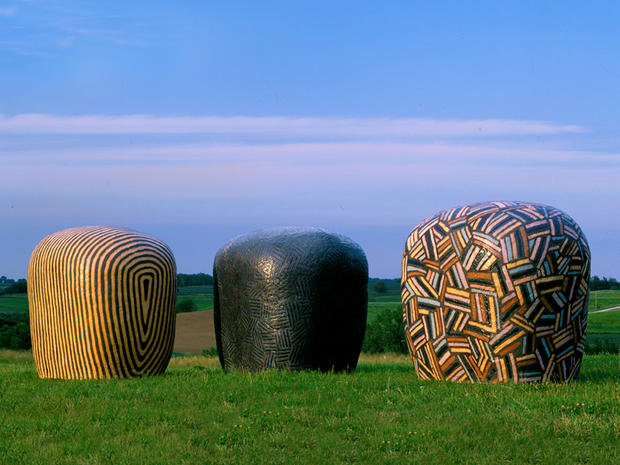
Kaneko's breakout works were called dangos - Japanese for "dumplings" - that resemble huge closed vases.
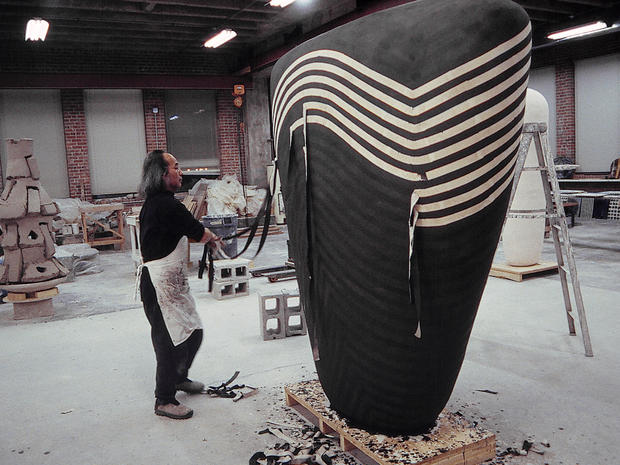
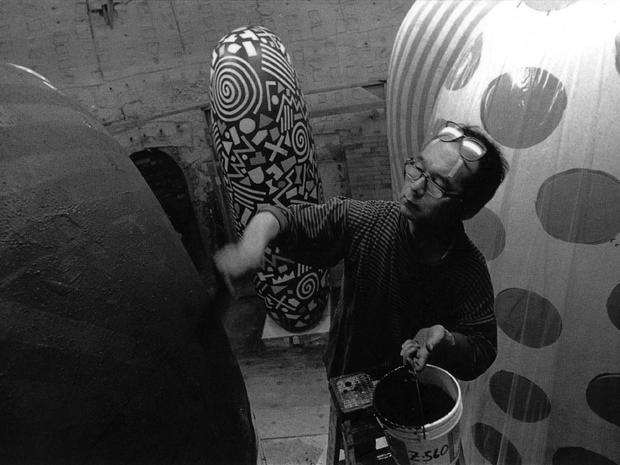
Left: Kaneko glazes a giant ceramic dango sculpture, 2000.
Courtesy Jun Kaneko
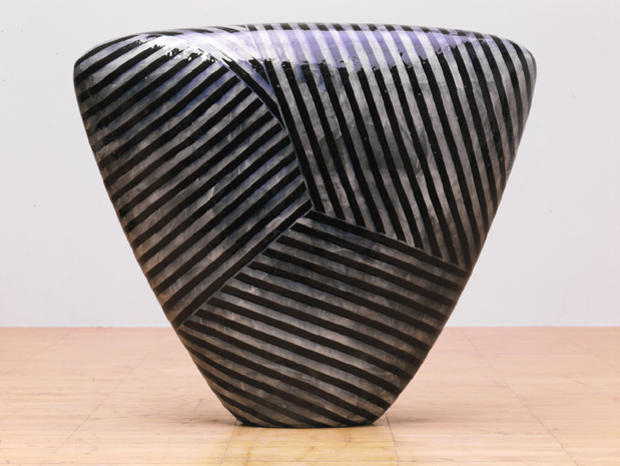
A dango from 1998 by Jun Kaneko.
CBS News
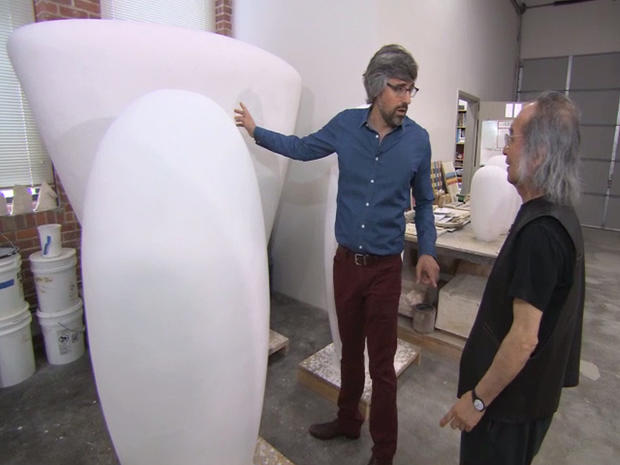
But his goal isn't just to make big pieces per se.
"That's true," he told CBS News' Mo Rocca. "It takes so much effort to make a big piece, so you better make sure the piece is going to be good. So don't make ugly, big piece!"
Courtesy Jun Kaneko
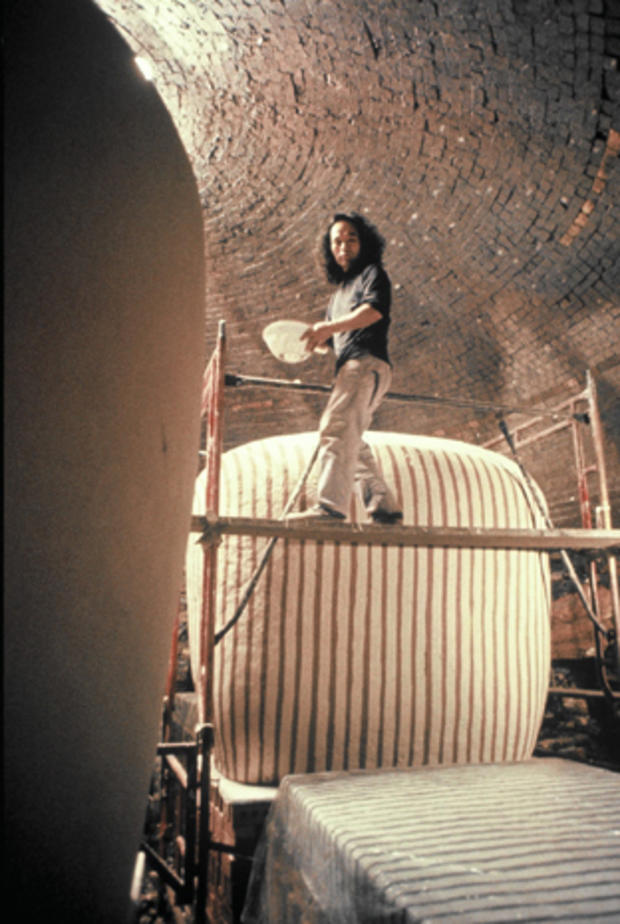
Jun Kaneko creating his first large dangos in 1983.
Dirk Bakker/Courtesy Jun Kaneko
An untitled dango from 2000. (72h x 28w x 17d in.)
Courtesy Jun Kaneko
A dango by Jun Kaneko, 1996.
Courtesy Jun Kaneko
A dango by June Kaneko, 2000.
Courtesy Jun Kaneko
A ceramic dango by Jun Kaneko, 1998.
CBS News
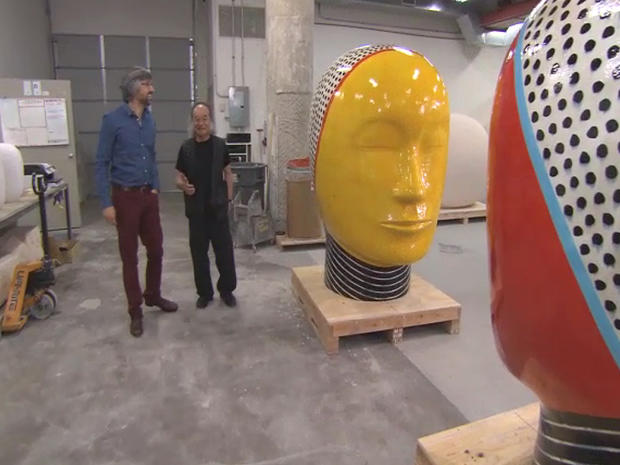
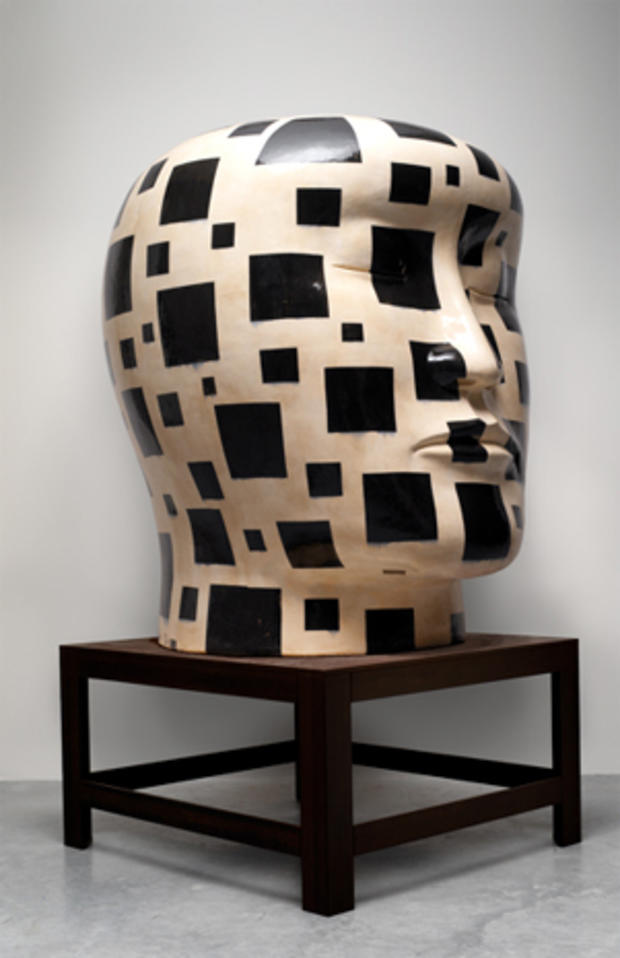
As Kaneko's work became better known, he moved on to other forms - like six-foot-tall heads.
Courtesy Jun Kaneko
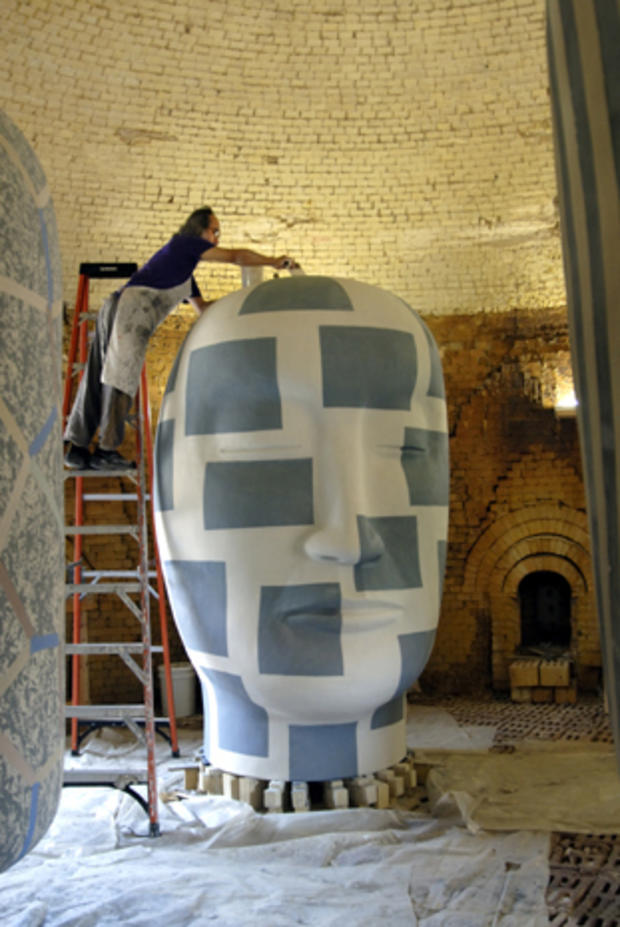
Jun Kaneko glazes one of his giant head ceramic sculptures, 2007.
Dirk Bakker/Courtesy Jun Kaneko
One of Kaneko's giant heads, from 2004. (78h x 63w x 70d in.)
Courtesy Jun Kaneko
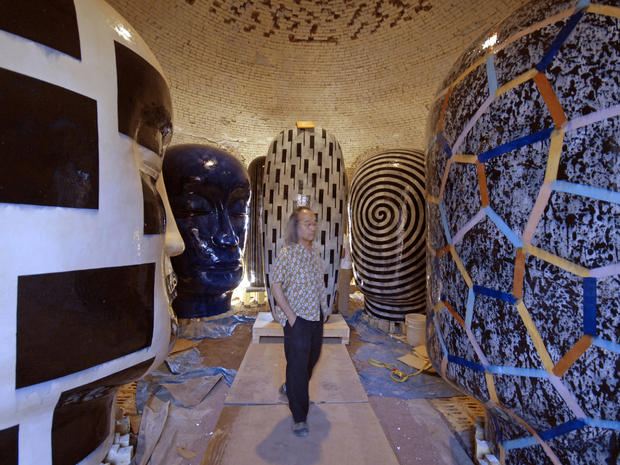
Jun Kaneko with giant heads to be fired as part of the Mission Clay Pittsburg Project, 2007.
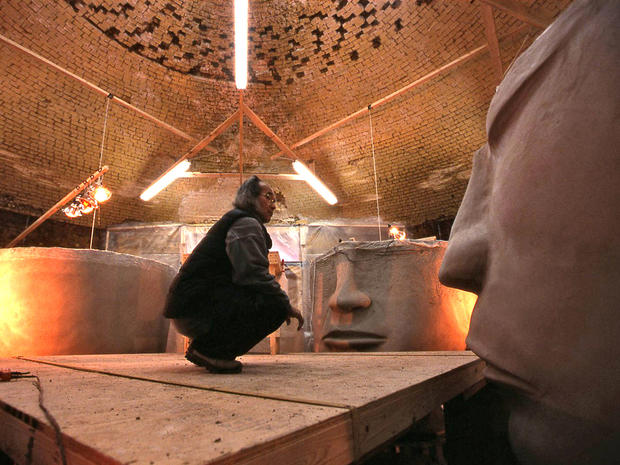
The Mission Clay Products factory in Fremont, Calif., uses giant beehive kilns to manufacture large clay sewer pipes - precisely the type of kilns that could accommodate Kaneko's giant ceramic heads.
Courtesy Jun Kaneko
Jun Kaneko's giant ceramic sculptures fill the beehive kiln at Mission Clay Products factory in Fremont, Calif.
Courtesy Jun Kaneko
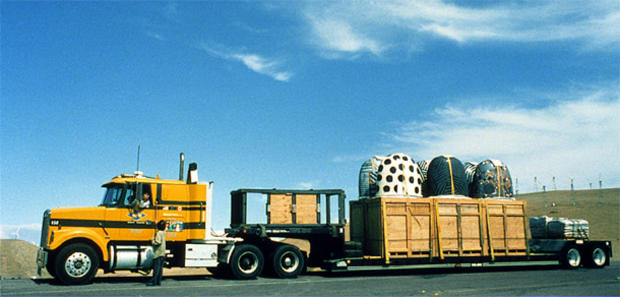
Giant ceramic sculptures are transported from the Mission Clay Factory in Fremont, Calif., to the artist's studio in Omaha.
Courtesy Jun Kaneko
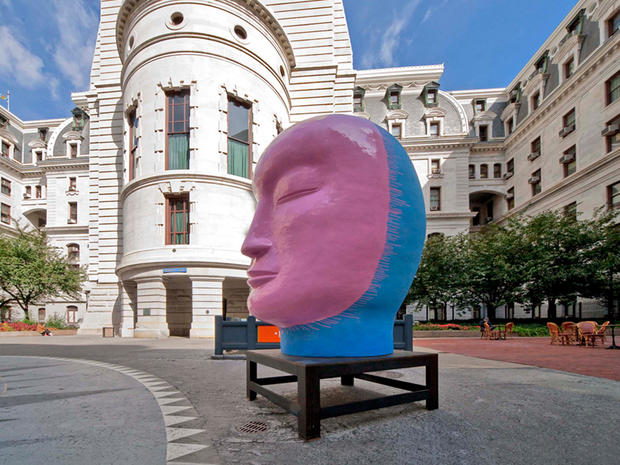
Giant heads - hand-built glazed ceramics - by Jun Kaneko, at Philadelphia City Hall, 2009.
CBS News
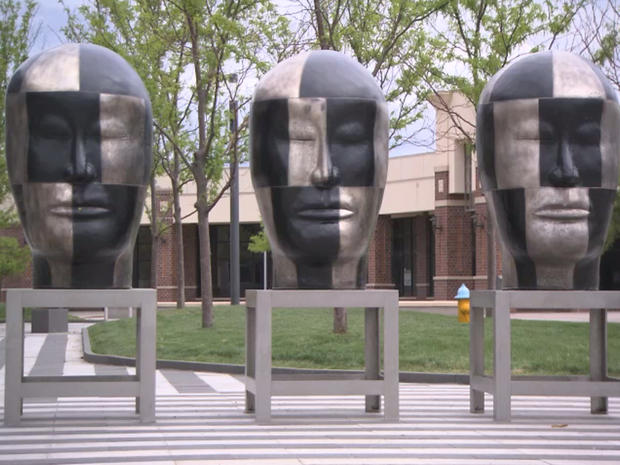
Three giant heads by Jun Kaneko.
Courtesy Jun Kaneko
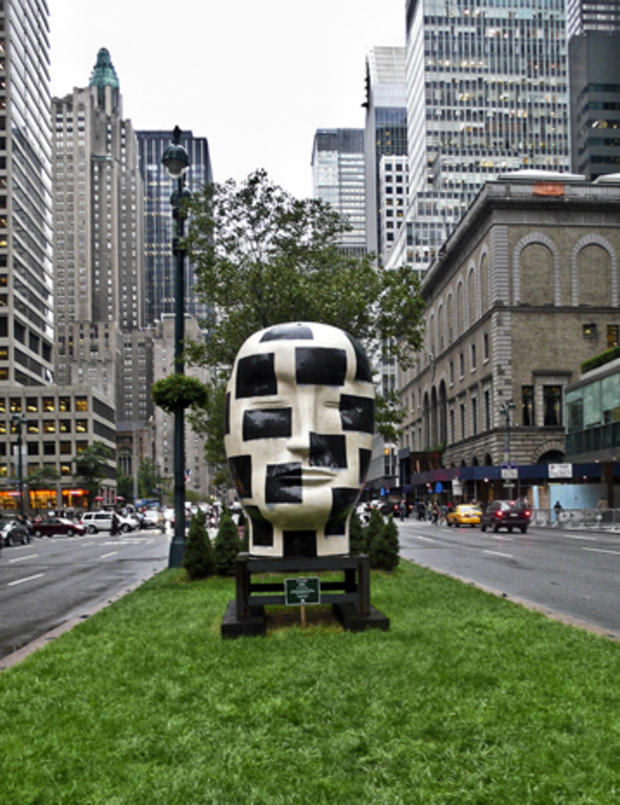
An exhibition of Kaneko's giant heads on New York's Park Avenue, 2008. The three heads were 10-and-a-half feet tall by 6 to 6.5 feet in width.
CBS News
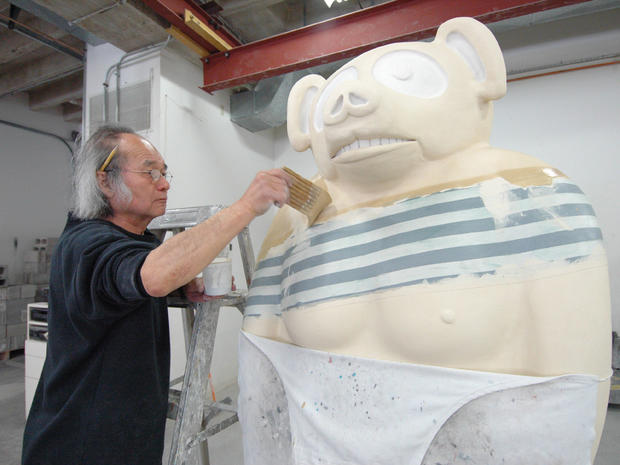
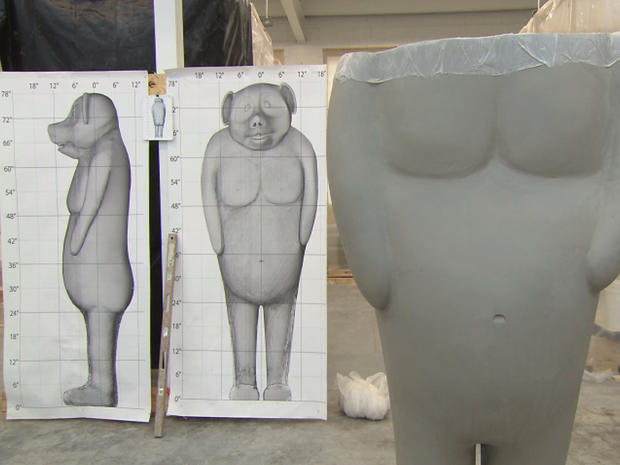
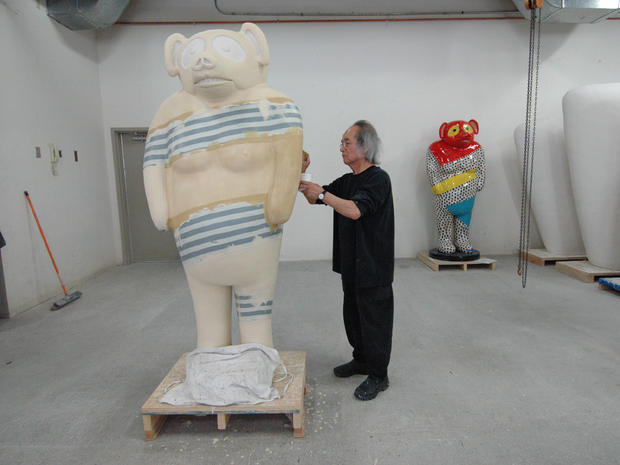
Kaneko's latest big sculptures are called tanukis. Tanuki means "raccoon dog," and it's the name of a small Japanese animal popular in folk tales.
Kaneko's tanukis, however, are anything but small.
CBS News
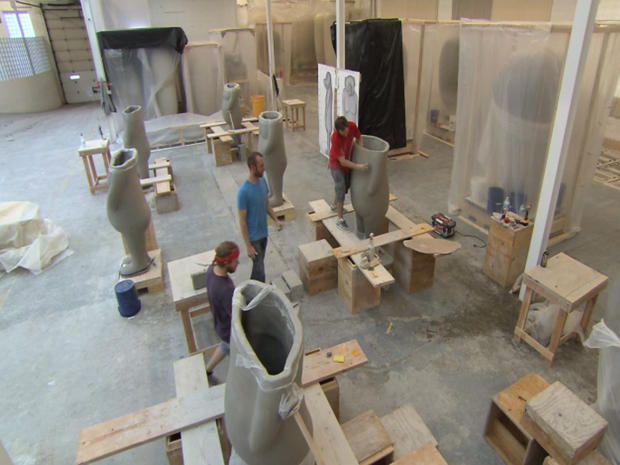
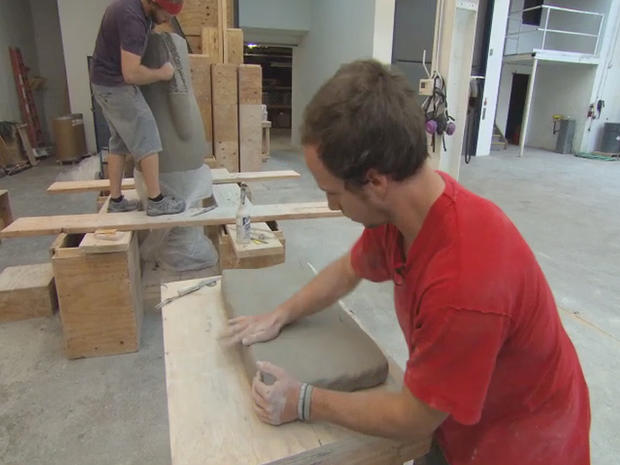
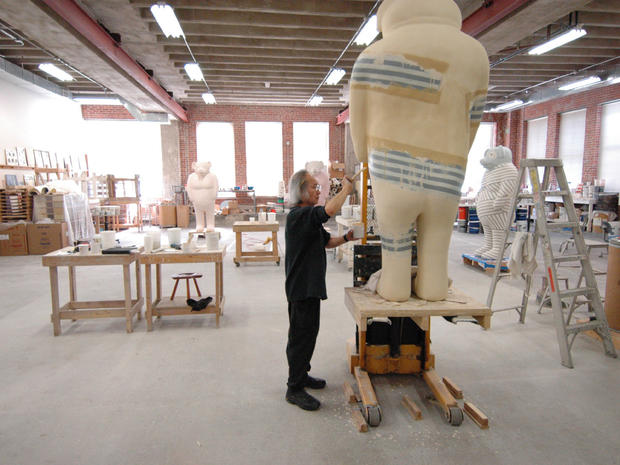
At 71, Kaneko now leaves the heavy lifting to a team of assistants, who help with fitting the heavy clay slabs.
CBS News
Assistant Garet Reynek hoisted a clay slab weighing 60 pounds.
CBS News
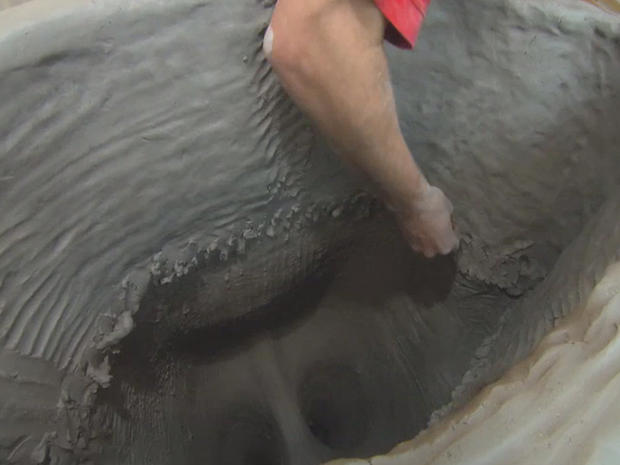
The slabs of clay are fitted and formed from the feet up around a hollow core.
CBS News
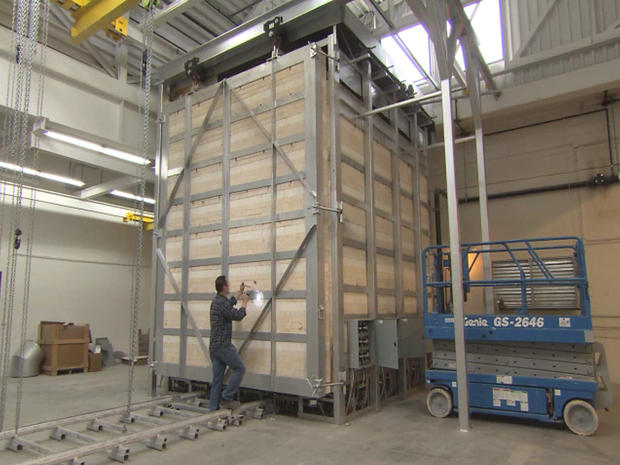
When the form is complete, it's fired in the studio's giant kiln for 11 days, then taken out and left to dry for 6 months.
Courtesy Jun Kaneko
Then Kaneko hand-paints them, and it's back in the kiln for another 11 days.
Courtesy Jun Kaneko
Each Tanuki takes more than a year to complete.
CBS News
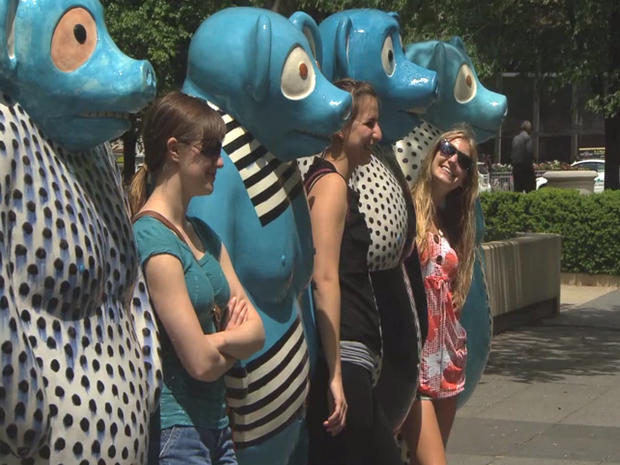
Kaneko's massive, fanciful creatures - almost 7 feet tall and 900 pounds each - are the centerpiece of a display running through November in Chicago's Millennium Park.
Courtesy Jun Kaneko
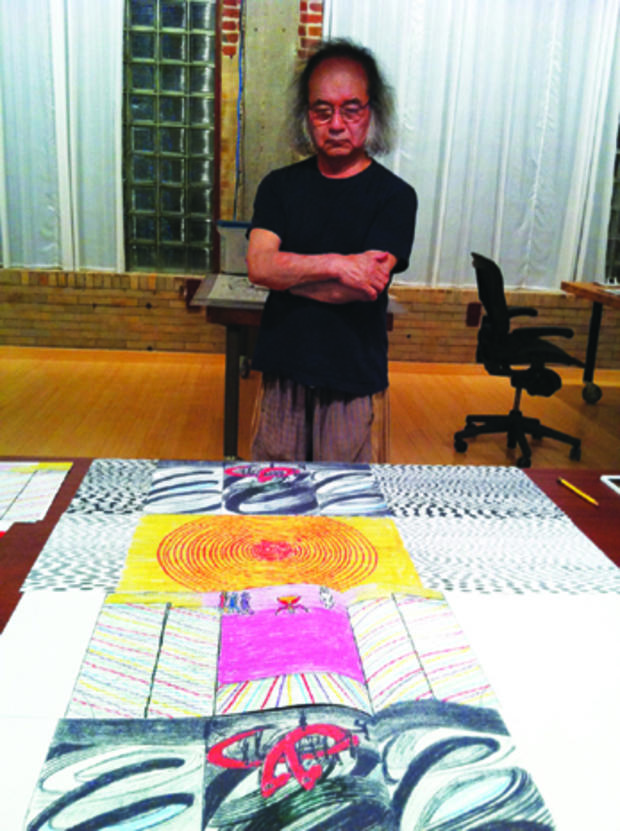
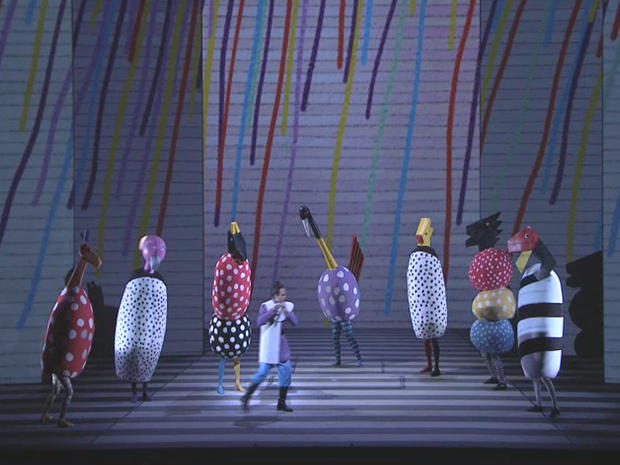
Kaneko spent two years designing the costumes and backgrounds for a San Francisco Opera production of Mozart's "The Magic Flute."
San Francisco Opera
A scene from of the Jun Kaneko-designed San Francisco Opera production of Mozart's "The Magic Flute" (2011-2012).
There were no physical set pieces; all the scenery was projected onto screens, groundbreaking for a major opera production.
Courtesy Jun Kaneko
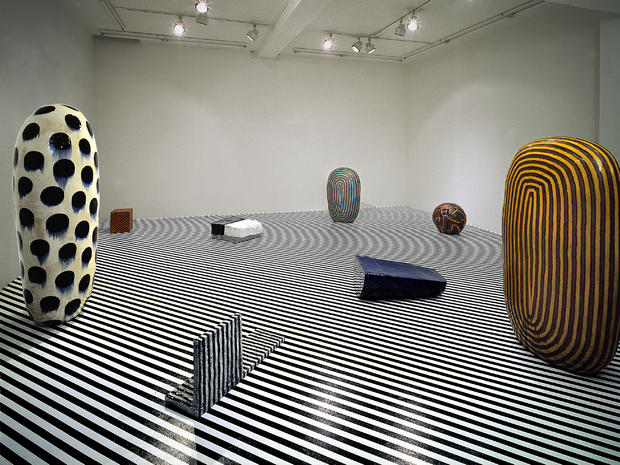
An installation by Jun Kaneko of hand-built glazed ceramics and epoxy paint, at Gallery Takagi, 1991.
Courtesy Jun Kaneko
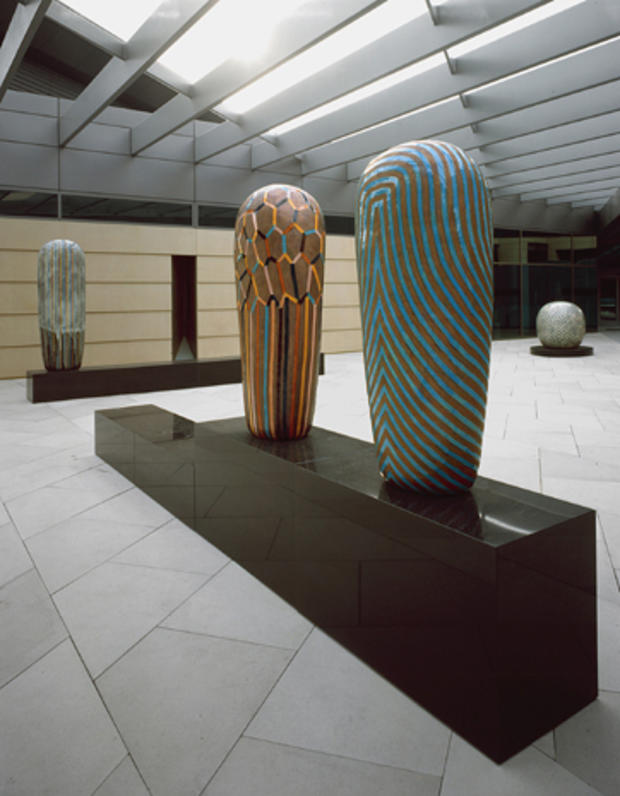
A public art installation, of hand-built glazed ceramics and granite, at Washington State University, 2001.
Courtesy Jun Kaneko
Hand-built glazed ceramics by Jun Kaneko, at a public art installation at the University of Connecticut, 1997.
Courtesy Jun Kaneko
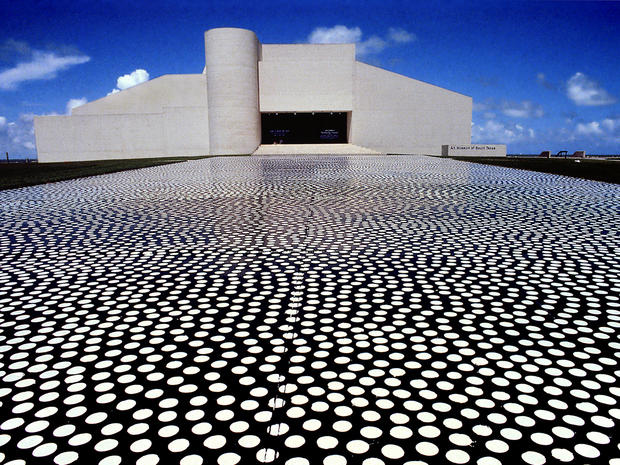
"Polka Dot Sidewalk" (acrylic paint on concrete), at the Museum of South Texas, 1986.
Courtesy Jun Kaneko
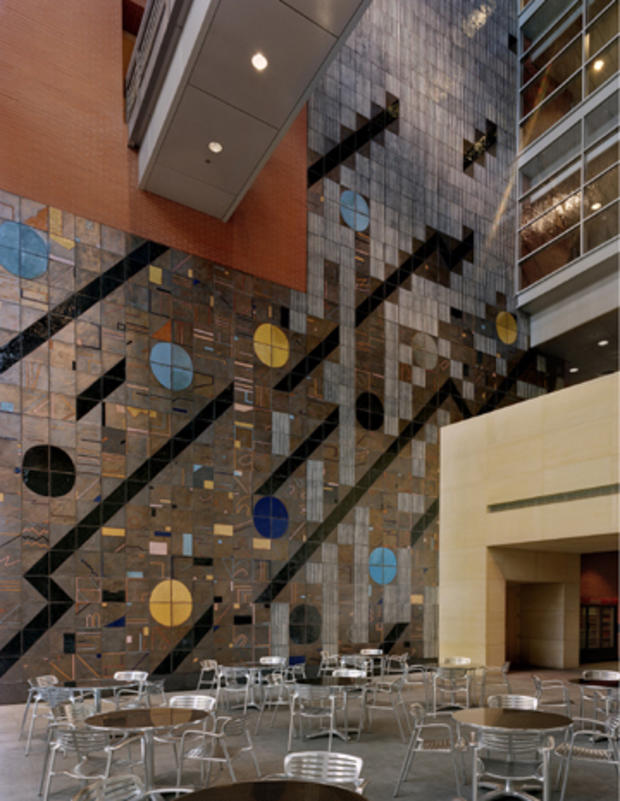
Omaha Brickworks Project, 1982-1984, by Jun Kaneko.