Courtesy Toledo Museum of Art
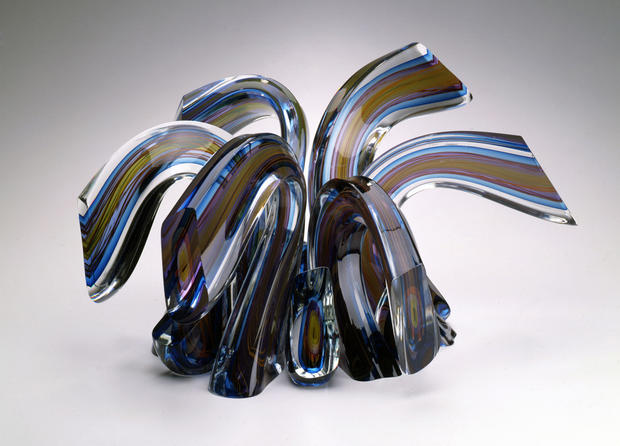
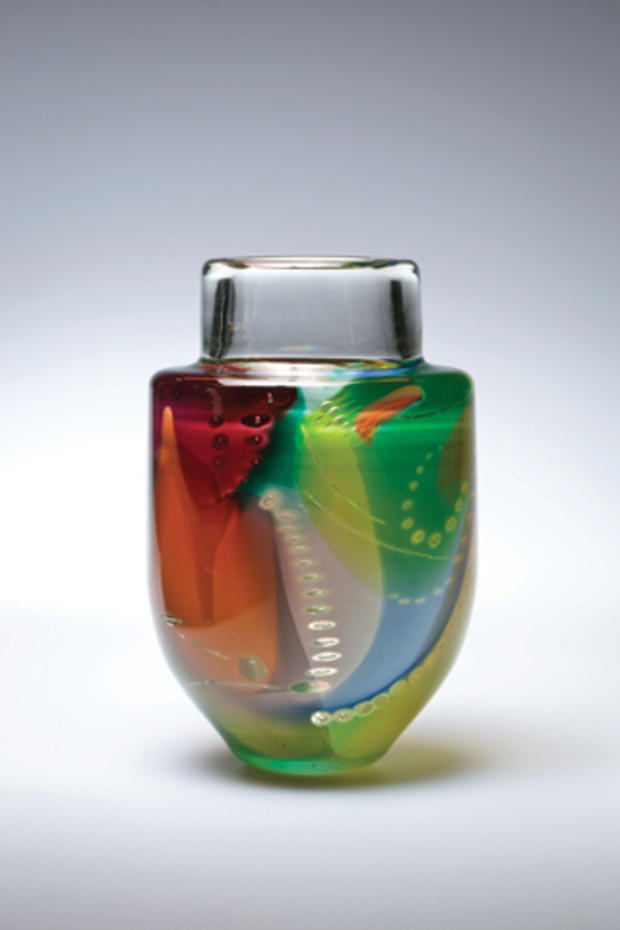
"Blue/Ruby Spray" (1990) from Harvey Littleton's Crown Series, is made from colorless and colored barium potash glass, blown, with multiple cased overlays.
Fifty years ago ceramics instructor Harvey Littleton created a workshop in a garage at the Toledo Museum of Art to explore the possibilities of newly-developed small furnaces. Beautiful glass has been around for thousands of years, from ancient Egypt and Rome to Tiffany's in 19th century America. But making it is so difficult that before 1962, artists had to hand over their designs to industrial furnaces to be completed.
All that changed with the Studio Glass movement that grew out of Littleton's modest workshop.
Courtesy Toledo Museum of Art
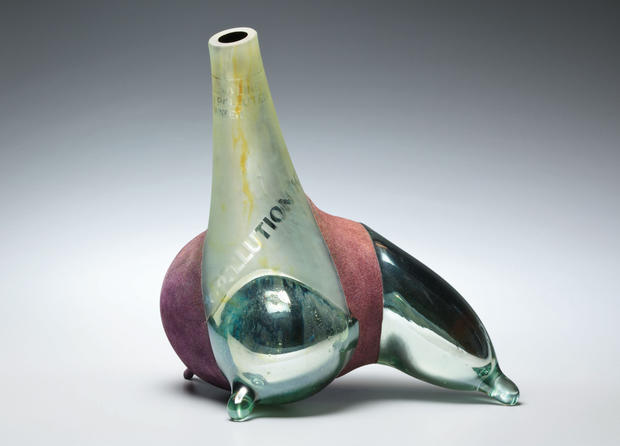
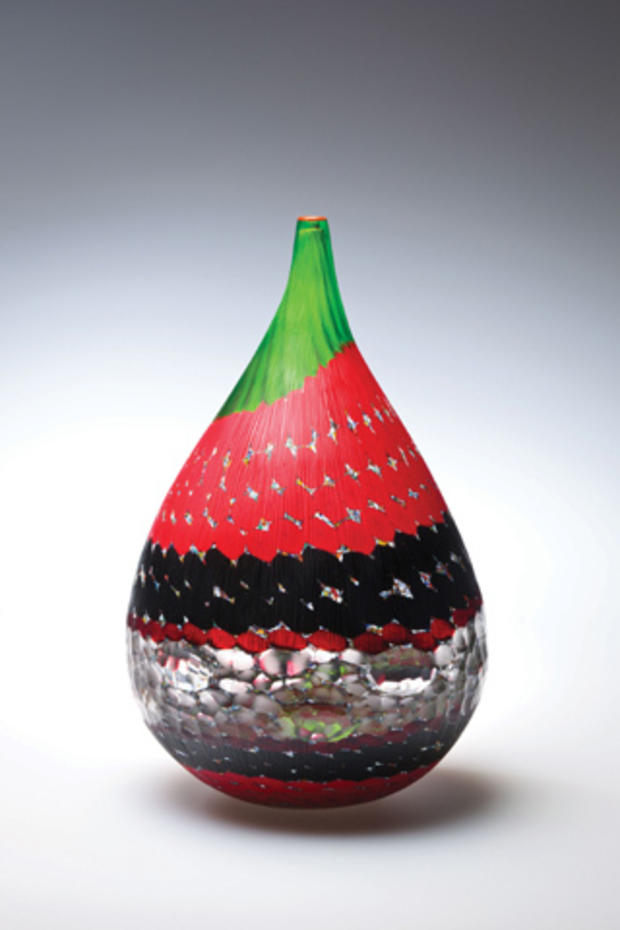
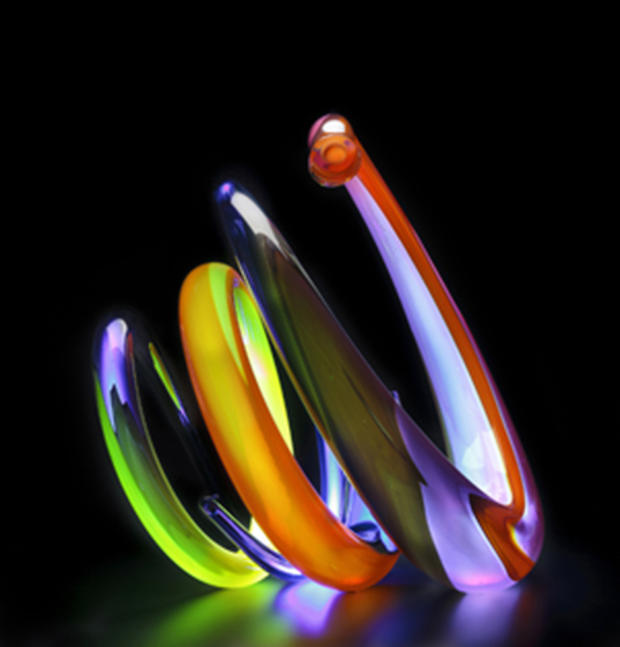
This piece by glass artist Marvin Lipofsky is one of many on display in the Toledo Museum of Art's show called "Color Ignited," in honor of Littleton's 1962 workshop.
Courtesy Toledo Museum of Art
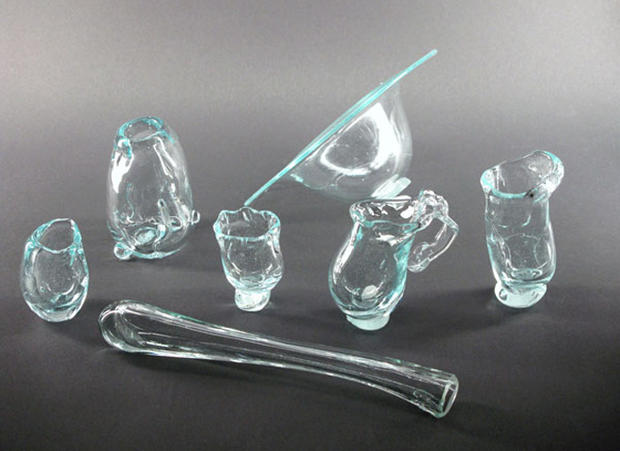
These early glass pieces by Edith Franklin and Tom McGlauchlin were made in the original 1962 workshops at the Toledo Museum of Art, which gave rise to the Studio Glass movement - and stand as testament to the difficulties of the medium. "Normally, something like that would go right back into the furnace and be melted down again," said curator Jutta Page.
In the beginning, Littleton's small furnace didn't work at all.
To the rescue came Toledo glass scientist Dominick Labino, an engineer with more than 60 patents to his name who helped develop fiberglass insulation for the NASA space program. But Labino also wanted to be an artist, so he joined forces with Littleton and showed him how to build a usable furnace, and supplied him with glass beads that could be melted more easily.
Courtesy Toledo Museum of Art
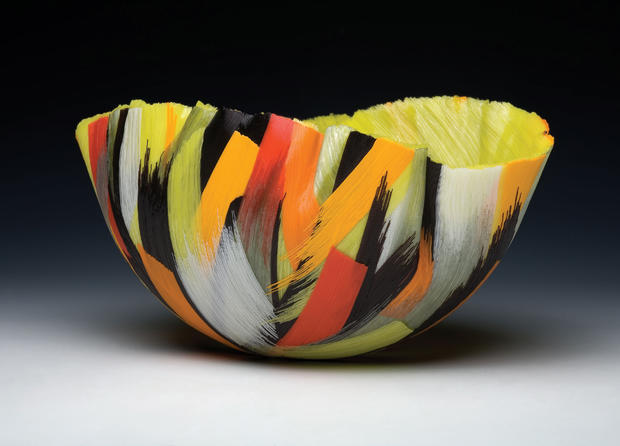
This vibrant bowl titled "City Lights" (1993) is by American glass artist Toots Zynsky.
Courtesy Toledo Museum of Art
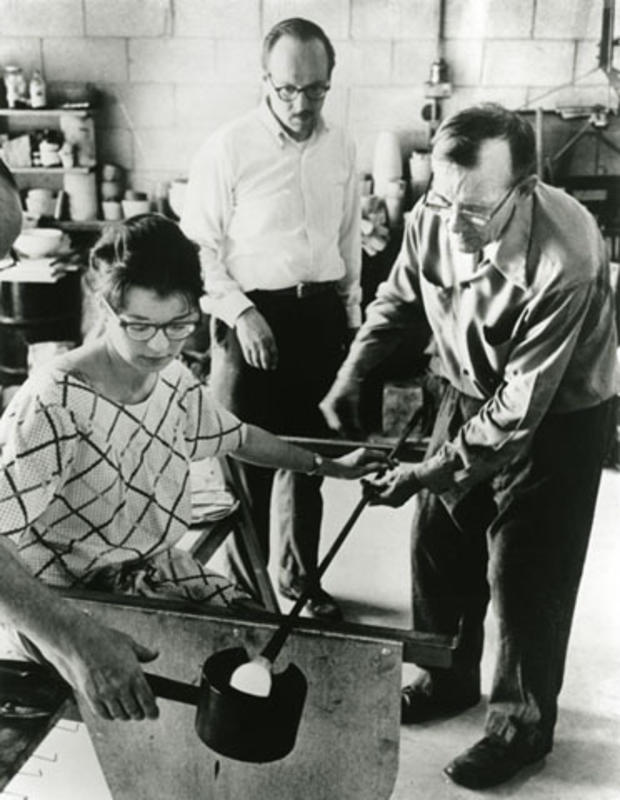
In this photograph taken during the March 1962 Toledo Museum workshop, Rosemary Galasso (left) works with molten glass with Harvey Littleton and glassblower Harvey Leafgreen.
Courtesy Toledo Museum of Art
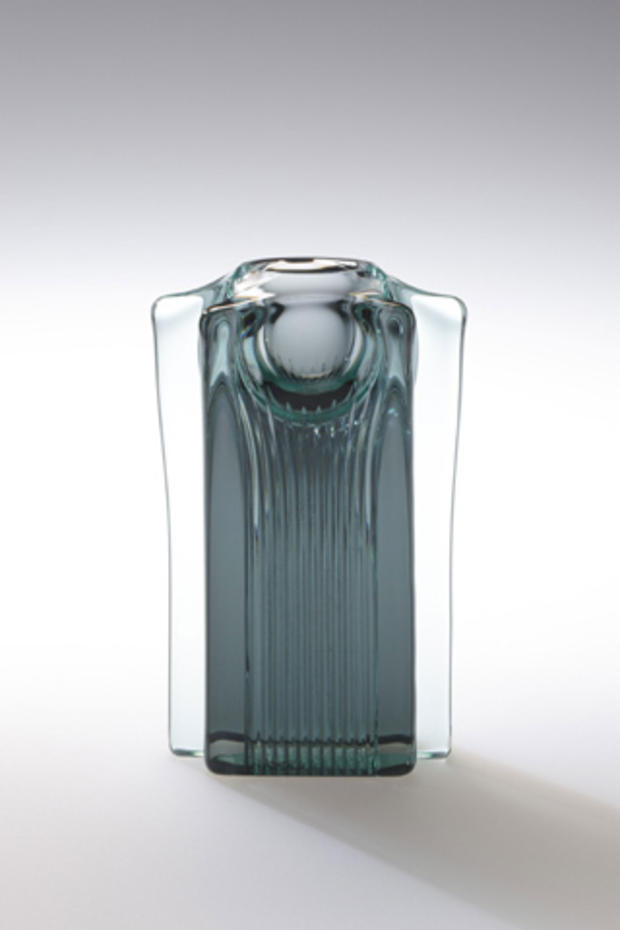
Traditional Japanese vases are recalled in this work by Yoichi Ohira.
Courtesy Toledo Museum of Art
"Infolding II" (2008) by Portland, Ore., artist Deborah Horell, who uses a process of "pate de verre," mixing crushed glass with coloring agents.
Courtesy Toledo Museum of Art
"Dessin de Bulle," a blown glass vase by Tom McGlauchlin (1978).
Courtesy Toledo Museum of Art
"Radio Light," blown glass with mercury and argon gas by Paul Seide (1985).
Courtesy Toledo Museum of Art
Tom Patti has created small scale sculptural works as well as large architectural art commissions.
Courtesy Toledo Museum of Art
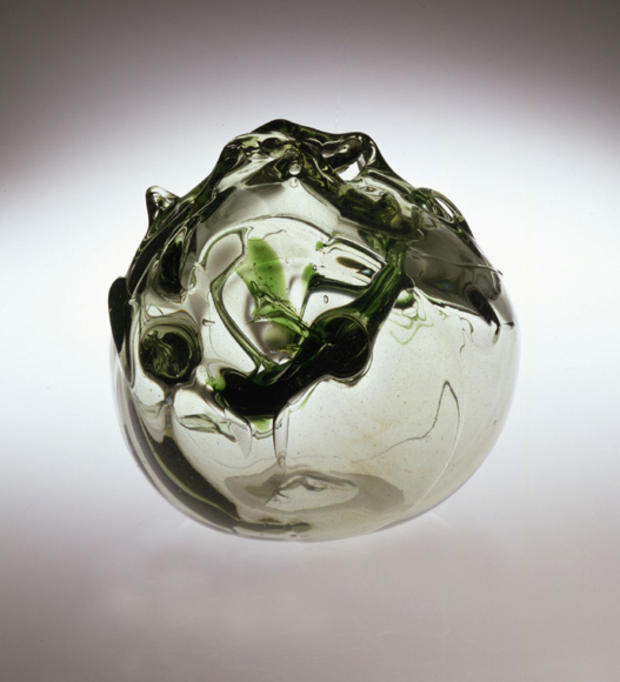
A light olive green blown glass vase form with applied prunts by Robert Fritz (1966).
Courtesy Toledo Museum of Art
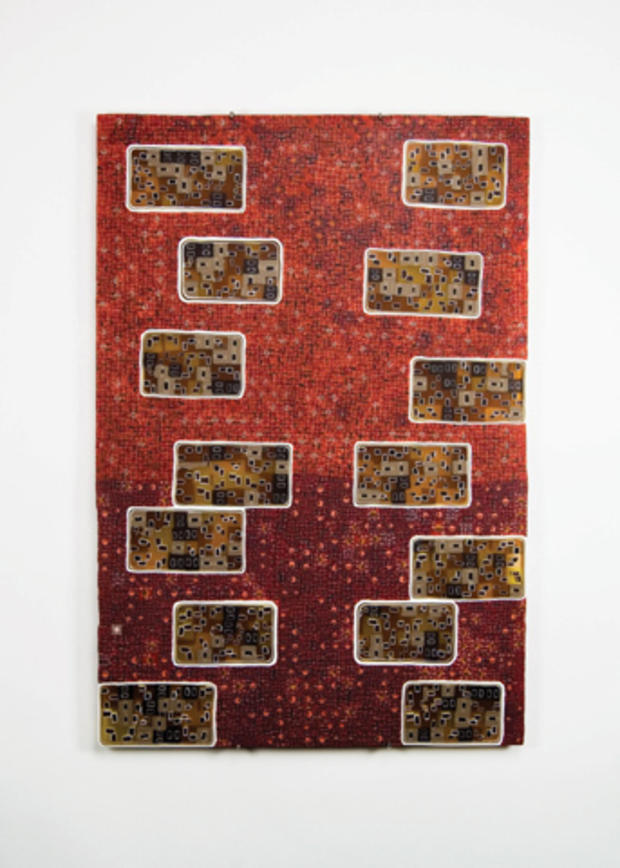
This artwork by Giles Bettison is titled "Salt Lake #5."
Courtesy Toledo Museum of Art
This conceptual work, "Twilight Powered by Electricity Makes for a Brilliant New Horizon" (2012) by Andrew Erdos, features mouth-blown glass, sterling silver and a video monitor.
Courtesy Toledo Museum of Art
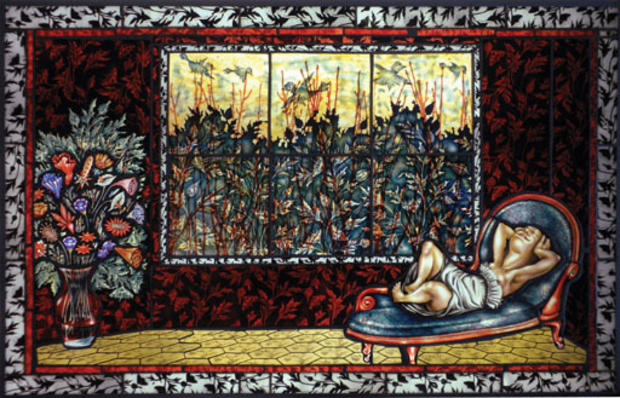
What started in an Ohio garage back in 1962 has truly blossomed into creations of surpassing beauty, such as Judith Schaechter's "Nature." The Studio Glass movement freed artists from around the world to express themselves fully in the difficult but brilliant medium of glass.