Redfern Natural History
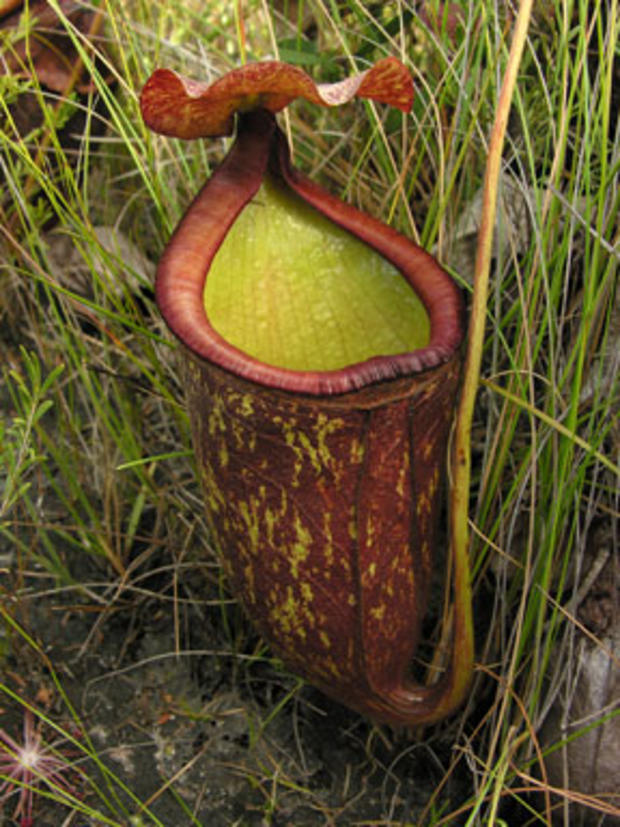
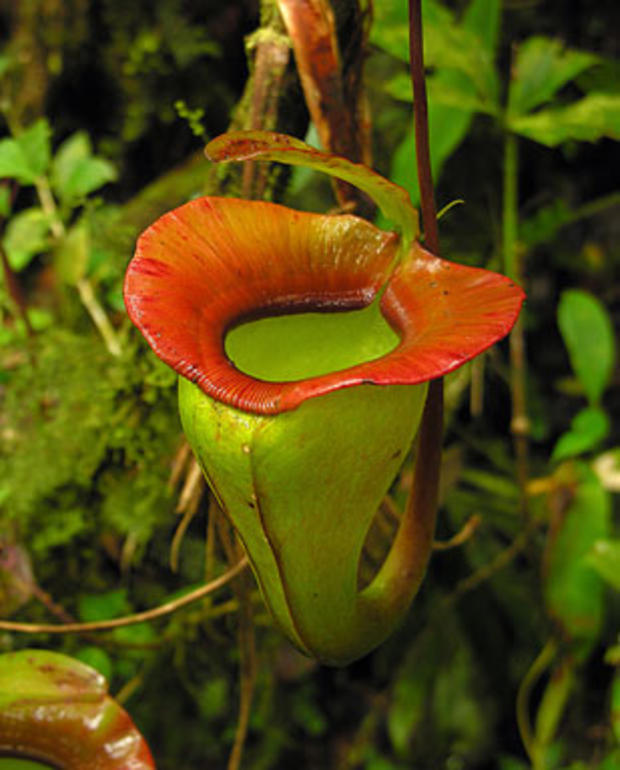
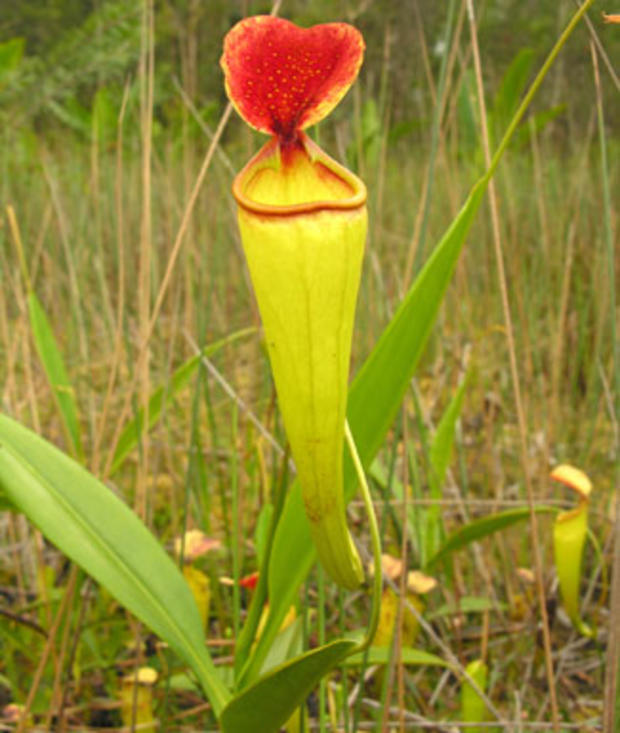
Explorer Stewart McPhereson has recently completed the first-ever global study of all 120 known species of "pitcher plants," all of which are carnivorous, and some of which grow large enough "pitchers" to trap vertebrate prey including rodents. Nepenthes rowanae, a little-known species of pitcher plant from the northern tip of Australia.
Redfern Natural History
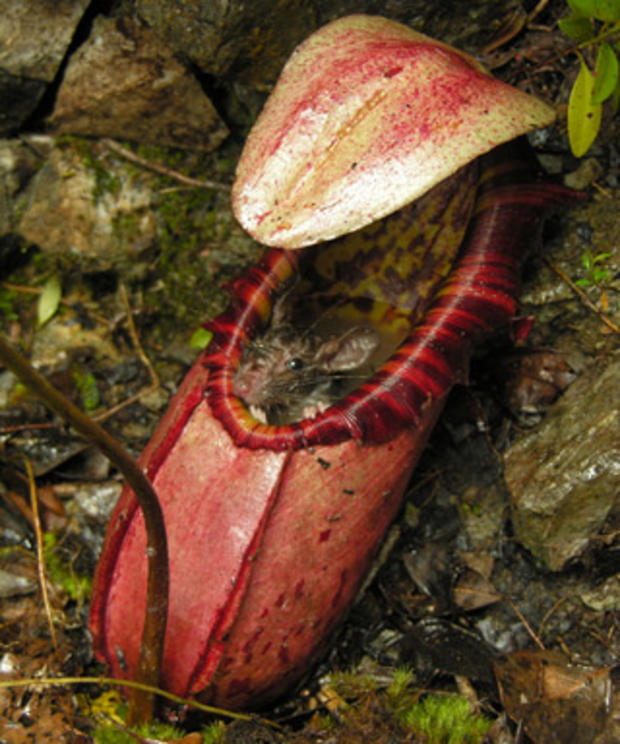
Nepenthes northiana, a pitcher plant found only on the slopes of limestone outcrops of Sarawak, Borneo. A mouse is trapped inside the pitcher of this specimen.
Redfern Natural History
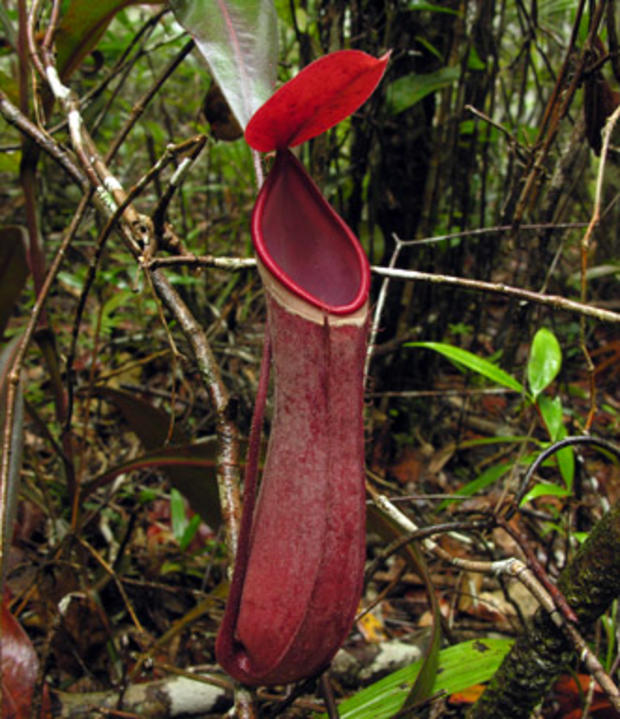
Nepenthes albomarginata, a pitcher plant that is common in the forests of Borneo, Sumatra and Peninsular Malaysia. This species is unique in that it attracts prey. The white band around the mouth of the trap consists of a bait that is attractive to termites.
Redfern Natural History
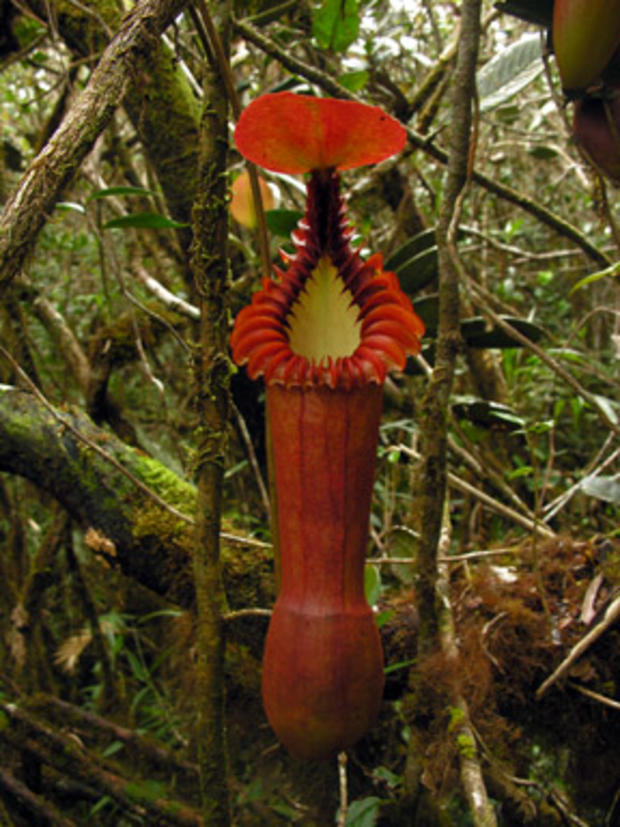
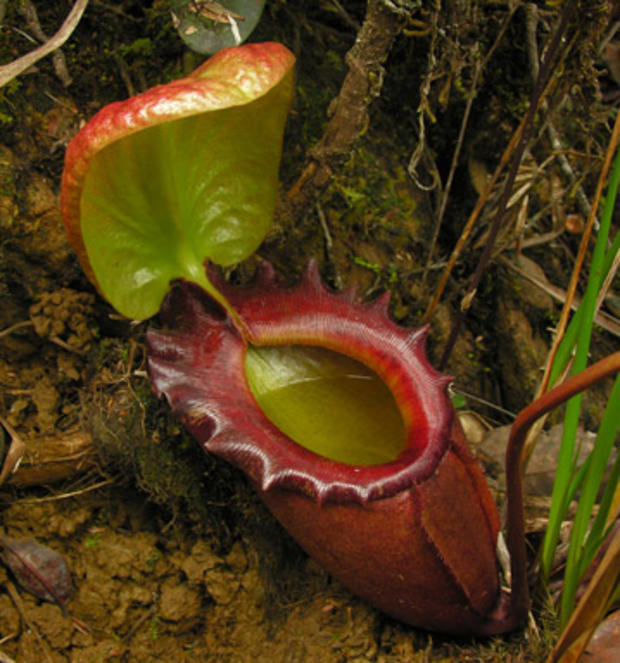
Nepenthes edwardsiana grows only on two mountains in Borneo. The pitchers of this species are lined with inwards pointing blades that terminate in sharp points. From the perspective of trapped prey inside the pitchers, the rows of inward pointing spikes make escape very difficult.
Redfern Natural History
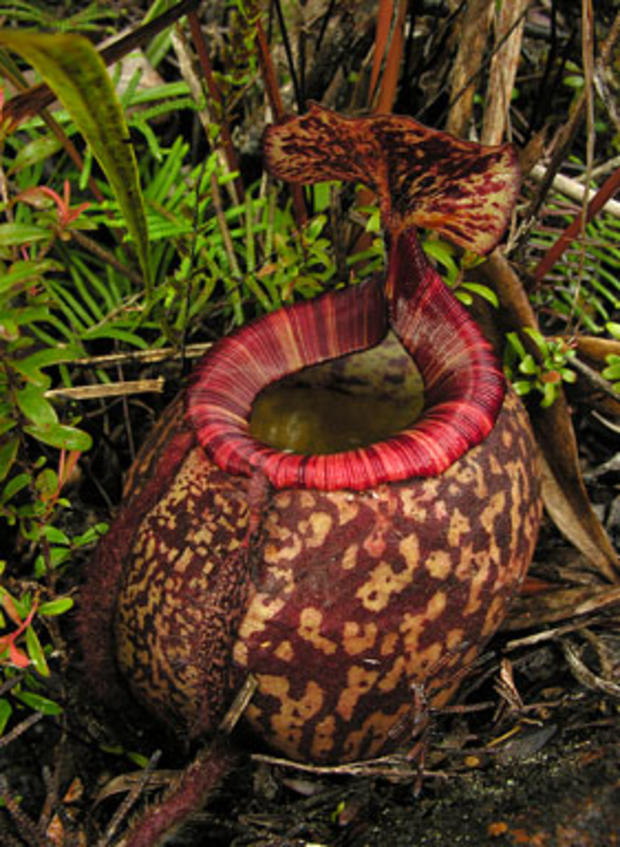
Nepenthes rajah, the largest of all pitcher plants. The traps of this species may often exceed 3 liters in volume and occasionally trap prey as large as rats. This species grows only on the slopes of two mountains in Borneo.
Redfern Natural History
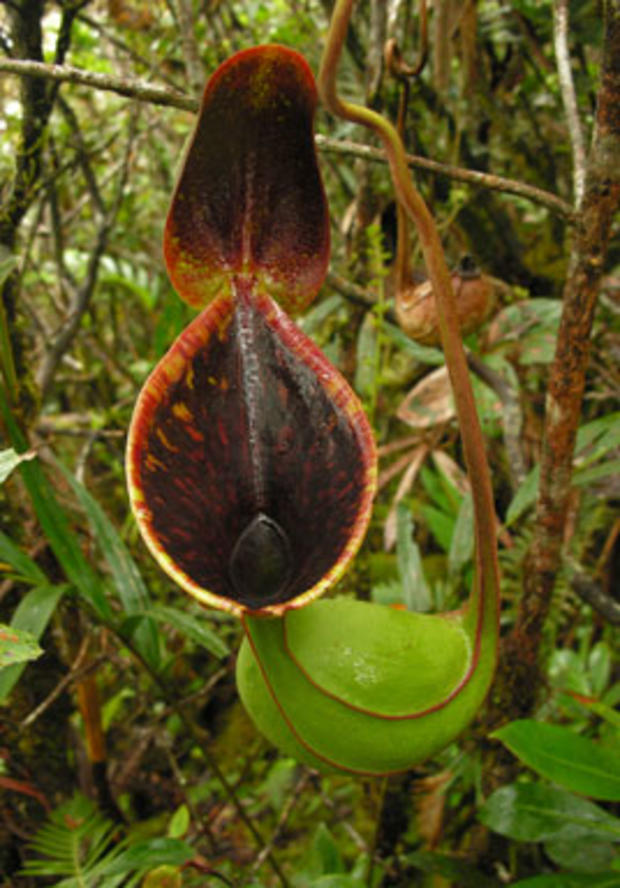
Nepenthes attenboroughii - a giant pitcher plant that was discovered only in 2007. The pitchers of this species may exceed 30 cm (1 foot) in length.
Redfern Natural History
The bizarre pitchers of N. lowii trap not only insects, but also detritus and animal waste. This species is widespread across Borneo.
Redfern Natural History
The traps of N. peltata are brightly coloured to attract insects and other small animals - much like the colourful flowers of a petal.
Redfern Natural History
The extraordinary shape of the pitcher of N. jacquelineae. This, and at least 20 other species of pitcher plants, have been discovered and names during the last decade. Hundreds of mountains remain unexplored across South East Asia, and could harbour dozens of further undiscovered carnivorous plant species.
Redfern Natural History
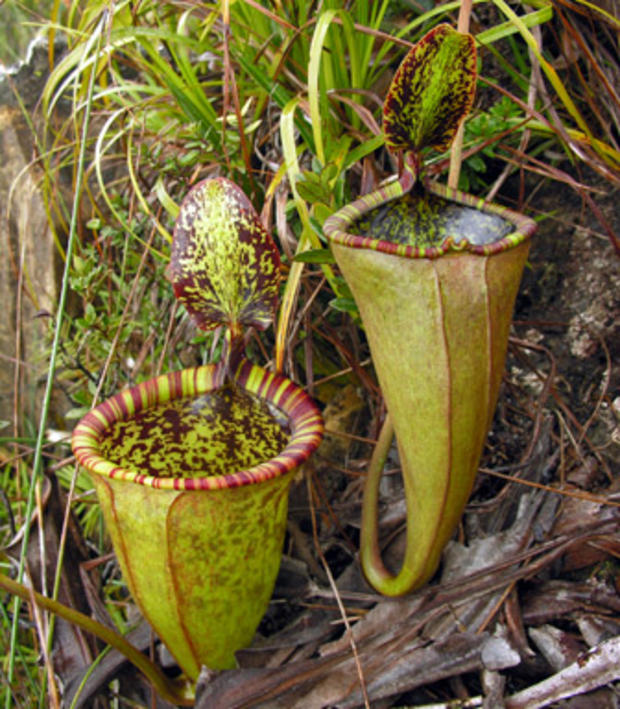
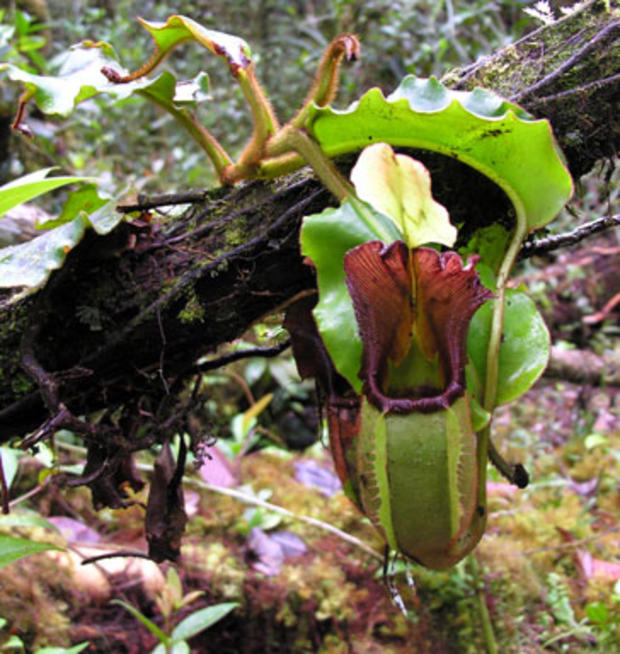
The traps of many pitcher plants are extremely complex. In this one, N. klossii, the trap acts like a lobster pot. An inward protruding rim makes it difficult for prey to escape after entering the pitcher.
Redfern Natural History
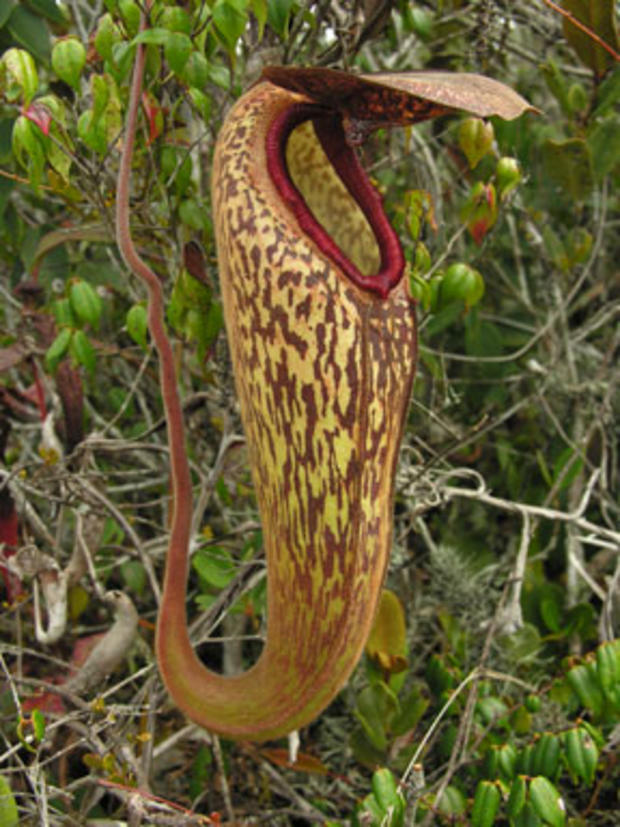
Nepenthes madagascariensis was one of the earliest pitcher plants to be discovered. It was first sighted by early traders and European naturalists in Madagascar during the mid 17th century.
Redfern Natural History
Pitcher plants, such as Nepenthes veitchii (pictured here) grow in habitats that are critically deficient in nutrients. By trapping insects and other small animals, they augment nutrients that are not otherwise available in their habitats.