Rodrigo Abd/AP
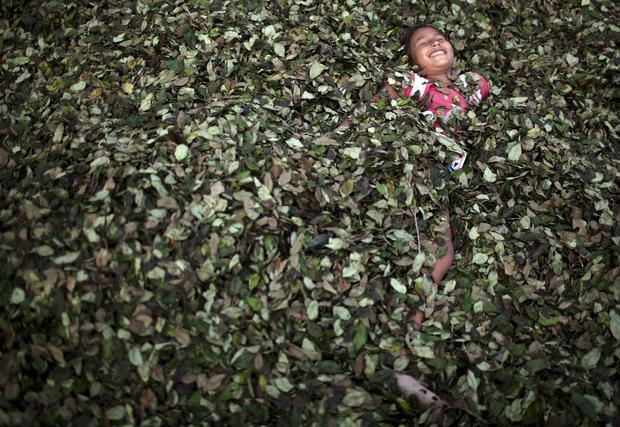
A girl plays in a bed of coca leaves, in the village of Trincavini in Peru's Pichari district, Sept. 25, 2013.
For centuries, coca has been central to Andean culture and religion. But the mild stimulant chewed to fight off fatigue and altitude sickness has in recent decades become the focus of the illegal cocaine trade.
Rodrigo Abd/AP
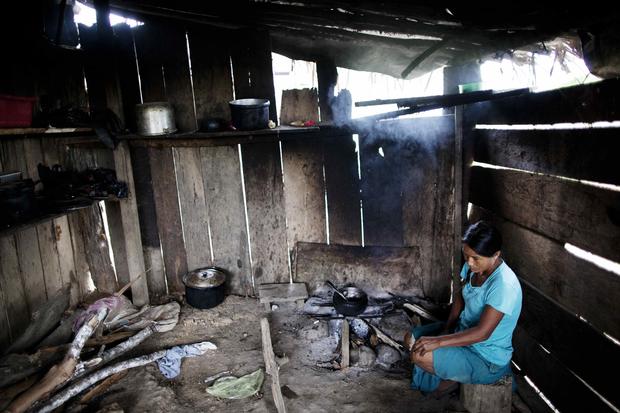
Coca farmer Clementina Gonzalez rests in her kitchen while she heats lunch for her family in the village of Los Angeles in Peru's Pichari district, Sept. 26, 2013.
In its efforts to discourage coca cultivation, the government encourages farmers to plant alternative crops such as cacao and coffee.
Rodrigo Abd/AP
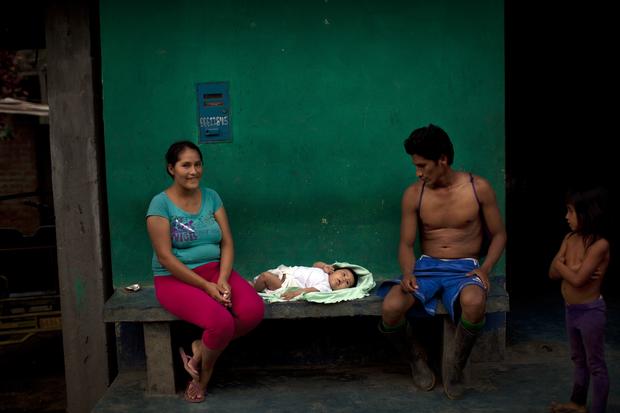
Seeking respite from the oppressive heat inside her home, Norma Taipi, 23, with her 2-month-old daughter Mirella, sits on a storefront bench as she visits with neighbors in Trincavini, a community in Peru's Pichari district, Sept. 25, 2013.
Pichari lies on the banks of the Apurimac river at the center of the world's No. 1 coca-growing valley. Coca is the lifeblood of the economy in Pichari, a mostly rural municipality of 40,000 people.
Rodrigo Abd/AP
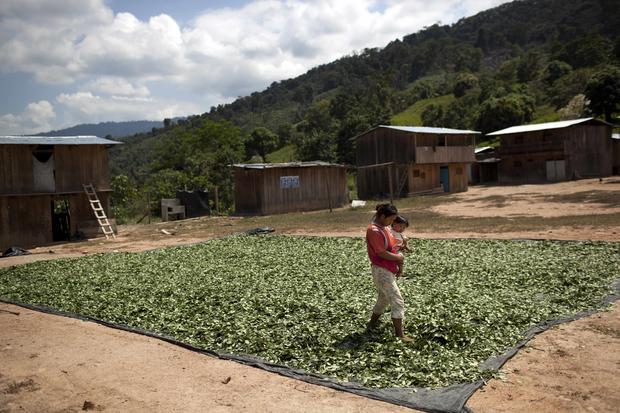
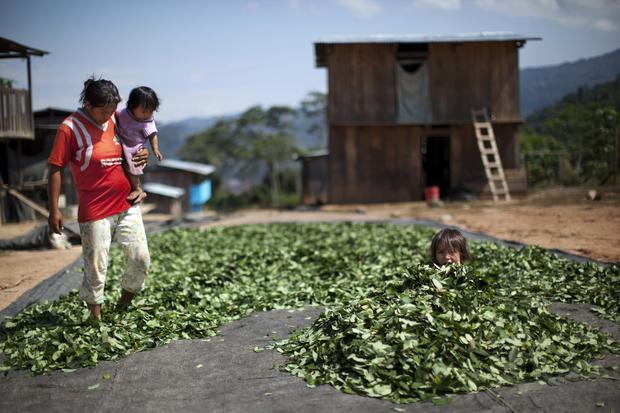
Magali Rua Gonzalez, 25, holds her 8-month-old daughter Astrid as she use her feet to thinly spread out coca leaves on a tarpaulin to be baked by the sun, Sept. 26, 2013.
The United Nations says Peru last year displaced Colombia as the world's No. 1 producer of coca leaf.
Rodrigo Abd/AP
A discarded television set decorates a corner of a coca farmer's home in Pueblo Libre, Peru, Sept. 28, 2013.
Cultivation of coca leaf, the basis of cocaine, is a part of Pichari life. The government's anti-drug strategy is to get farmers to grow alternative crops such as cacao and coffee but the benefits of the illicit crop are difficult to overcome when the leading cash crop can be harvested four times a years.
Rodrigo Abd/AP
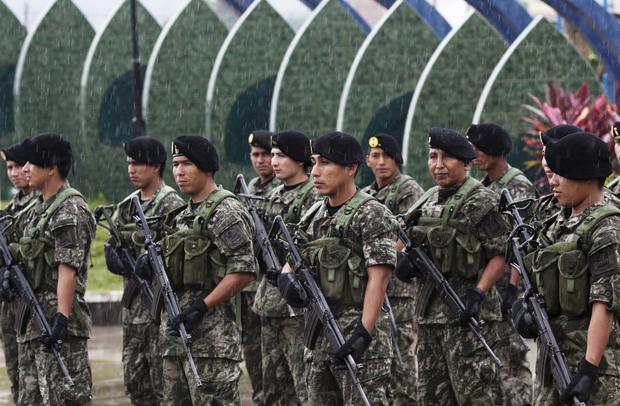
Soldiers stand in the rain during a flag-raising ceremony backdropped by a sculpture depicting coca leaves in Pichari, Peru, Sept. 29, 2013.
There is a constant military show of force in the region with a vibrant trade in the leaf that is the basis of cocaine, and where Peru's government is trying to expand its presence and combat an illegal drug trade.
Rodrigo Abd/AP
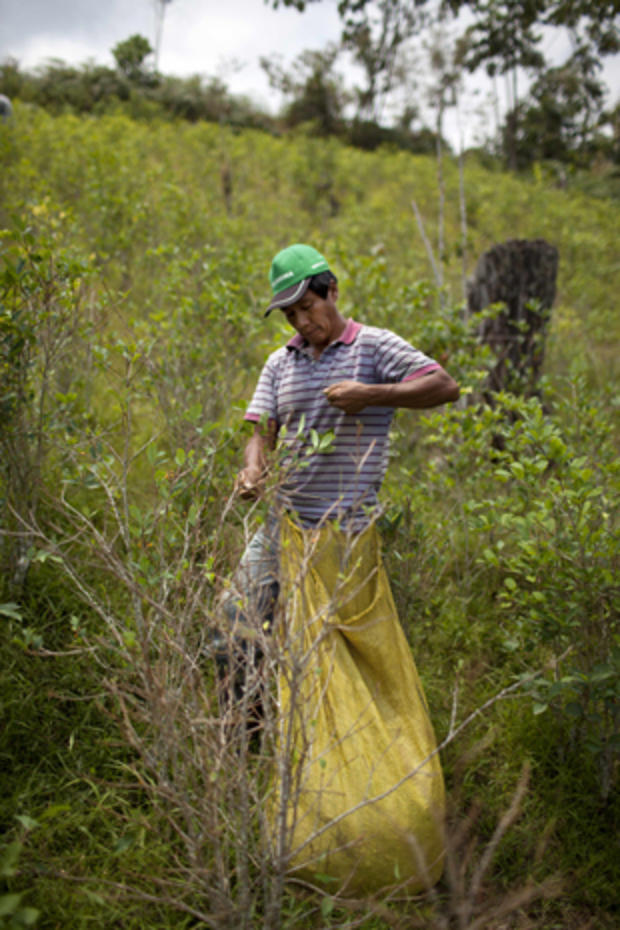
A farmer collects coca leaves on his parcel of land in Pueblo Libre, in Peru's Pichari district, Sept. 28, 2013.
The dried coca leaves are the world's cheapest, according to the United Nations, sold in 25-pound sacks known as "arrobas" that each cost about $6 in the region.
Rodrigo Abd/AP
Saiumi Yasumi, 4, right, peeks out from a pile of coca leaves as her mother Magali Rua Gonzalez, 25, who holds her 8-month-old daughter Astrid, uses her feet to spread out coca leaves on a tarpaulin, in the village of Los Angeles in Peru's Pichari district, Sept. 26, 2013.
Rodrigo Abd/AP
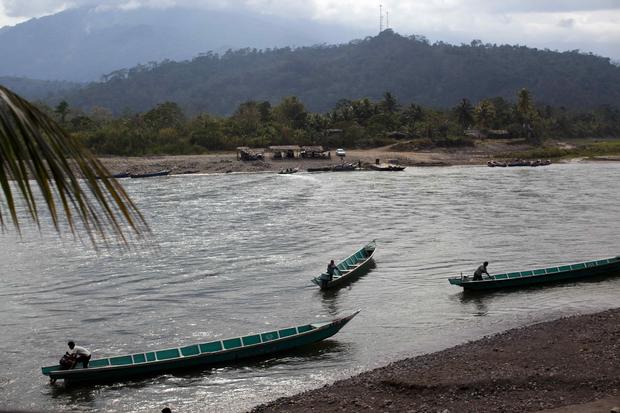
Boatmen await customers to ferry across the Apurimac river, in Pichari, Peru, which is at the center of a valley that the United Nations says yields 56 percent of Peru's coca leaves, Sept. 27, 2013.
Rodrigo Abd/AP
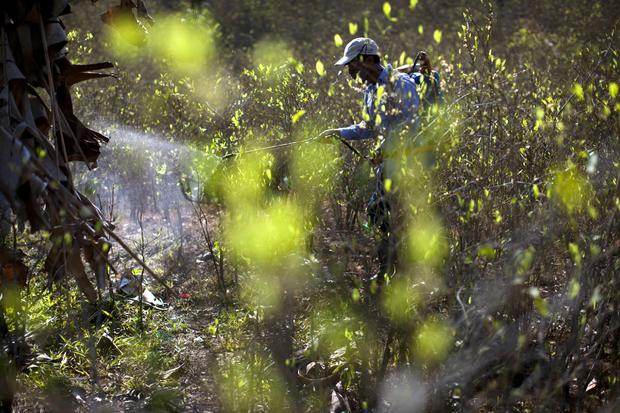
Coca farmer Hugo Tacuri sprays his field in Pichari, Peru, which lies in the world's No. 1 coca-producing valley, Sept. 26, 2013.
Rodrigo Abd/AP
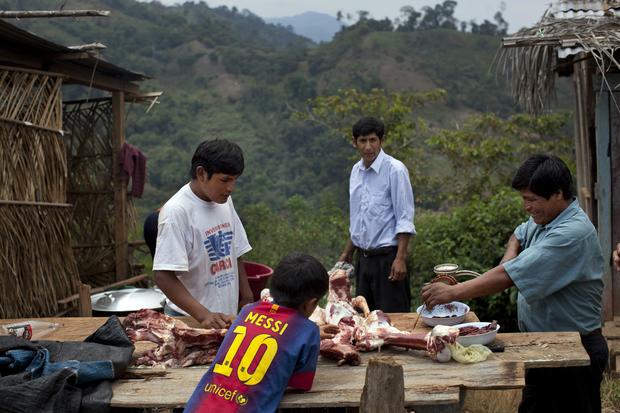
A boy wearing a Barcelona Lionel Messi soccer jersey, watches men prepare lunch during an evangelical celebration in Pueblo Libre, Pichari, Peru, Sept. 28, 2013.
Rodrigo Abd/AP
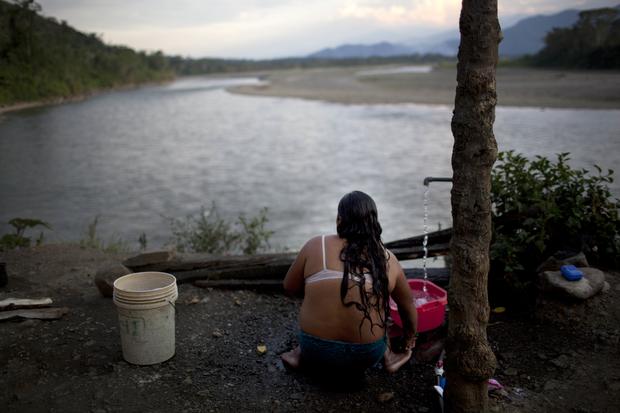
A woman bathes at a communal water faucet above the Apurimac river, in the Trincavini community of Peru's Pichari district, Sept. 25, 2013.
The village lies at the center of the world's No. 1 coca-growing valley.
Rodrigo Abd/AP
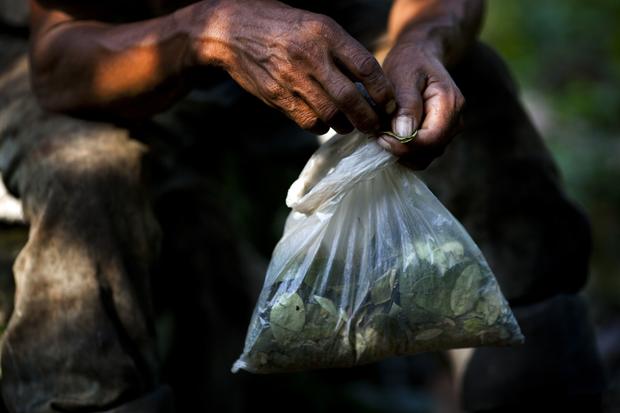
A field worker chews on a coca leaf, while taking a break from weeding in a cacao field in Ottari, a village in Peru's Pichari district, Sept. 30, 2013.
Rodrigo Abd/AP
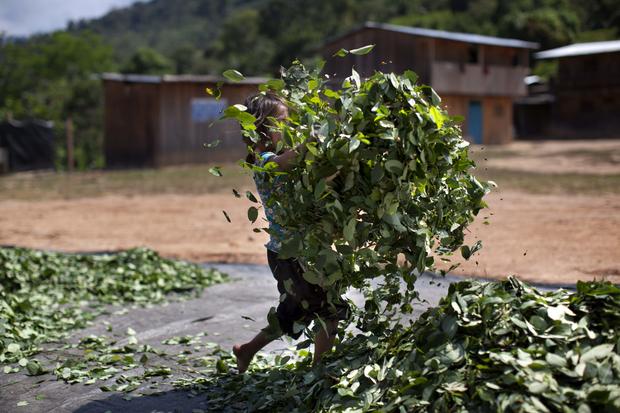
Saiumi Yasumi, 4, carries a heap of coca leaves to spread on a tarpaulin to dry in the sun in Los Angeles, a village in Peru's Pichari district, Sept. 26, 2013.
Rodrigo Abd/AP
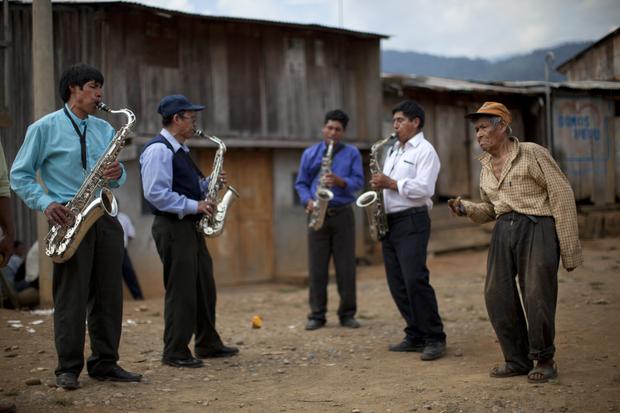
A resident with castanets joins the "La Roca Eterna" evangelical orchestra as they perform during an annual church festival in Pichari, Peru, Sept. 28, 2013.
Rodrigo Abd/AP
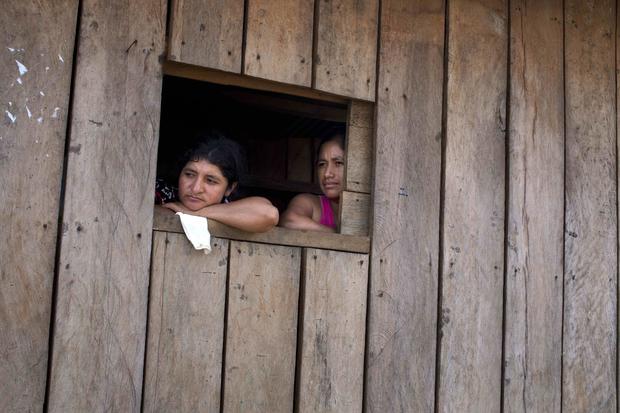
Women watch an annual church festival in Pueblo Libre, a village in Pichari, Peru, Sept. 28, 2013.
Rodrigo Abd/AP
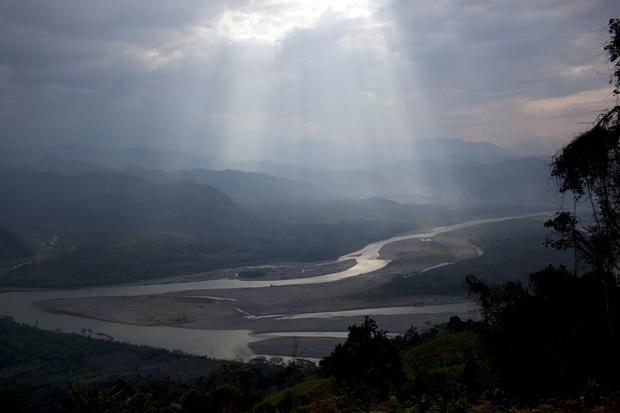
Sunlight filters through the clouds, illuminating the Apurimac river in Pichari, Peru, Sept. 28, 2013.
The river cuts through a long valley that the United Nations says yields 56 percent of Peru's coca leaves.
The government says it will soon begin destroying coca crops in the region, known as the VRAE - the Valley of the Apurimac and Ene rivers.
Rodrigo Abd/AP
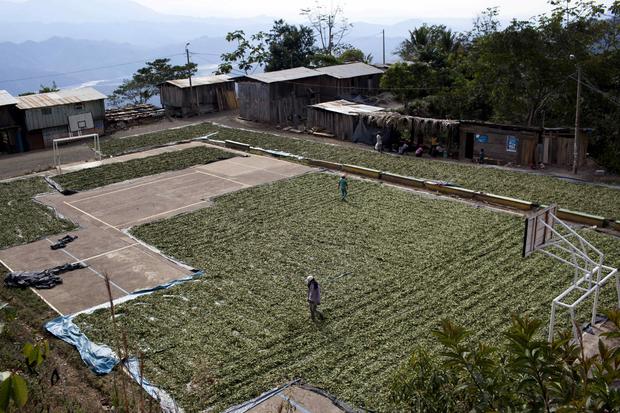
Coca leaves are spread out on tarpaulins on the basketball court that doubles as a soccer field at the community center in Pichari, Peru, Sept. 27, 2013.
Peru last year displaced Colombia as the world's leading producer of coca leaf. But unlike Colombia, most cocaine produced in Peru is exported not to the United States but to Brazil, Argentina and Europe.