Philadelphia public schools seeing impacts of federal funding cuts to SNAP-Ed program

Bagels, hummus, carrots and peppers are all on the menu in Bonnie Stright's first-grade classroom at Andrew Hamilton School on Monday morning.
"I can really see a difference in the children where they open up their lunch and they see a bag of chips and they're actually disappointed and they're like, I wish it was a healthy food," Stright said.
The nutrition education is a part of "Eat Right Philly," which is a School District of Philadelphia initiative that relies on federal funding from the SNAP-Ed program.
Monday's lesson is called "bagel face making," where students use fresh, local produce to make eyes, ears and a mouth on a bagel.
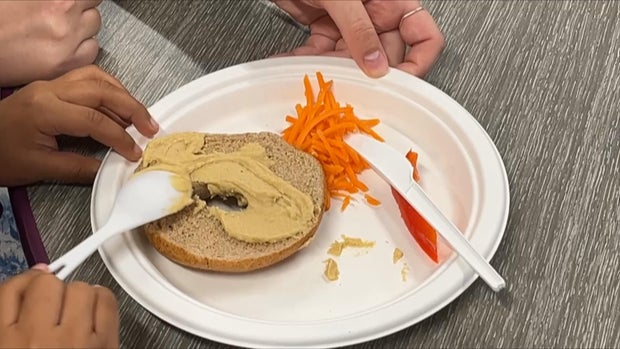
"It's really good," Aurora Starling said with a smile.
Her mom, Alina Amador, relies on SNAP benefits to put food on the table. Programs like this, she said, not only expose her daughter to healthy foods but also provide access to healthy options.
"I just started a new job, and I have to call out a lot because I have to take care of her," Amador said. "So it makes me really nervous that they're reducing things and taking away benefits."
Funding to continue SNAP-Ed was not included in the One Big Beautiful Bill. Democratic U.S. Rep. Dwight Evans, school leaders and other community partners came together to share the impacts.
"The importance of food is something that no one should take for granted," Evans, who represents the 3rd District of Pennsylvania, said.
School district data from the 2023-2024 school year shows nearly 43,000 students and almost 11,000 families benefit from the "Eat Right Philly" program.
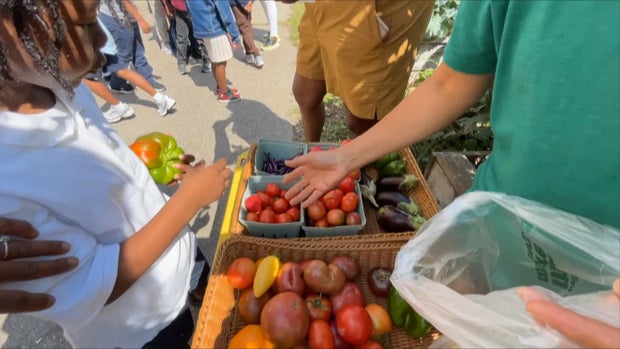
"It's very worrisome. Like, where would our next meal be coming from? You know, this program really helps out a lot," parent Ronique Brown said. "It provides different vegetables and everything."
A spokesperson for the school district shared that while the federal government announced plans to end the program by the end of the month, the state stepped in and will provide funding to continue the program for another year.
"This program exposes our students to healthy eating and how to prepare food and to take that away," Andrew Hamilton School Principal Torrence Rothmiller said. "It's just a detriment to our whole community."
School leaders are hopeful that a more permanent funding solution can happen. Until then, they are tasked with finding ways of continuing nutrition education in the classroom.
"The resources are already limited in public education in our communities," Asmeret Easley, assistant principal at Andrew Hamilton School, said. "So I would like to see that their families and our school community and the neighborhood know that they matter."
PA SNAP-Ed provided this comment about the end of SNAP-Ed funding:
"Across the Commonwealth, Penn State and 22 partner agencies implement SNAP-Ed programming in schools, retail stores, food pantries, farmers markets, and other community settings. These programs reach hundreds of thousands of Pennsylvanians with limited resources to help build their knowledge and skills to select and prepare nutritious foods that support healthy diets and lifestyles. The loss of SNAP-Ed funding will likely eliminate almost 600 community collaborations fostered by these partner agencies across Pennsylvania that are intended that help improve lives in real, sustainable ways."