Philadelphia superintendent addresses budget deficit, school closures: "We can't kick the can down the road"

Students are back in classrooms across Philadelphia, but this school year also marks the beginning of major changes for the School District of Philadelphia — from a multibillion-dollar facilities plan and school closures to a nearly $300 million structural deficit and a continued push to improve student achievement.
Superintendent Tony Watlington, now beginning his fifth school year leading the district, sat down one-on-one with CBS News Philadelphia to discuss where the district is headed and what families should expect in the years ahead.
The school board has approved a $3 billion facilities plan that includes closing 17 schools in the coming years. The plan will affect communities across Philadelphia, including Kensington, and Watlington acknowledged how difficult the prospect of a school closure can be for families.
"I would not want my own child's school to close. Period. The end," Watlington said.
Still, he said the district can no longer ignore major differences in enrollment and building use across the city.
"We are at a point in Philadelphia we can't kick the can down the road," Watlington said. "Our 250 district-operated schools have an occupancy of about 65%."
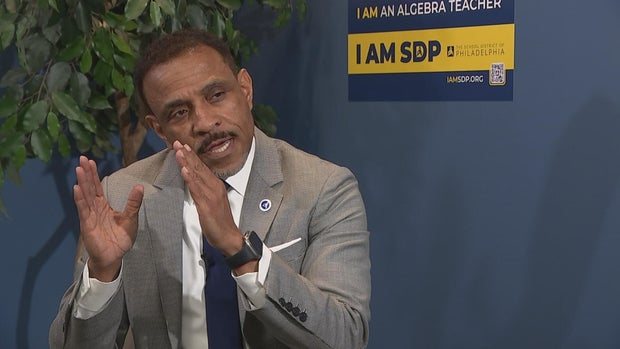
He described the facilities proposal as "not a perfect plan," but said it is designed to address a system in which some schools are underused while others are overcrowded.
Those changes come as the district also works to eliminate a nearly $300 million structural deficit. With additional funding from the state, Watlington said the district now expects to close that gap by the end of the decade.
"For the first time in recent history, we will retire and eliminate this deficit by 2029-2030," he said.
Watlington cautioned, however, that additional funding does not mean the district can spend without making difficult choices about how its money, buildings and programs are used.
Beyond buildings and budgets, Watlington said the district's success will ultimately be measured by what happens inside classrooms.
Too many Philadelphia students remain below proficiency in reading and math, and Watlington said improving those outcomes is critical to what students are able to do after graduation.
"When children are proficient through the third and through the eighth grade, through high school, they have a greater likelihood of getting into a college of their choice," Watlington said.
He said stronger academic skills also improve students' chances of passing civil service exams, entering the building trades or earning career and industry certifications if they choose not to attend college.
The district says its long-term plan is about more than closing schools. Officials believe better use of money and space could allow Philadelphia schools to expand pre-K, arts, recess and physical education programs.
The district also wants to grow career and technical education opportunities, including welding and programs tied to Philadelphia's expanding life-sciences industry.
Watlington's message to parents and the community is to watch the results. The district says it will report back to the Philadelphia Board of Education quarterly, giving families a chance to track whether it is delivering on the academic, financial and facilities promises being made now.


