Rare printings of Declaration of Independence now on display in Philadelphia

As the United States celebrates its semiquincentennial, a new exhibit in Philadelphia is showing off rare printings of the Declaration of Independence.
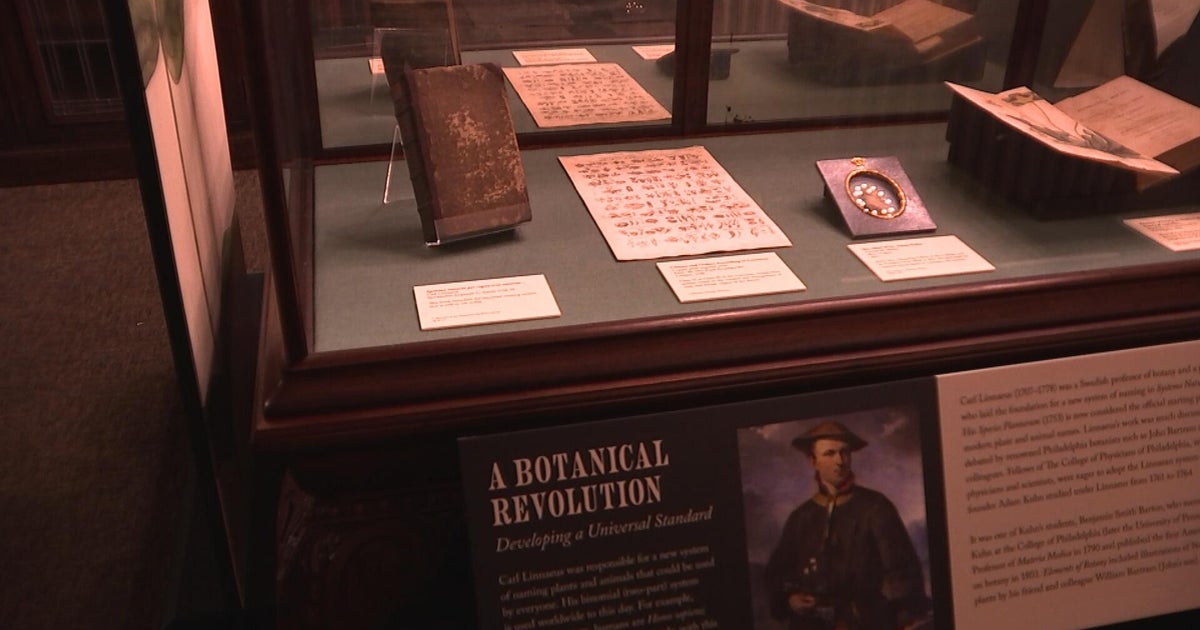
Next to Independence Hall is the American Philosophical Society.
"We have hundreds of copies of the declaration," David Gary, associate director of collections and exhibit curator at the American Philosophical Society, said. "Many of them from July 1776."
This week and for months to come, the public will have the chance to see several of those rare copies on display. It's a part of an exhibit called "These Truths: The Declarations of Independence."
"We have several items in this exhibition that connects directly to that July 1776 moment," Gary said, "and this is one of them."
Gary gave CBS News Philadelphia a preview of the space Tuesday, starting with a map ordered by Benjamin Franklin.
"This copy was hanging in Independence Hall, what was called the statehouse at the time in 1776," Gary said. "This would've been the backdrop that the delegates who were debating and editing the document were looking at."
On display are nearly 50 items from a 1776 printing of Thomas Paine's "Common Sense" to Washington's farewell address and even the chair Thomas Jefferson sat in to write the Declaration.
"Nineteen of those items are declarations from the first 50 years from 1776 to 1826," Gary said. "We think that's the largest gathering of early declarations publicly displayed ever."
Exploring the document's process over the country's first 50 years is the focus of the exhibit. Gary said it took a year and a half filled with research, collaboration and the like to put this all together.
Gary said the exhibit features "one of the copies of the original draft that Thomas Jefferson wrote."
The founding father handwrote the copy between July 4 and 8, 1776, Gary explained, to send to confidants and air his grievances over the cuts made to the original text.
"So much was deleted from the declaration," Gary said. "The big one that was deleted was an anti-slave trade grievance against the king."
In the early 1800s, the look of the declaration changed in some reprintings of the document.
"The idea was that they would buy this, probably frame it, put it in their house," Gary said, "and they could talk about the values and virtues of the nation."
Gary believes "These Truths" is a moment for civic education. He wants anyone who comes through the space to leave with this:
"I want them to think about the declaration not being a static document, that it offers all of us in this nation a chance to think about our values and what we are as a nation," Gary said.