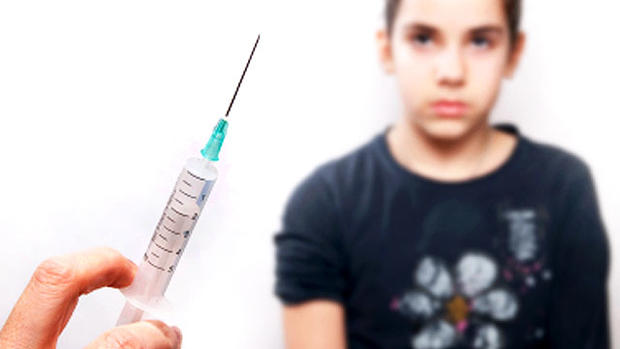
Vt. debates letting parents skip vaccines for their kids
(CBS/AP) Should childhood vaccinations be required for all children or up to parents to decide? It's an oft-debated topic in the U.S., and in Vermont, the debate has reached the state legislature . State lawmakers are debating whether to end the state's "philosophical exemption" - the right of refusal for parents who want to enroll their kids in school or child care without immunizations.
PICTURES: Vaccines for kids: 8 states where parents say no
The Vermont Department of Health and the CDC call for about 20 vaccinations by the time a child enters kindergarten. The CDC and state health officials say Vermont is among the states with the highest exemption rates for childhood vaccinations. Some say it's no coincidence that Vermont recently has seen an outbreak of one of the diseases the vaccines target: pertussis, or whooping cough.
Jill Olson, a mother of two, says it's a matter of trusting the experts. "There's not really any way that as an individual I can do more scientific study and research than the American Academy of Pediatrics or the Centers for Disease Control."
For Jennifer Stella, it's a question of informed consent. Her son had a seizure after getting childhood vaccinations and her daughter suffered a "head-to-toe" eczema outbreak; she says parents should research the risks and benefits of immunizations and decide which ones are appropriate.
For Vermont House Speaker Shap Smith, the state motto sums it up: "freedom and unity" - individual choice versus the public health benefit of having a high percentage of kids vaccinated.
"It's a balance between individual rights and our obligations to each other in society," the Democratic speaker said.
If no agreement is reached in the 2012 legislative session, the legislation will die and Vermont will remain among the 20 states that allow some form of philosophical exemption from required childhood immunizations. All but a handful of states offer religious exemptions, and all allow medical exemptions for kids.
Many of Vermont's more vocal vaccine skeptics are active in alternative health and natural food movements and are critical of what they see as a profit-driven pharmaceutical industry. Stella, a homeopathic health practitioner, works at a clinic that also offers massage and herbal medicine.
Critics of the philosophical exemption say that the drop in Vermont's immunization rates must be stopped, to preserve what public health officials call "herd immunity." That's when most of the population is immunized against a specific disease to keep outbreaks from occurring.
Christine Finley, immunization program manager at the state Health Department, said the percentage of Vermont kindergarteners with all their required immunizations dropped from 93 percent in 2005 to 83 percent in 2010. Finley says prevention is necessary. "Do you want to wait until you've got a measles outbreak?" she asked. Vermont saw 102 pertussis cases between January and the first week of April, Finley said, more than were reported in the state all last year.
Stella's group, the Vermont Coalition for Vaccine Choice, says the rate of vaccination decline is exaggerated, since kids are counted as unvaccinated if they miss just one of the required shots.
"The question is whether they have the right to endanger other children in the school setting," Vermont lawmaker Rep. George Till, D-Jericho, an obstetrician-gynecologist, said during a recent House debate on ending the philosophical exemption.
The debate goes far beyond the state of Vermont. Nationally, the CDCrenewed its call for parents to get their children vaccinated after U.S. measles cases reached a 15-year-high in 2011, mostly fueled by unvaccinated persons traveling overseas. Washington state is currently in the midst of a whooping cough epidemic, prompting officials to call on all adults and children to get a pertussis vaccine if they haven't done so.
Some doctors across the nation have even taken to the extreme step of "firing" patients who refuse to have their children vaccinated, arguing they might infect other children in patient waiting rooms.
What do you think? Who should make the decision about whether not a child is vaccinated?