Mike Waltz defends U.S. at U.N.: "We are not occupying a country"
U.S. ambassador to the U.N. Mike Waltz defended American military actions in Venezuela during an emergency meeting at the United Nations on Monday, and argued that there is no regime change nor U.S. occupation. He repeated the Trump administration's argument that the air and ground assault was not an attack but rather military force used as a tool to assist a law enforcement operation.
"As Secretary Rubio has said, there is no war against Venezuela or its people. We are not occupying a country," Waltz said, according to the readout. "This was a law enforcement operation in furtherance of lawful indictments that have existed for decades. The United States arrested a narcotrafficker who is now going to stand trial in the United States in accordance with the rule of law for the crimes he's committed against our people for 15 years."
"This is not regime change this is justice," Waltz wrote in a social media post on Saturday.
In a statement, a spokesperson for U.N. Secretary-General Antonio Guterres said he is "deeply alarmed by the recent escalation in Venezuela," saying it has "potential worrying implications for the region."
"The Secretary-General calls on all actors in Venezuela to engage in inclusive dialogue, in full respect of human rights and the rule of law," the statement said.
France's foreign minister has already condemned the operation as violating international law, although President Emmanuel Macron said Monday that he "neither supported nor approved" the operation, according to France 24.
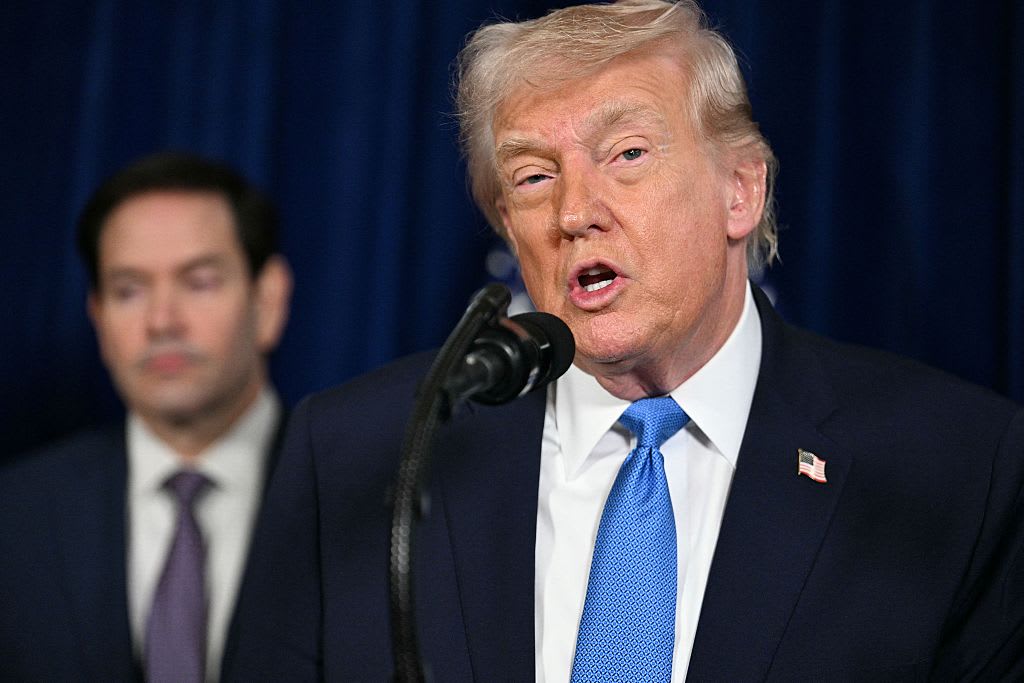
Secretary of State Marco Rubio told Margaret Brennan on CBS News' "Face the Nation" on Sunday that "the president always retains optionality on anything and on all these matters" when pressed as to whether the U.S. had ruled out an occupation of Venezuela. Rubio argued that President Trump would not explicitly rule out anything and maintained the power to invoke military force if there are imminent threats. He emphasized that economic pressure was the main tool being used on the remaining indicted regime members who currently run the country.
As noted by Brennan, other officials in Maduro's government who are still in power in Venezuela, including Interior Minister Diosdado Cabello and Defense Minister Vladimir Padrino López, who have also been indicted in the U.S. District Court for the Southern District of New York and have multi-million dollar U.S. government bounties on their heads. Rubio argued Sunday that it was not feasible to arrest four individuals in five different locations in a single complex raid and that there would have been outcry if the U.S. attempted to do so.
"Imagine the howls we would have from everybody else if we actually had to go and stay there four days to capture four other people. We got the top priority," Rubio said.
As for the Trump administration's ability to control the current regime, Rubio emphasized that the main pressure remains cutting off their financial lifelines.
"What you're seeing right now is an oil quarantine that allows us to exert tremendous leverage over what happens next," Rubio said.