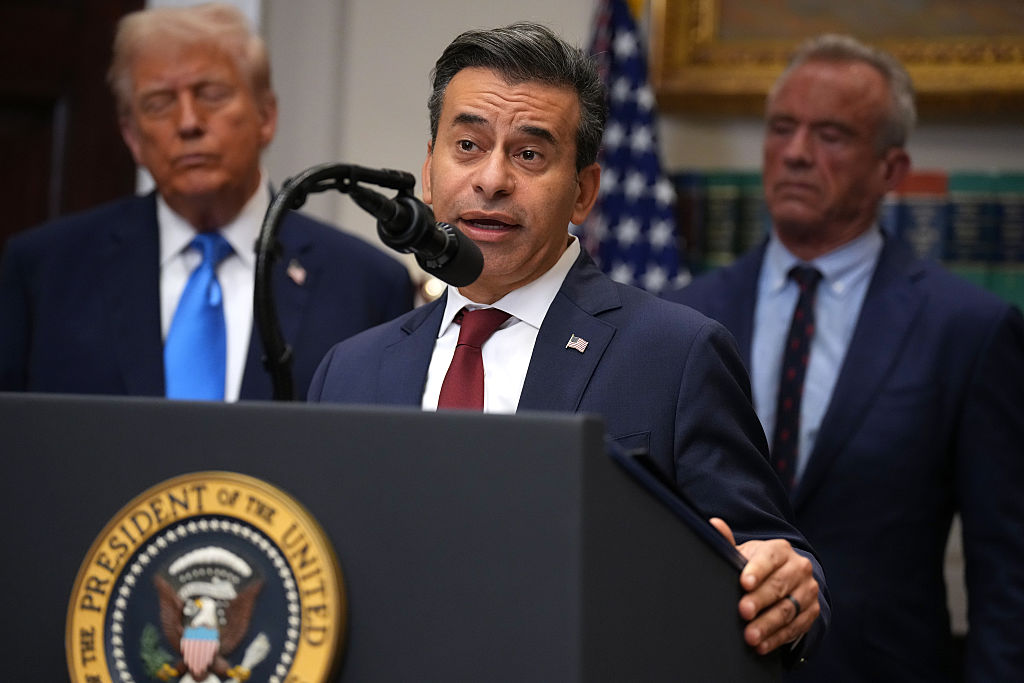
Human "biology was never intended to handle" ultraprocessed foods, former FDA head David Kessler warns
Today, an increasing number of Americans across the political spectrum – from Make America Healthy Again activists to everyday shoppers – are voicing concern about the health impact of ultraprocessed foods – those boxed and wrapped in plastic, ready-to-eat items lining grocery store shelves.
Leading the charge are two men who disagree on pretty much everything else about public health – Health and Human Services Secretary Robert F. Kennedy Jr. and Dr. David Kessler, the former commissioner of the U.S. Food and Drug Administration.
The two men have found common ground over a common culprit: a 67-year-old government classification for substances in our food. It's called GRAS, or generally recognized as safe. Kennedy and Kessler say it has allowed big food companies to use ingredients without a full government safety review and flood the market with ultraprocessed foods that now make up 50% of our calories and 60% of our children's diets.
David Kessler: Over the last 40 years, the United States has been exposed to something that our biology was never intended to handle. Energy-dense, highly palatable, rapidly absorbable, ultraprocessed foods that have altered our metabolism and have resulted in the greatest increase in chronic disease in our history. Type 2 diabetes, pre-diabetes, hypertension, abnormal lipids, fatty liver, heart attacks, stroke, heart failure.
Bill Whitaker: From our food
David Kessler: From our food.
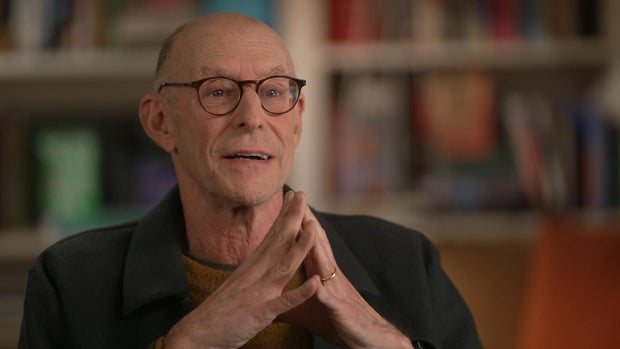
David Kessler was commissioner of the U.S. Food and Drug Administration during the 1990s when he helped expose how the tobacco companies manipulated nicotine levels to hook consumers.
He was a driving force in bringing tobacco executives before Congress and turning public attention to the industry. He's now aiming to do the same with the food industry.
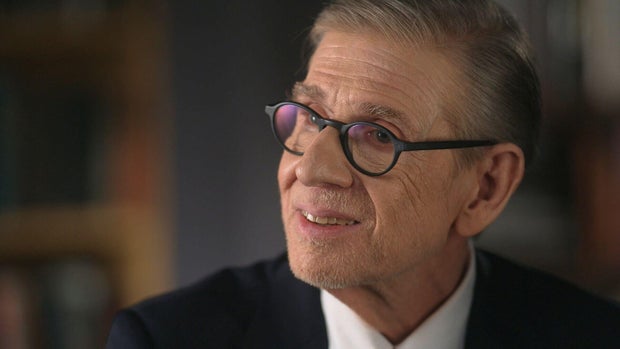
Bill Whitaker: In terms of a public health crisis, how does this compare with tobacco?
David Kessler: It's as large, if not larger.
Bill Whitaker: It's that significant?
David Kessler: The scale of this-- this affects everybody. Understand, not everybody smoked. But look at the number of people who consume ultraprocessed food. It touches all of us.
Robert F. Kennedy Jr.: 70% of Americans are either obese or overweight, and it's not because they got indolent or because we became lazy or because we suddenly developed giant appetites. It's because We're being given food that is low in nutrition and high in calories and it's making – it's destroying our health
We met with Health and Human Services Secretary Robert F. Kennedy Jr. last month after he issued new dietary guidelines that for the first time advise against highly processed foods.
Bill Whitaker: You have said that these ultraprocessed foods are poisoning us. I think many Americans would be surprised to hear that.
Robert F. Kennedy Jr.: We're seeing in our population people who are obscenely obese and at the same time malnourished
Kennedy says that's largely because we don't know the health consequences of what we're eating - thanks to the GRAS exemption enacted by Congress in 1958 that allows food companies to independently verify the safety of their ingredients with no government oversight if they are generally recognized by experts as safe. Pending White House approval, he intends to close that backdoor.
Robert F. Kennedy Jr.: That loophole was hijacked by the industry, and it was used to add thousands upon thousands of new ingredients into our food supply. In Europe there's only 400 legal ingredients. This agency does not know how many ingredients there are in American food.
Bill Whitaker: They do not know.
Robert F. Kennedy Jr.: They do not know. The estimates are between 4,000 and 10,000. We have no idea what they are.
Bill Whitaker: How do we know what is safe to eat?
Robert F. Kennedy Jr.: There is-- no way for any American to know if a product is safe if it is ultraprocessed.
For his part, David Kessler is petitioning Kennedy to go further and outright revoke the GRAS status for dozens of processed refined carbohydrates – sweeteners and starches such as corn syrup and maltodextrin - unless the companies can prove they are safe and not fueling obesity.
David Kessler: They took starch, right? Those cheap, easy calories. And they converted those into a whole panoply of ingredients, that it was able to reassemble. And those products are so rapidly absorbed in our system that it caused metabolic havoc.
David Kessler: - they target the brain reward circuits that keep us coming back for more. They, they trigger overeating. They deprive us of any sense of fullness.
Bill Whitaker: What we all call empty calories
David Kessler: -- those calories are not just empty. They're ending up in your liver, and that fat in your liver is gonna migrate into other organs. And it's the cause of cardiometabolic disease.
Kessler, a pediatrician, filed his petition with the FDA after zeroing in on GRAS ingredients listed in plain sight on the backs of packaged foods.
David Kessler: Pick up any one of these products. You ever look at the-- the ingredient label?
Bill Whitaker: A lot of 'em are things I can't even pronounce.
David Kessler: Right. Is that food? Corn syrup, corn solids, maltodextrin, dextrose, xylose, high-fructose corn syrup. And then these ingredients were subjected to industrial processing so that our system can't handle it.
Robert F. Kennedy Jr.: We will act on-- on David Kessler's petition. And the questions that he's asking are questions that FDA should've been asking a long, long time ago.
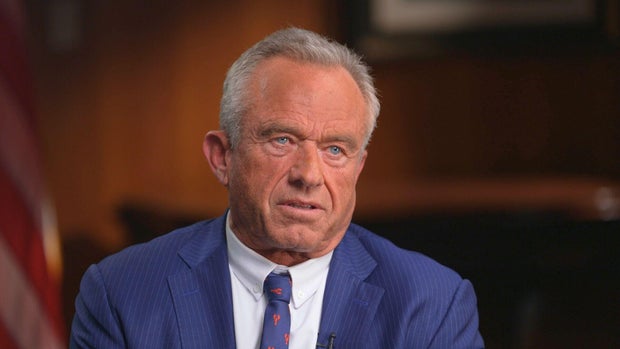
Kennedy told us he will use gold standard science to review GRAS ingredients. but his credibility on that score has been widely called into question because of his history of vaccine skepticism and his agency's revision of the childhood vaccine schedule.
Bill Whitaker: Are you concerned at all that your stance on vaccines might make people reluctant to support you on ultraprocessed foods?
Robert F. Kennedy Jr.: My stance on vaccines is the same. People should have food science and they should have choice.
Bill Whitaker: Some doctors worry that-- the new immunization schedule sows confusion and will lead some Americans not to vaccinate their children
Robert F. Kennedy Jr.: People who wanna get those vaccines can get them and they can get them fully insured.
David Kessler: The secretary and I, you know, we disagree on a number of issues, I mean, in the strongest possible terms. When it comes to vaccines I disagree. But if he's willing to take action on these ultraprocessed foods, I will be the first-- to applaud that.
Bill Whitaker: If you don't trust him on vaccines, why trust him when it comes to ultraprocessed foods?
David Kessler: I don't think it's a question of trust, Bill. I mean, this country is ill. I'm a doc I care about the public health of this country. And if we can make progress on that, let's do that
In December, San Francisco City Attorney David Chiu filed a landmark lawsuit against 10 manufacturers of ultraprocessed foods alleging that, like the tobacco companies, they knowingly engineered and marketed addictive, dangerous products while hiding the risks and causing a public health crisis.
The Consumer Brands Association, one of the largest trade groups representing the food industry, declined to respond to us about the lawsuit. But in a statement to 60 Minutes, said there is no "agreed upon scientific definition of ultraprocessed foods" and "companies adhere to the rigorous evidence-based safety standards and nutrition policy established by the FDA to deliver safe, affordable and convenient products that consumers depend on every day."
We met with food author Michael Pollan, who for decades has been warning about inexpensive, factory-processed food.
Michael Pollan: Granola bars, those look very healthy all of these would qualify as ultraprocessed foods--
Bill Whitaker: All of them?
Michael Pollan: --even though they're very different. This-- you know, we have a snack good-- couple of snack foods.
Bill Whitaker: Even the Nature Valley?
Michael Pollan: I would argue, because of the number of-- ingredients in it. So there's a lot of sugar in here
Bill Whitaker: But this is sold as a health food.
Michael Pollan: Yeah, a health food.
Pollan commends Kennedy for shining a light on ultraprocessed foods. He ties their ubiquity to longstanding federal farm subsidies.
Michael Pollan: We subsidize as taxpayers, through the Farm Bill, the least healthy calories in the diet.
Michael Pollan: Most of which goes to people farming corn and soybeans
Bill Whitaker: What's wrong with corn and soybeans?
Michael Pollan: When you hear corn and soy you think food. This is not corn on the cob. This is commodity corn
Bill Whitaker: It's not the sweet corn we eat in the summer?
Michael Pollan: No. You can't eat it, in fact. It's all starch, big cobs. You'd break your teeth on it. And then soy, which is not, in the form we grow it as a commodity, is not edamame. You can't eat it. These are raw ingredients for processed foods and animal feed.
Bill Whitaker: So the-- the government is subsidizing crops that are making us unhealthy?
Michael Pollan: Sick. Yes. Yeah. And one way to look at it is we are supporting both sides in the war on type 2 diabetes. We are-- we're subsidizing the high fructose corn syrup that's contributing to causing it. And then we're paying for the healthcare costs. I mean, it makes no sense at all.
In a statement, the American Farm Bureau Federation, the largest general farm organization in the U.S., told us: "[a] healthy diet relies on a variety of nutrient-dense foods and a balance of healthy fats, carbohydrates, protein and fiber, some of which can come from shelf-stable foods"
Bill Whitaker: Why are there not subsidies to produce more of the healthy foods?
Michael Pollan: Cheap food is the goal of all governments. If you were to remove these corn subsidies there is concern that the price of corn would raise. And that would be a problem for the whole food industry, which, of course, is a very powerful lobby, and would be a problem for the consumer, conceivably.
Bill Whitaker: When you're taking on ultraprocessed foods, you're also taking on powerful industries, Big Ag, Big Food. What makes you believe you will prevail?
Robert F. Kennedy Jr.: My belief that I will prevail is because we have the president behind us.
Bill Whitaker: But the president has shown himself to be-- pretty much against regulations. So, why would he support regulating ultraprocessed foods?
Robert F. Kennedy Jr.: Well, I'm not saying that we're going to regulate ultraprocessed food. Our job is to make sure that everybody understands what they're getting, to have an informed public.
Bill Whitaker: There are Americans who live in so-called food deserts with little access to whole foods. And these are foods that many of them can't afford anyway. So how do you speak to that American?
Robert F. Kennedy Jr.: We are laser-focused on making all of these foods affordable and accessible to every American.
The Consumer Brands Association told us the GRAS process enables companies to "innovate to meet consumer demand" and that "food companies adhere to FDA's science and risk-based evaluation of ingredients[...]before and after they are in the marketplace." David Kessler says that's not enough.
David Kessler: We changed how this country views tobacco. We need to change how this country views these ultraprocessed foods.
Bill Whitaker: Would you like to see the CEOs of big food companies come before Congress and raise their hand and be questioned like the tobacco industry was?
David Kessler: I'd like them to understand the consequences of what they are doing and to do something about it.
Produced by Sarah Koch. Associate producer, Amanda Winograd-Schnur. Broadcast associate, Mariah Johnson. Edited by Craig Crawford