Tupac Shakur murder suspect recounts moments before 1996 shooting in audio played to jury
Jurors on Thursday heard Duane "Keffe D" Davis tell detectives in 2008 that his nephew Orlando "Baby Lane" Anderson fired the shots that killed Tupac Shakur.
Davis, who said in the interview he was also in the car with Anderson, is accused of orchestrating the 1996 killing of the 25-year-old hip-hop superstar in Las Vegas. At the time of the interview, his nephew had been dead for a decade.
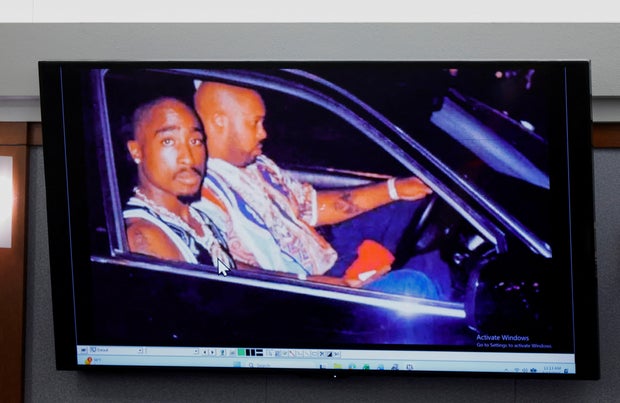
Davis said the white Cadillac he and Anderson were riding in with two other men pulled up alongside a car with Shakur inside, along with hip-hop mogul and Death Row Records head Marion "Suge" Knight.
"If we would have been on my side, I would have blasted," Davis said. Instead, Knight's car was on the other side, so Davis passed his gun back to Deandre "Big Dre" Smith. But Smith didn't want it, Davis said.
Anderson, who was also in the back seat, took the weapon and started firing, Davis said.
Jurors watched the screen as the transcript of the audio recording rolled. Some occasionally took notes. At the beginning of the audio interview, Davis and his attorney whispered to each other. Shakur's family sat still, occasionally looking at the screen or looking down to the floor. The room was quiet as Davis described the shooting.
It was the first time Davis directly discussed his involvement in the killing with authorities. The interview is essential evidence in the state's case against the 63-year-old Davis. Prosecutors told jurors in opening statements they would lean heavily on Davis' own admissions in interviews with police and on podcasts, as well as the 2019 memoir he co-authored, "Compton Street Legend."
He also previously told the FBI his nephew was not involved in the 1996 shooting of Shakur, and speculated Knight or Sean "Diddy" Combs were involved.
Davis has pleaded not guilty. His lawyer has called the prosecution's narrative "fiction" and said Davis was "full of crap" when he told stories of his involvement, and authorities knew it. He argued investigators failed to back up the statements his client made with evidence.
The Los Angeles police detectives had actually brought Davis in to talk about the 1997 shooting death of Shakur's archrival, the Notorious B.I.G.
Davis had briefly been one of the suspects in that still-unsolved killing, but he was later discounted.
"Everybody was a suspect at that time," Daryn Dupree, one of the detectives in the interview, said in court testimony Thursday.
According to CBS affiliate KLAS-TV, Dupree said he was on a task force investigating the murder of Christopher Wallace, also known as Biggie Smalls.
The detectives tell Davis their discussion is confidential.
"Nothing you say today can be used against you," said Greg Kading, the other detective conducting the interview who described it in a book a few years later.
Some in the audience shook their heads when someone in the audio tells Davis that "nothing leaves this room."
Dupree adds, "If you don't say nothing, it's cool, but if you go out there and start talking …"
Prosecutors say Davis did in fact "go out there and start talking" a decade later when he told stories about the shooting in interviews and the memoir. They said that nullifies any agreement he had with law enforcement over this and other recorded conversations.
Before the trial, KLAS-TV investigative reported Vanessa Murphy had multiple jailhouse interviews with Davis since his arrest, including one in which Davis said he wasn't even in Las Vegas the night Tupac was shot.
Prosecutors allege Shakur was killed to avenge the rapper's entourage attacking Davis' nephew, Anderson, a few hours earlier at the MGM Grand after a boxing match involving Mike Tyson. Davis was at the Tyson fight but not the brawl, prosecutors say.
Later in the evening, they were in the Cadillac and saw Shakur hanging out of a black BMW with people calling out "Tupac!"
Davis said after Lane fired the shots, he thought Knight was dead. Instead, he suffered only a graze wound.
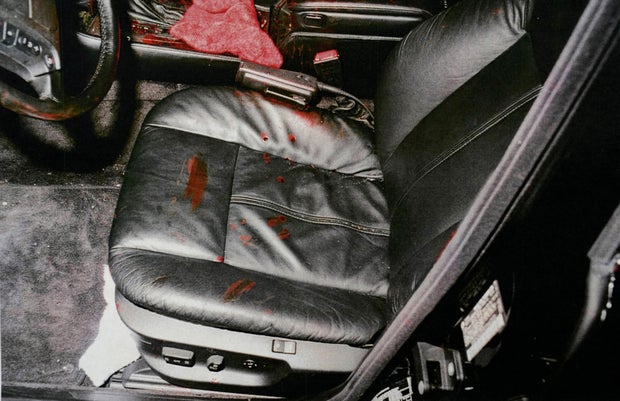
Earlier this week, some members of Shakur's family stepped out of the courtroom before prosecutors showed photos from his autopsy. Others remained in the courtroom to face the grim facts of what happened to his body.
Decades after his death, Shakur remains a cultural icon, and one of the most influential and versatile rappers of all time. He died as his popularity was peaking and his film career as an actor was taking off. His legend has only grown in the years since.