Treasure hunter who refused to disclose location of shipwreck's 500 gold coins is released from prison after a decade
A former deep-sea treasure hunter who made one of the greatest shipwreck discoveries in American history and spent the past decade in prison after refusing to disclose the whereabouts of some of its missing gold coins is now free, federal records show.
Tommy Thompson, who in 1988 located what was known as the "Ship of Gold" off the coast of South Carolina, was released last Wednesday, according to Federal Bureau of Prisons records reviewed by The Associated Press.
Thompson, an Ohio-born research scientist, was hailed as a hero after finding the S.S. Central America and its thousands of pounds of sunken treasure that sat at the bottom of the Atlantic Ocean for more than 150 years.
The ship sank in September 1857, along with 425 passengers and crewmembers and 30,000 pounds of federal gold from the new San Francisco Mint to create a reserve for banks in the eastern U.S. The ship was located by Thompson and his team more than 7,000 feet below the surface.
But in the decades that followed, he battled with investors who accused him of cheating them out of millions and then spent years on the run as a fugitive before being sent to prison over rebuffing court orders while contending he didn't know what happened to 500 coins minted from the ship's gold.
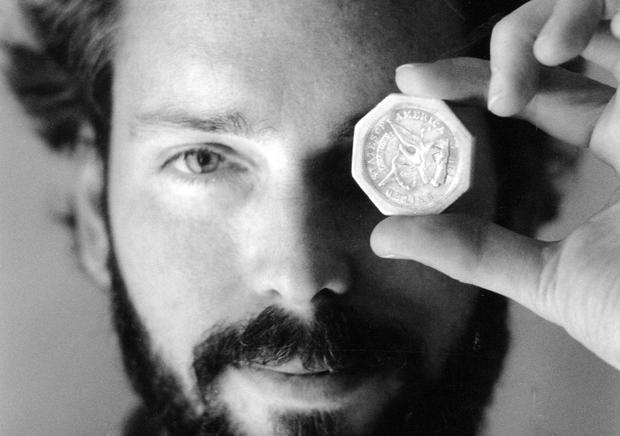
The Central America was filled with a big haul from the California Gold Rush when it sank in a hurricane in 1857. Four hundred and twenty-five people drowned, and thousands of pounds of gold were lost, contributing to an economic panic.
Investors who backed Thompson's venture sued him in 2005, saying they had yet to receive any money from the $50 million sale of more than 500 gold bars and thousands of coins — just part of the ship's booty.
Thompson, who was living in Florida, went into seclusion and then later became a fugitive when an Ohio federal judge issued a warrant for his arrest in 2012 after he failed to show up in court.
Three years later, authorities tracked Thompson to a Florida hotel where he was living under a fake name. The judge then held him in contempt and sent Thompson to prison at the end of 2015 for refusing to answer questions about the location of missing coins.
Thompson, now 73, maintained that the coins — valued then at $2.5 million — were turned over to a trust in Belize and said the $50 million from the sale of the first batch of gold mostly went toward legal fees and bank loans.
He remained locked up even though federal law generally limits jail time for contempt of court to 18 months. A federal appeals court in 2019 rejected Thompson's argument that the law applied to him, saying his refusal violated conditions of a plea agreement.
The following year, Thompson appeared by video for another hearing where U.S. District Judge Algenon Marbley again asked whether he was ready to address the whereabouts of the gold.
"Your honor, I don't know if we've gone over this road before or not, but I don't know the whereabouts of the gold," Thompson responded. "I feel like I don't have the keys to my freedom."
Just over a year ago, Marbley agreed to end Thompson's sentence on the civil contempt charge, saying he was no longer convinced that keeping him in prison would produce an answer. The judge then ordered Thompson to immediately start serving a two-year sentence for skipping the 2012 court hearing.
"People kill people and get out in half the time"
Dwight Manley, a California coin dealer who bought and sold nearly the entire fortune, said Monday that Thompson paid a heavy price over what he described as a business dispute.
"Going to prison for 10 years over a business dispute is not America," Manley said. "People kill people and get out in half the time."
Sentences in civil contempt cases are somewhat indefinite, but they shouldn't go on forever, said Ryan Scott, a University of Florida law professor who researches contempt law and worked to secure Thompson's release.
"It's very unusual to go on 10 years," Scott said.

He said Thompson should have been freed years ago - since at least 2018, after the court dismissed the underlying case - calling it a "miscarriage of justice for this to have gone on this long."
Treasure from the S.S. Central America has fetched millions of dollars over the years.
In 2022, one of the largest S.S. Central America ingots ever offered at auction, an 866.19-ounce find known as a Justh & Hunter ingot, sold for $2.16 million through Dallas-based Heritage Auctions.
In 2019, multiple relics from the shipwreck hauled in more than $11 million at auction. In 2001, an 80-pound ingot was bought by a private collector for a record $8 million.