The Social Animal: The Hidden Sources of Love, Character and Achievement
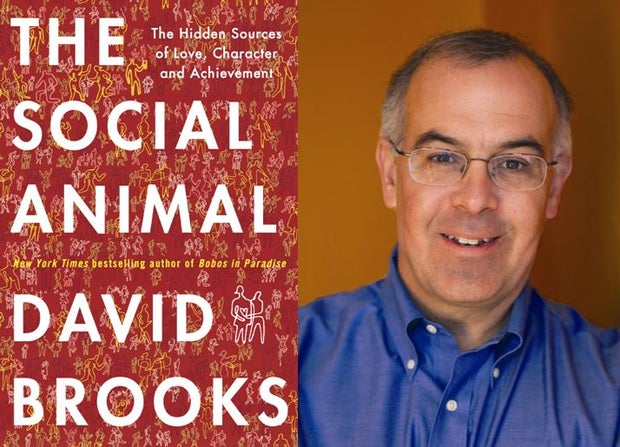
I remember reading a collection of essays that David Brooks edited in 1996, when I was still in college (dating myself). A few years later, my brother told me I absolutely had to read "Bobos in Paradise," Brooks' smart and funny assessment of mid-90's yuppies. I did, I thought it was great, and I don't think Brooks has stopped producing must-read material ever since. Whether you know him from his old "Weekly Standard" work, his now twice weekly New York Times column, or his wide variety of TV appearances, it goes without saying that Brooks is one of the most influential opinion-makers in the world. If you want to know where this country stands, and where it might head next, it's never a bad idea to dip into David Brooks. "The Social Animal" is out this month.
Jeff Glor: What inspired you to write the book?
David Brooks: I found myself stuck in world that encouraged a shallow view of human nature. When we raise our kids, we emphasize grades and SAT scores but when it comes to the mot important things, like character, we often have little to say. In government, we emphasize the things that can be counted and minimize all the rest. But at the same time, thousands of researchers in the worlds of neuroscience and psychology are making all sorts of incredible discoveries about who we are deep down. I wanted to take their findings and round them up into one story.
JG: What surprised you the most during the writing process?
DB: How complicated we are down below. We marry people who have similar nose widths, who have complimentary immune systems. That's just a small example of all the many different perceptions and thoughts that are flowing through our minds unconsciously every second of the day--sleep-time included.
JG: What would you be doing if you weren't a writer?
DB: I'd be an editor. I have no other skills. I could try run for office, but I can't remember names well enough. I'd probably try to be a teacher, though I'm not sure I'd be great at it.
JG: What else are you reading right now?
DB: "The Immortal Life of Henrietta Lacks," a beautiful story about people who were sucked into and abused by the world of medicine even while remaining deeply suspicious of it.
JG: What's next for you?
DB: The next column for the Times is always next. It's like being a student and having a paper due in 3 days. Except its for the rest of my life.